

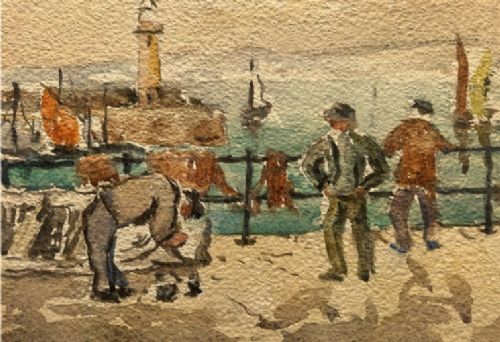

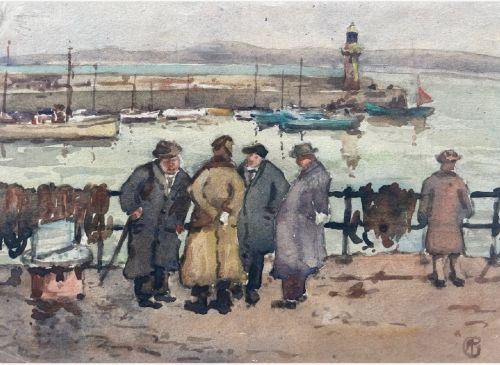


Cornish Harbour Scene
A cornish harbour scene captures the salty air and working boats of the south-west coast, offering a direct window into historic fishing ports.
Cornish Harbour Scene
A cornish harbour scene typically portrays the coastal towns, fishing luggers and bustling quays of Cornwall, spanning the late nineteenth and twentieth centuries. These works record maritime life through the eyes of artists drawn to the distinct light and topography of ports like St Ives, Newlyn and Polperro.
Most examples found here appear as framed watercolours or oil paintings on canvas, reflecting the heavy output of regional art schools during this period. The subject matter ranges from quiet tidal inlets and whitewashed cottages to dramatic depictions of trawlers returning to shelter.
Materials and construction
Painters relied primarily on oil paint applied to canvas or wood panels, alongside watercolours worked on paper. These materials allowed artists to capture either the translucent wash of coastal weather or the rich, textured impasto of a busy harbour.
Framing often involved gilt wood or simple wooden mouldings suited to the domestic display of British landscape and marine art.
Cornish Harbour Scene Retail Price Guide 2026
Typical asking prices for cornish harbour scene among the pieces listed under this phrase on Sellingantiques today, from the lower quarter to the upper quarter. They describe what is for sale here now, not the wider market.
Listings feature paper, canvas and wood panel as primary supports, painted in oil or watercolour.
Qualities of the brushwork and composition
The distinction between ordinary and exceptional pieces lies in the sureness of the handling and the atmospheric depth of the maritime setting. Stronger works convey the movement of water and the specific quality of West Country light without relying on formulaic details.
Provenance and association with recognised regional art movements also elevate certain pieces, distinguishing standard topographical records from accomplished examples of British impressionism.
William Banks Fortescue·George F Pennington·Richard Harry Carter·Gyrth Russell·Ernest F Hill·Frederick Stuart Richardson·Ralph Todd·Jack R Mould·William Lee Hankey·Walter Sweet·Hendrik Yan Wolter·William Edward Webb
The Cornish Harbour Scene Glossary
- Newlyn School
- An art colony based in Cornwall during the late nineteenth and early twentieth centuries, known for its plein-air realism and focus on local fishing communities. Artists in this circle often painted directly from life on the quayside.
- Lugger
- A traditional two-masted fishing vessel frequently depicted in West Country maritime art. These boats form a central motif in historical harbour compositions.
- Impasto
- Paint laid on an area of a surface in thick layers, standing out visibly from the canvas. This technique adds tactile weight to crashing waves or stone quays.
- Plein-air
- The practice of painting outdoors to capture direct natural light and atmosphere. It underpins much of the coastal work produced in Cornish artist colonies.
Cornish Harbour Scene: Frequently Asked Questions
What periods do these paintings come from?
The works span from the late nineteenth century through to the mid twentieth century, with a heavy concentration of pieces dated around the Edwardian era and the interwar years.
This timeframe aligns with the peak activity of Cornish art colonies and the popularity of regional British landscape painting.
How were these watercolours and oils framed originally?
Many examples are housed in period gilt wood frames or simple timber mouldings that complement the coastal subject matter.
Original framing helps preserve the work, though mount cards and backing boards on paper pieces sometimes show age-related toning.
Which Cornish locations appear most often?
St Ives, Polperro, Mousehole and Mevagissey feature frequently across the titles, reflecting the primary hubs where artists gathered to paint the local fleets.
These specific ports provided varied topography ranging from narrow slipways to open coastal vistas.
How do I care for an antique watercolour?
Watercolours on paper require protection from direct sunlight to prevent fading of the pigments and discolouration of the paper support.
Displaying them away from moisture and maintaining stable indoor humidity levels will keep the delicate washes secure.