



Copper Wash Pot
These copper wash pot examples offer heavy metal vessels and boilers, bringing warmth and utilitarian utility into modern domestic spaces.
Copper Wash Pot
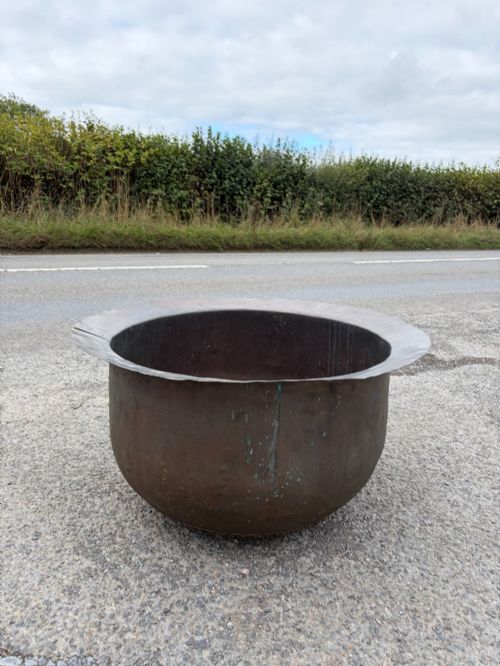
A copper wash pot represents the heavy utilitarian vessels utilised during the nineteenth century for boiling laundry, cooking, and large-scale household tasks. These pieces frequently manifest as large pots, cauldrons, boilers, and grain measures spanning periods from the early eighteen hundreds through the Victorian era.
Buyers browsing this selection commonly encounter large nineteenth century copper pots and heavy boilers alongside repurposed forms functioning as log bins and garden planters. The inventory spans English and French origins, encompassing rustic farmhouse and industrial utility styles defined by honest, hard-working domestic service.
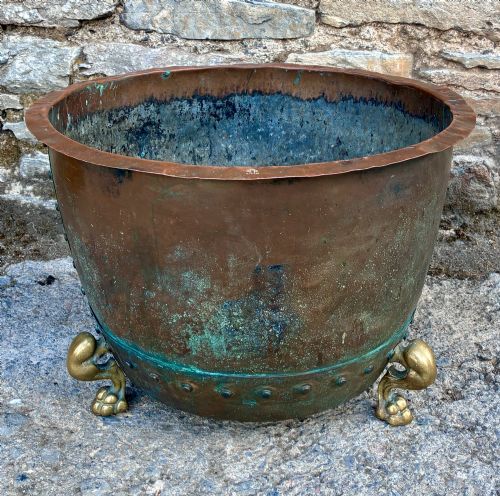
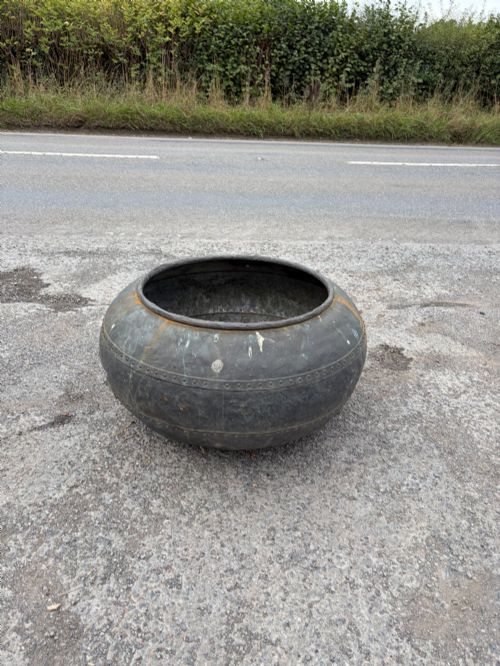
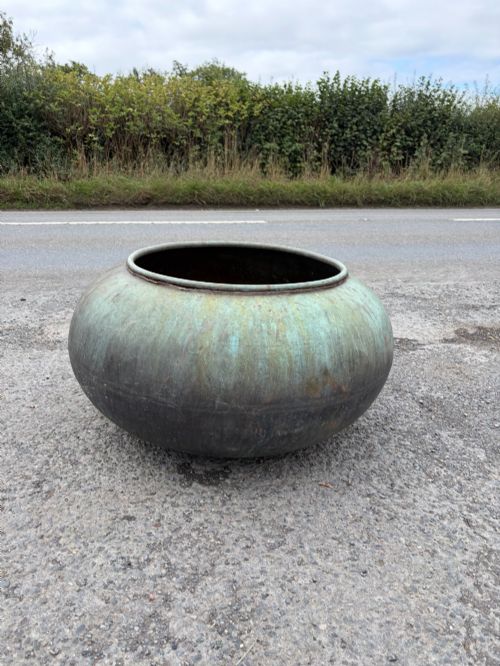
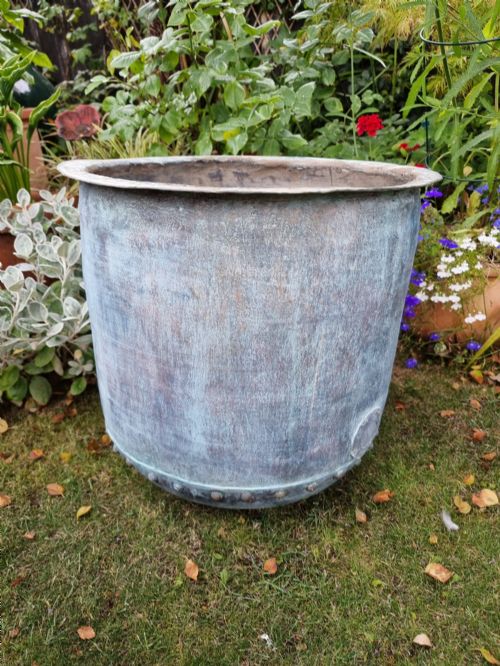
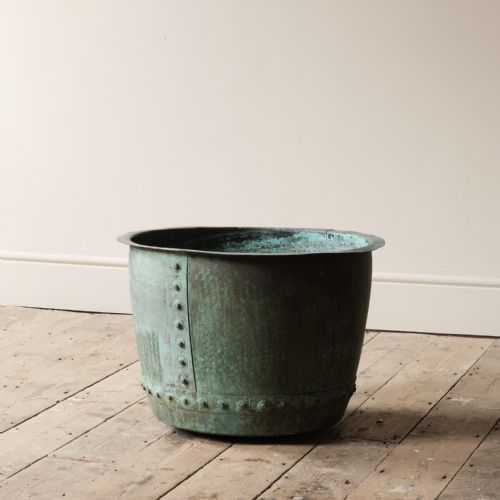
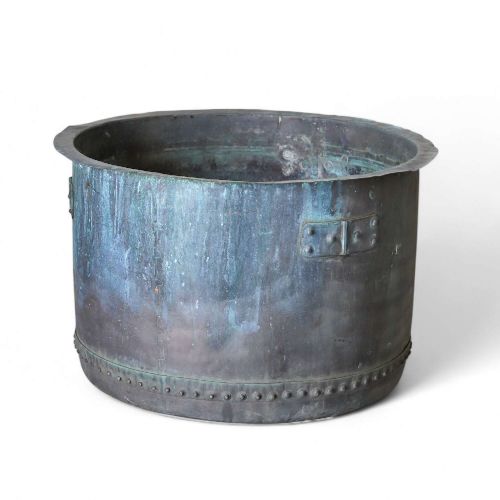
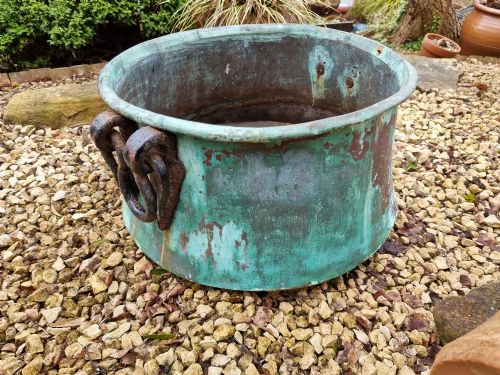
Many survivors retain iron handles, riveted seams, and aged verdigris surfaces that reveal their original practical function. While originally built for heavy domestic labour, these robust metal vessels now find renewed purpose in modern interiors as statement log baskets and large-scale planters.
Materials and construction methods
Makers constructed these vessels primarily from heavy gauge sheet copper, selected for its thermal conductivity and resistance to corrosion during prolonged boiling tasks. Craftsmen hammered and shaped the metal sheets by hand before joining the body panels with neat rows of hand-driven copper rivets.
Structural reinforcement frequently relied upon wrought iron and cast iron components, including swing handles, rims, and base bands that provided rigidity under heavy loads. Brass details occasionally appear on specific vessels, adding contrasting metal tones to the warm reddish hue of the primary copper body.
Surface finishes developed naturally through decades of practical use, moisture exposure, and polishing, leaving rich patinas that range from bright metallic warmth to deep verdigris encrustation. Protective painted elements or steel reinforcements occasionally supplement the primary copper and iron construction on later nineteenth century pieces.
Copper Wash Pot Retail Price Guide 2026
Typical asking prices for copper wash pot among the pieces listed under this phrase on Sellingantiques today, from the lower quarter to the upper quarter. They describe what is for sale here now, not the wider market.
Several heavy grain measures bear stamped numerical inventory marks from their days of commercial agricultural service.
Distinctions in construction and preservation
The standard of a nineteenth century copper wash pot depends heavily on the integrity of its original hand-riveted seams and the thickness of the metal sheet. Heavier gauge copper resists denting and maintains structural soundness better than thinner alternatives, ensuring the vessel survives centuries of use without failing.
Preservation of original hardware, such as wrought iron swing handles and iron support bands, elevates the integrity of an individual piece. Evidence of original manufacturing marks, maker stamps, or untouched natural patina rather than aggressive modern cleaning preserves the historical character of the object.
The Copper Wash Pot Glossary
- Verdigris
- A green patina or crust forming naturally on copper and brass surfaces through atmospheric weathering and oxidation over long periods. This chemical layer often adds considerable visual charm and confirms genuine antique age.
- Riveted
- A method of joining sheet metal panels by inserting metal pins through overlapping edges and hammering the ends flat. Hand-riveted seams are a hallmark of nineteenth-century utilitarian construction.
- Cauldron
- A large round metal pot with a wide opening, usually fitted with an iron swing handle for hanging or lifting. These heavy vessels were standard equipment for boiling laundry or large quantities of liquid.
- Grain measure
- A standardised cylindrical metal vessel utilised for measuring agricultural produce such as grain or seeds. These containers display robust construction and stamped capacity numbers.
- Patina
- The surface sheen, colour variation, and wear accumulated by an object through age and handling. A rich natural patina reflects decades of domestic use.
Copper Wash Pot: Frequently Asked Questions
What were copper wash pots originally used for?
These large metal vessels served demanding domestic tasks such as boiling laundry, heating water, and preparing foodstuffs over open fires or dedicated ranges.
Households relied on their thermal properties and large capacities to handle heavy daily chores before modern plumbing and electrical appliances existed.
How do I clean an antique copper pot?
Gentle washing with warm soapy water and a soft cloth removes everyday dust without disturbing the historic surface condition.
Avoid harsh chemical dips or aggressive metal polishes that strip away the authentic patination and historical character accumulated over centuries.
Can these pots be used outdoors as planters?
Many examples function effectively as garden planters or log bins due to their durable copper and iron construction.
Exposure to outdoor elements will naturally continue the weathering process, deepening the verdigris finish over time.
How can I tell the age of a copper pot?
Examination of construction techniques, such as hand-driven rivets and hand-beaten sheet metal, points toward nineteenth-century manufacturing methods.
Associated iron hardware styles, material thickness, and recorded period markers help distinguish early nineteenth-century pieces from later Victorian utility items.