






Copper Frame Wall Mirror
A copper frame wall mirror brings warmth and hand-worked texture to a room, offering both practical reflection and distinctive period character.
Copper Frame Wall Mirror
A copper frame wall mirror is primarily a product of the Arts and Crafts movement, spanning the late nineteenth century through the Edwardian period and into the nineteen-twenties. These pieces showcase hand-wrought metalwork, often featuring beaten surfaces or applied decorative motifs that reflect the ideals of craftsmanship over mass production.
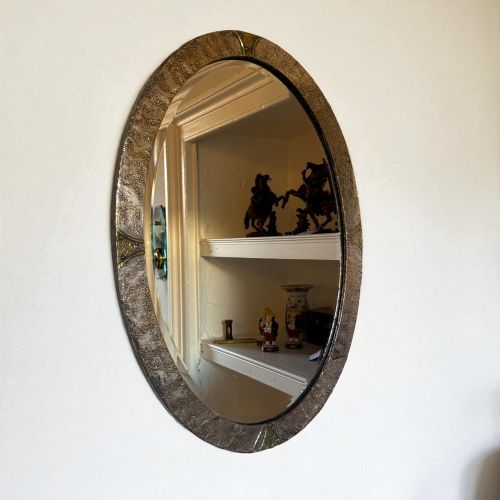
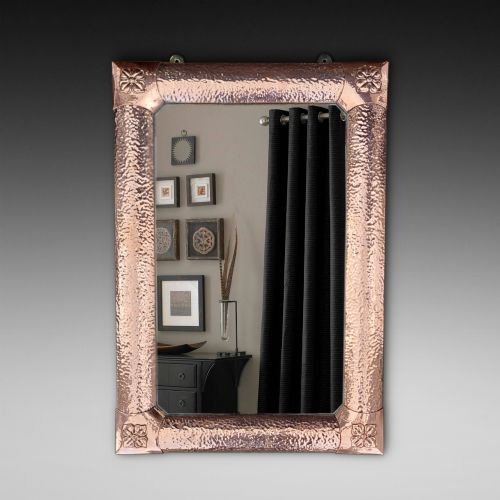
The versions most commonly met on this page include rectangular and oval wall mirrors framed in hammered or beaten copper, sometimes accented with brass, oak, or ceramic cabochons. Originating largely from the period around nineteen hundred, they frequently incorporate bevelled glass and riveted construction.
Alongside Arts and Crafts examples, the selection includes Art Deco designs from the nineteen-thirties, utilising blue glass panels set with copper. These later pieces offer cleaner geometric lines while maintaining the characteristic metallic warmth of the earlier works.
How they were made
Makers constructed these frames using sheet copper, shaping the metal by hand through hammering and beating techniques that left visible tool marks on the surface. Rivets and brass mounts often secured the metal panels to wooden backing structures, typically oak.
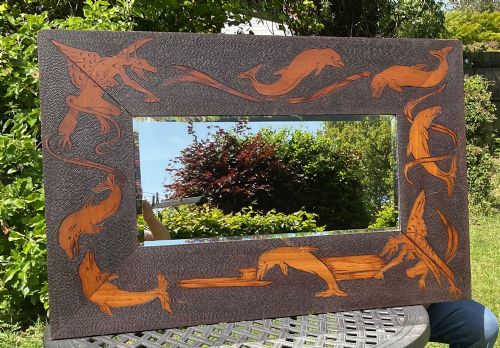
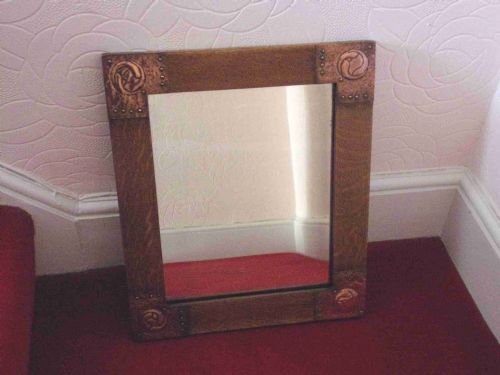
Glass plates, frequently featuring bevelled edges to catch the light, were set within the metal frames and held by internal wooden rebates. Additional decorative elements, such as Celtic knots, dragon and dolphin motifs, or Ruskin ceramic cabochons, were integrated into the metalwork to enhance the visual depth.
Copper Frame Wall Mirror Retail Price Guide 2026
Typical asking prices for copper frame wall mirror among the pieces listed under this phrase on Sellingantiques today, from the lower quarter to the upper quarter. They describe what is for sale here now, not the wider market.
Marine life and mythology find their way into domestic hallways via mirrors decorated with beaten dragons and dolphins.
What varies in quality
The distinction between standard production and exceptional work lies in the depth and complexity of the hand-beaten metalwork. Superior examples display confident, varied texturing by skilled hands rather than uniform mechanical stamping, alongside thoughtful integration of secondary materials like brass or ceramic cabochons.
Construction methods also separate the ranges, with better pieces utilising substantial oak frames and secure rivet work to support the weight of the mirror glass. The inclusion of specialised elements, such as Ruskin cabochons or attribution to prominent firms like Liberty and Co, elevates the artistic standing of an individual mirror.
Liberty and Co·Ruskin
The Copper Frame Wall Mirror Glossary
- Bevelled glass
- Glass with an angled edge polished around the perimeter, creating a framed effect within the glass itself. This technique adds depth to the reflection and catches the light.
- Arts and Crafts
- A design movement spanning the late nineteenth and early twentieth centuries that emphasised handcraft, traditional materials, and simple forms. It rejected mass production in favour of visible maker skill.
- Ruskin cabochon
- A polished, unfaceted ceramic stone with a rounded top, produced by the Ruskin pottery. These colourful glazed inserts frequently adorn the copper frames of the period.
- Art Deco
- A style of visual arts originating in the nineteen-twenties that favoured streamlined geometric forms and modern industrial materials. It succeeded the organic motifs of the Arts and Crafts movement.
Copper Frame Wall Mirror: Frequently Asked Questions
How do I date a copper mirror?
Dating relies on stylistic markers and construction methods, moving from the organic, hand-beaten motifs of the Arts and Crafts period around nineteen hundred to the geometric lines of Art Deco pieces from the nineteen-thirties.
Examination of the backing wood, typically oak in earlier pieces, and the nature of the metal rivets also helps determine the era of manufacture.
Are these mirrors heavy to hang?
Due to the combination of solid oak framing, sheet copper, and thick mirror glass, many of these pieces possess considerable weight. Proper wall anchors and sturdy fixings are essential for secure placement.
Checking the internal wooden backing ensures the hanging wire or brackets remain firmly anchored to the frame.
What is the difference between Arts and Crafts and Art Deco?
Arts and Crafts pieces emphasise visible hand-working, hammered copper textures, and nature-inspired motifs such as Celtic knots or dragons. They originate mostly from the late Victorian and Edwardian eras.
Art Deco works from the nineteen-thirties favour streamlined geometric patterns, smooth surfaces, and contrasting materials like blue glass panels.
How should I clean a copper frame?
Cleaning requires a gentle approach to preserve the natural patina developed over a century or more. Harsh metal polishes remove the aged surface character that collectors value.
Dusting with a soft, dry cloth is usually sufficient for regular maintenance of both the copper frame and the glass.