





Copper Fire Basket
These copper fire basket pieces bring warmth and texture to a hearth, combining sturdy metalwork with practical daily storage for logs and coal.
Copper Fire Basket
When you search for copper fire basket items, you encounter a selection of vessels designed to hold fuel or serve as planters near a hearth. These items include log bins, coal buckets, and fire buckets spanning Georgian, Victorian, and Arts and Crafts periods.
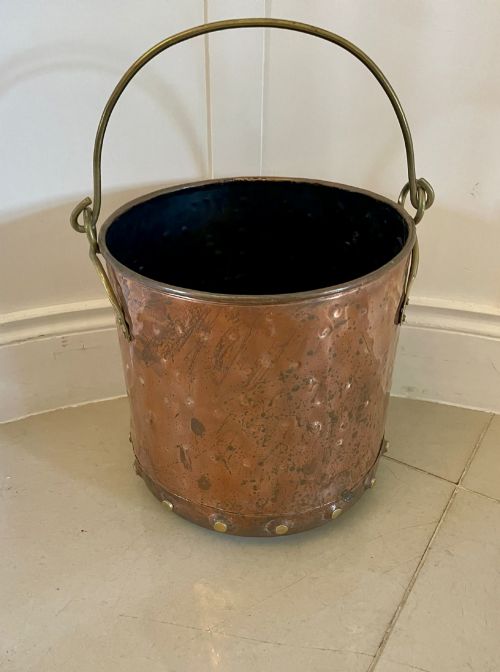
The versions you are most likely to meet on this page are nineteenth century copper log bins and riveted coal buckets. Many pieces incorporate brass handles, iron accents, or leather construction reflecting Victorian and rustic farmhouse styles.
How they were made
Makers shaped these vessels primarily from sheet copper, often joining the body with visible metal rivets for structural strength. Iron and brass components such as handles, bands, and studs were added to reinforce the structure and handle heavy loads of wood or coal.
Some specialised examples utilise boiled leather fitted with copper studs, demonstrating alternative utility as fire buckets or waste paper baskets. Metal surfaces show hand-beating and shaping techniques typical of nineteenth century country and Arts and Crafts workshops.
Copper Fire Basket Retail Price Guide 2026
Typical asking prices for copper fire basket among the pieces listed under this phrase on Sellingantiques today, from the lower quarter to the upper quarter. They describe what is for sale here now, not the wider market.
Listings feature copper, brass, iron, and boiled leather across Victorian, Georgian, and Arts and Crafts styles.
What varies in quality
The distinction between ordinary and superior examples lies in the weight of the metal and the integrity of the construction. Thicker gauge copper maintains its form under heavy use, while robust riveted joints and original brass fittings indicate higher standards of period craftsmanship.
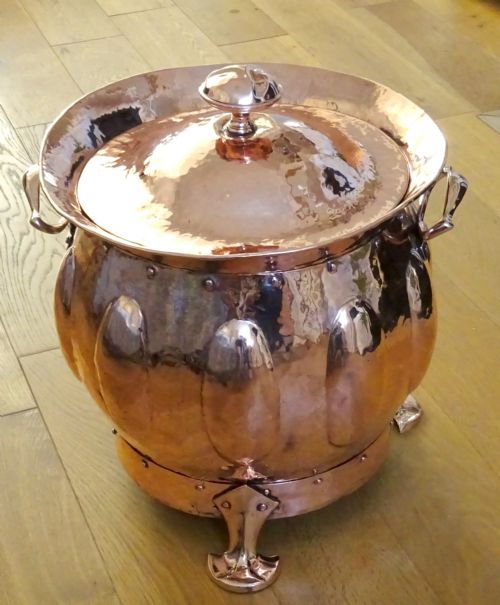
Design complexity also separates standard utility buckets from decorative pieces, particularly within Arts and Crafts and Art Nouveau items. Enhanced visual appeal often comes from deliberate shaping, patination, and the integration of mixed metals like brass and iron.
The Copper Fire Basket Glossary
- Log bin
- A deep vessel designed for holding firewood beside a fireplace. These containers often feature drop handles and sturdy bases to facilitate moving heavy logs.
- Coal bucket
- A metal container used to transport and store coal for domestic fires. They frequently incorporate pivoting handles and smaller footprints than log bins.
- Riveted
- Joined together using metal pins hammered flat to secure overlapping sheets. This technique provides both structural strength and a distinct industrial aesthetic.
- Arts and Crafts
- A design movement emphasising handcraftsmanship and simple forms. Objects from this period often display honest construction methods and understated surface decoration.
Copper Fire Basket: Frequently Asked Questions
What were copper fire buckets used for?
These buckets served a practical role in transporting fuel to the hearth or storing coal and logs nearby. In earlier periods, similar leather and metal vessels were also kept ready filled with water for extinguishing domestic fires.
Over time, many of these containers transitioned from utilitarian duties to decorative interior accessories. Today, they function primarily as hearthside storage for firewood or as large planters.
How do I date a copper log bin?
Dating relies on observing construction methods, material combinations, and stylistic markers recorded across the pieces. Georgian examples often display simpler, heavier forms with specific studwork, while Victorian and Arts and Crafts items introduce varied handles and surface textures.
Changes in manufacturing techniques, such as the shift from hand-riveted heavy plates to later machine-assisted production, also help narrow down the period. Comparing the specific brass or iron hardware provides further clues to the decade of manufacture.
Can I use these outdoors as planters?
Many large nineteenth century vessels and log bins find a second life as garden planters. Their robust copper and brass construction withstands outdoor environments while developing a natural verdigris over time.
Ensure adequate drainage if planting directly into the metal, or use the vessel as an outer cachepot for potted plants. The weight of the copper helps keep the planter stable in open garden settings.
How do I clean antique copper?
Maintenance depends entirely on personal preference regarding the surface finish and historic patination. Light dusting with a dry cloth is usually sufficient to remove daily accumulation without disturbing the aged surface.
Avoid harsh abrasive cleaners that strip away the character built up over centuries of use. Preserving the natural tone ensures the metal retains its historical appearance within a room.