


Copper Desk Light
These copper desk light examples combine utilitarian metalwork with period design, offering practical illumination and robust desk presence.
Copper Desk Light
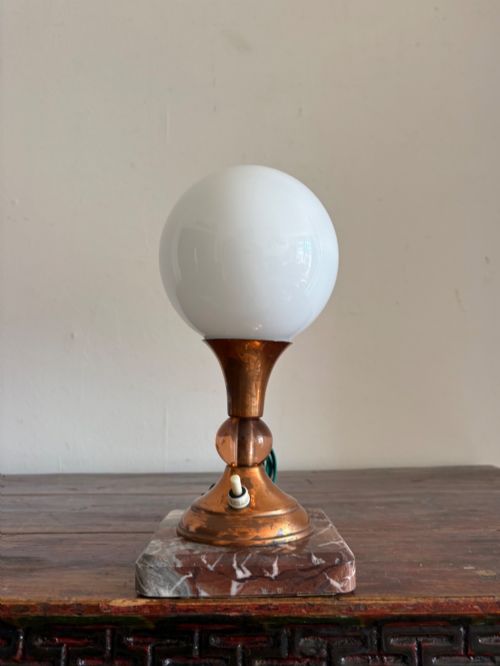
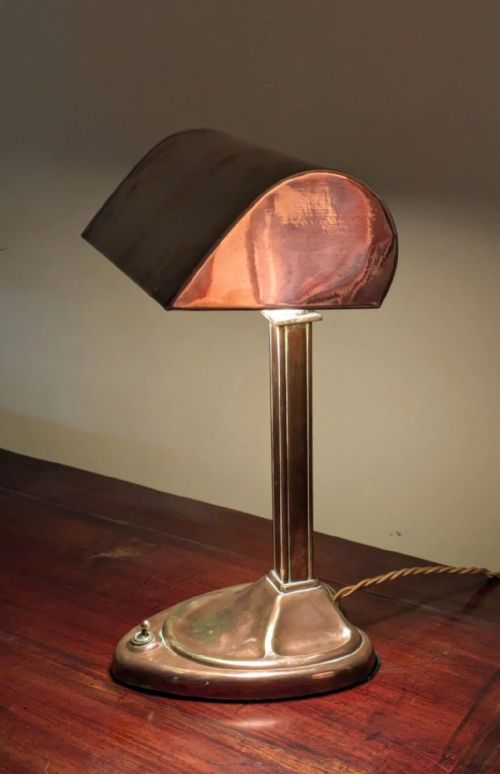
A copper desk light provides focused illumination for writing surfaces while introducing warm metallic tones to a study or workspace. These functional objects range from straightforward Edwardian adjustable designs to more decorative Art Deco forms mounted on marble bases.
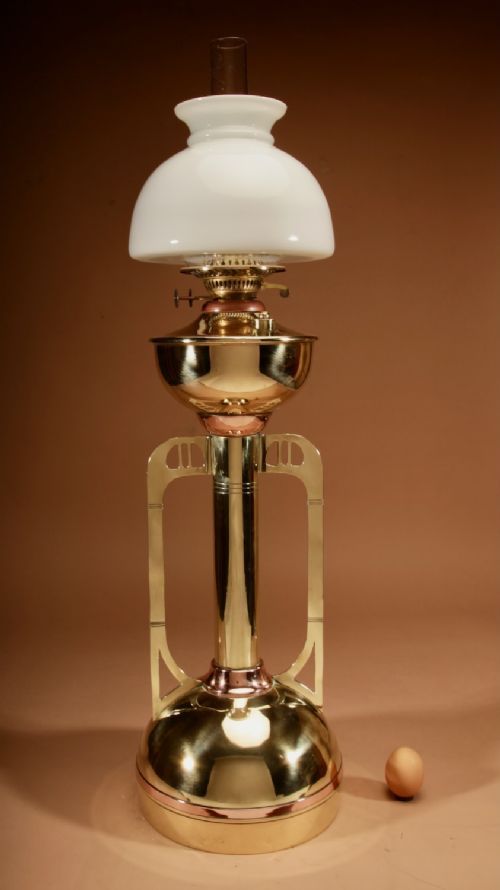
The pieces on this page draw from several periods, including the Victorian era, 1900, and the 1920s. Alongside dedicated desk lamps, the selection includes related lighting forms such as table lamps and converted oil lamps that serve a similar domestic role.
How they were made
Makers constructed these lights primarily from copper and brass, often combining the two metals to create structural contrast and durability. Patinated finishes appear frequently, achieved through chemical treatment or natural ageing of the metal surface.
Many examples incorporate glass elements such as opaline or vaseline shades to diffuse the light evenly across a workspace. Heavier bases utilise materials like marble to stabilize adjustable arms and upright stems.
Listings feature pieces spanning from the 19th Century through to the 1920s, incorporating styles from Art Nouveau to Maritime.
What varies in quality
The distinction between standard production and finer work rests on the precision of the metal shaping and the integrity of the period details. Pieces designed by recognised workshops or figures display greater attention to the proportional balance between shade, stem, and base.
Material selection also defines the tier of a piece, particularly where heavy marble plinths, specialised glass shades, or complex patination are employed. Superior examples retain their original components and mechanisms without clumsy modern replacements.
Gustave Serrurier Bovy·Jan Eisenlöffel·WMF·Benson
The Copper Desk Light Glossary
- Opaline glass
- A type of semi-opaque glass often used for lamp shades to soften and diffuse light. It typically appears in white or pastel tones.
- Patinated copper
- Copper that has developed a controlled surface oxidation through age or chemical treatment. This process deepens the colour and protects the underlying metal.
- Amsterdam School
- An architectural and design movement from the early twentieth century characterised by expressive forms and rich brickwork or metal detailing. Works from this style often feature bold silhouettes.
- Arts and Crafts
- A design movement valuing traditional craftsmanship and simple forms over mass production. Objects from this tradition emphasise honest construction and visible material qualities.
- Secessionist
- A Central European stylistic movement that rejected historicism in favor of geometric clarity and modern ornamentation. It frequently employs clean lines alongside traditional metals.
Copper Desk Light: Frequently Asked Questions
How do I care for a copper desk light?
Dust the metal gently with a soft dry cloth to prevent the accumulation of grime. Avoid abrasive cleaners that might strip away the historic patina.
Keep electrical components checked by a qualified professional if the lamp is wired for modern use. Protect marble bases from acidic spills and moisture.
Were these lights originally electric?
Many early pieces began as paraffin or oil lamps before later conversion to electricity. This evolution is common in lighting surviving from the nineteenth and early twentieth centuries.
Converted pieces often retain their original burners, reservoirs, or galleries alongside modern wiring. Such adaptations allow historic metalwork to continue functioning in contemporary interiors.
How do I identify an Edwardian desk light?
Edwardian examples typically date from the first decade of the twentieth century and often feature adjustable arms for directional utility. They frequently combine copper with brass or incorporate glass shades.
Stylistic restraint distinguishes them from heavier Victorian designs, while the construction remains entirely metal-based prior to later synthetic introductions.
What styles are common in these listings?
The selection spans several distinct aesthetic movements from the nineteenth and early twentieth centuries. Art Deco and Arts and Crafts pieces appear alongside earlier Victorian and George III forms.
Continental influences are also represented through Secessionist and Amsterdam School designs. Each style brings a different approach to metal shaping and proportion.