




Copper Brass Standing Lamp
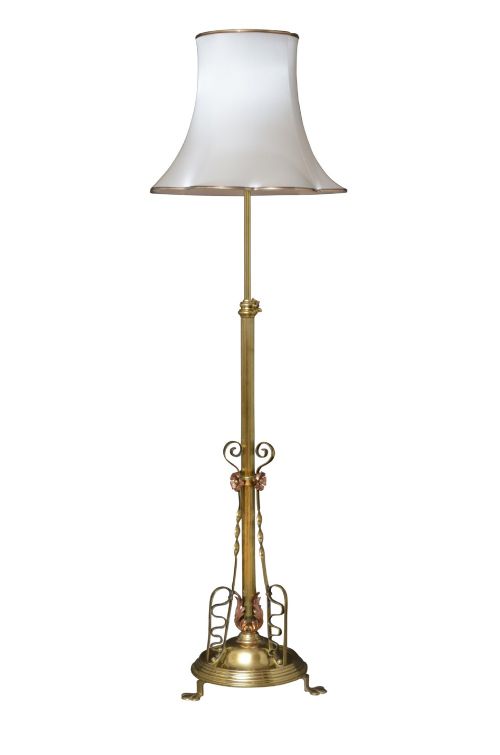
These copper brass standing lamp pieces combine warmth of metal and height for reading, bringing period character to any room.
Copper Brass Standing Lamp
A copper brass standing lamp provides downward or ambient illumination from a raised position using mixed metals. These vertical light fittings originate across the Victorian, Edwardian, and nineteenth-century periods, spanning the years from eighteen-fifty to nineteen hundred.
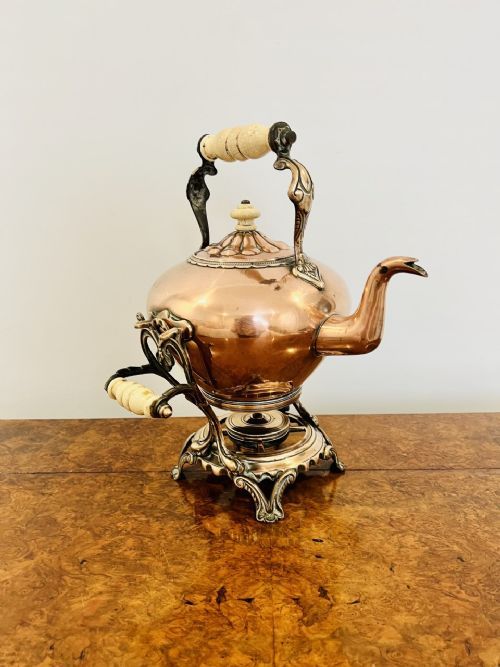
The selections on this page encompass standard lamps, floor lamps, and floor-standing oil lamps alongside related kettle forms on stands. They emerge within distinct aesthetic traditions including Arts and Crafts and Art Nouveau designs.
Makers and craftsmen utilise brass and copper extensively, occasionally incorporating cranberry glass, bone, and fabric elements. Pieces frequently feature height adjustment, telescopic mechanisms, or extending frames to alter the vertical reach.
What varies in quality
The calibre of a standard lamp rests upon the weight of its metal components and the precision of its adjustable mechanisms. Telescopic actions and extension joints operate smoothly on superior examples without slackness in the upright shaft.
Design execution distinguishes standard production from notable workshop output, particularly within Art Nouveau and Arts and Crafts pieces. The integration of contrasting materials such as cranberry glass or bone handle details elevates the sophistication of the construction.
Some nineteenth-century domestic copper kettles arrive mounted on tall stands, doubling as elevated water heaters before electricity reached the floor lamp.
W A S Benson
The Copper Brass Standing Lamp Glossary
- Standard lamp
- A tall floor-standing lighting fixture designed to illuminate a room from a vertical post. These objects support oil burners or electric fittings at height.
- Telescopic
- Describing a shaft composed of nested tubes that slide within one another to adjust overall height. This mechanism allows the user to raise or lower the light source.
- Art Nouveau
- A design style from around nineteen hundred characterised by organic flowing lines and natural plant motifs. This movement influences the curvature of the metalwork.
- Arts and Crafts
- A movement prioritising visible construction, honest materials, and handcrafted metalworking traditions. Objects from this tradition display straightforward assembly and utility.
- Cranberry glass
- A rich pinkish-red glass created by adding gold chloride to the molten batch. It frequently forms the oil font reservoir on nineteenth-century lighting.
Copper Brass Standing Lamp: Frequently Asked Questions
What is a standard lamp?
A standard lamp is a tall floor-standing lighting fixture designed to provide illumination from an elevated position in a room. These objects support either oil reservoirs or electric fittings upon a vertical metal shaft.
Such pieces rest directly on the floor and often incorporate weighted bases to maintain balance while extended to various heights.
How do I use a telescopic lamp?
Telescopic standard lamps feature adjustable vertical sections that slide upward or downward to alter the total height of the light source. Users loosen a thumbscrew or collar, position the shaft at the desired level, and secure it in place.
This mechanism allows the lamp to adapt to different seating arrangements and ceiling heights within a Victorian or Edwardian interior.
What materials make up these lamps?
These floor-standing pieces combine brass and copper elements, utilising sheet metal alongside cast components for stability and structure. Some nineteenth-century examples incorporate cranberry glass fonts, bone details, and fabric shades.
The juxtaposition of warm copper tones with polished brass creates the characteristic visual contrast found across Victorian and Arts and Crafts lighting.