

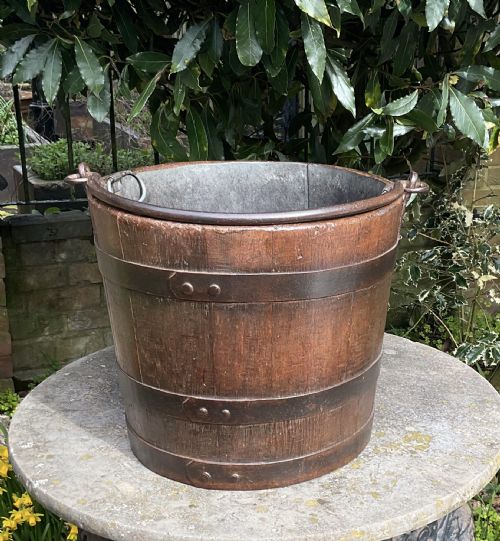


Coopered Wood Bucket
A coopered wood bucket brings sturdy craftsmanship and traditional warmth to a room, serving as a wine cooler, log bin, or planter.
Coopered Wood Bucket
A coopered wood bucket is a vessel constructed from vertical wooden staves held tightly together by metal bands, drawing on historical methods used by traditional coopers. When searching for a coopered wood bucket, you encounter forms that range from refined Georgian wine coolers on stands to rustic oak log bins and Dutch tea stoves.
The pieces on this page span several distinct periods, from eighteenth-century George III designs to early twentieth-century examples. Many double as jardinieres or peat buckets, reflecting how domestic utility merged with decorative display in past centuries.
How they were made
The construction relies on shaped wooden staves fitted edge-to-edge to form a watertight or structurally sound cylinder, secured by strong metal bands of brass or iron. Makers utilised timbers such as mahogany, oak, and walnut, often selecting woods that responded well to tight jointing and heavy daily use.
Metal furniture like swing handles, liners, and decorative studs completed the build, ensuring the vessels could hold peat, ice, logs, or soil without shifting. The exterior surfaces were frequently polished or left with a natural grain, depending on whether the destination was a formal dining room or a hearthside.
Coopered Wood Bucket Retail Price Guide 2026
Typical asking prices for coopered wood bucket among the pieces listed under this phrase on Sellingantiques today, from the lower quarter to the upper quarter. They describe what is for sale here now, not the wider market.
Listings feature items spanning from the eighteenth century to the twentieth century, utilising materials including mahogany, oak, walnut, brass, and iron.
What varies in quality
Quality in these vessels rests upon the precision of the stave joints and the proportion of the metal binding to the timber body. Finer examples display carefully selected mahogany or walnut with tight, clean staves, whereas simpler utilitarian versions rely on rugged oak with heavier iron bands.
The presence of original fittings, such as brass hoops, drop handles, and fitted metal liners, elevates a piece significantly. Workshop skill shows in how smoothly the taper of the bucket is handled and how securely the metal bands compress the wooden staves.
The Coopered Wood Bucket Glossary
- Coopered
- Built from fitted vertical wooden staves bound together by metal bands. This technique was traditionally used for barrels, buckets, and casks.
- Teestoof
- A Dutch foot warmer or peat bucket used in past centuries. They often feature characteristic brass mounts and swing handles.
- Wine cooler
- A large vessel used to chill bottles for the dining table. Georgian examples often take the form of highly polished mahogany coopered buckets on stands.
- Stave
- One of the narrow vertical strips of wood that form the sides of a coopered vessel. The edge-matching requires considerable joinery skill.
Coopered Wood Bucket: Frequently Asked Questions
What were coopered buckets originally used for?
These vessels served practical household roles such as carrying coal for fires, holding peat for stoves, or icing wine bottles at the dining table.
Over time, many of these utilitarian containers transitioned into decorative items like plant holders and log bins.
How do I tell a wine cooler from a log bin?
Wine coolers from the Georgian period often feature finer timber like mahogany, brass bands, and sometimes dedicated stands or lead linings.
Log bins and peat buckets tend to utilise sturdier oak or walnut with simpler iron bands designed for heavy hearthside use.
Can I use these buckets for plants?
Many of these pieces function well as planters or jardinieres, provided you use an internal pot to protect the historic wood from moisture.
Checking the interior for a metal liner helps determine if the vessel was originally intended to hold damp materials.
How do I care for antique coopered wood?
Keep the wood away from direct heat sources and sudden temperature changes to prevent the staves from shrinking and loosening the metal bands.
Applying a suitable wax occasionally helps maintain the lustre of the timber without damaging the historic finish.