

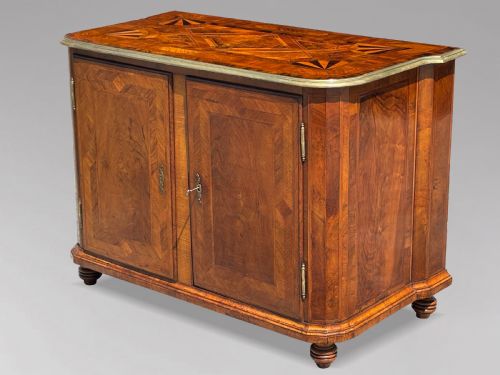


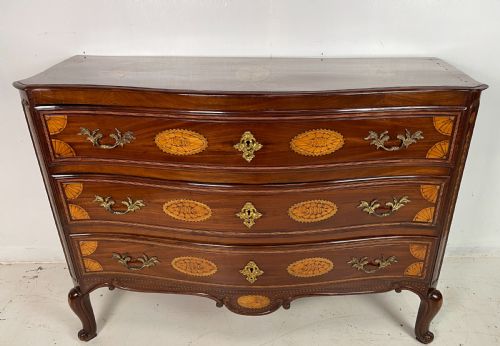


Continental Inlaid Cabinet
A continental inlaid cabinet brings centuries of European joinery and detailed marquetry directly into a room.
Continental Inlaid Cabinet
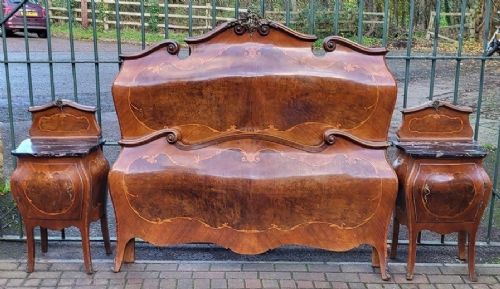
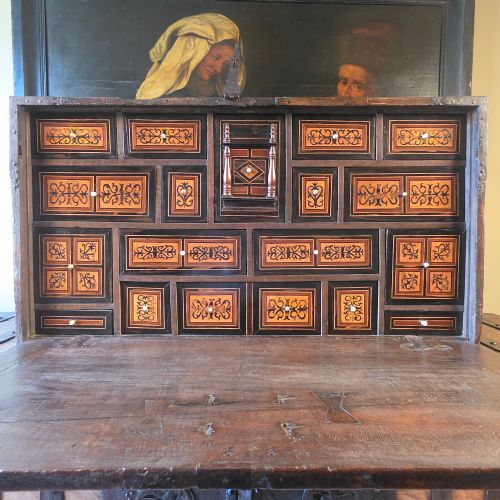
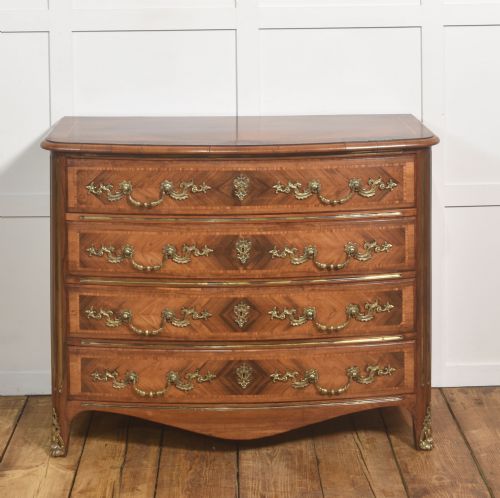
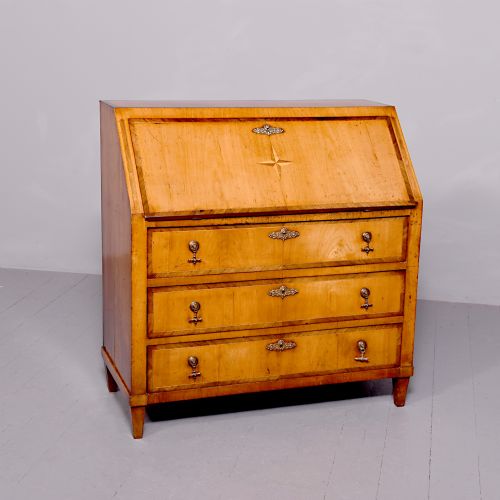
A continental inlaid cabinet encompasses chest of drawers, side cabinets, bureaux, and armoires originating from various European regions across multiple centuries. Buyers looking for a continental inlaid cabinet frequently encounter walnut and fruitwood examples featuring marquetry, parcel gilding, and contrasting veneers.
The selection ranges from early seventeenth-century German and Maltese designs to eighteenth-century Baroque, Rococo, and Neoclassical forms, alongside nineteenth-century French Louis XV style commodes. Bureau bookcases, tabletop escritosires, and bombe commodes further broaden the scope of pieces found within this category.
Regional diversity shapes the selection, with Dutch, German, Italian, French, and Austrian makers each utilising distinct proportions and decorative vocabulary. These storage pieces function primarily as statement furniture that combines practical compartment storage with elaborate surface decoration.
Materials and Construction
Cabinet makers constructed carcass frames in foundational timbers such as oak, walnut, and mahogany, applying fine veneers over the primary structure. Fruitwood inlay, satin birch, and rosewood formed complex pictorial or geometric marquetry patterns across drawer fronts and doors.
Surface enhancement often included ormolu mounts, brass hardware, marble tops such as Carrera marble, and parcel gilt detailing. Joinery techniques varied from block fronts and serpentine shapes to bombe curves requiring specialised wood-bending and veneering skill.
Continental Inlaid Cabinet Retail Price Guide 2026
Typical asking prices for continental inlaid cabinet among the pieces listed under this phrase on Sellingantiques today, from the lower quarter to the upper quarter. They describe what is for sale here now, not the wider market.
Listings feature walnut, fruitwood, and kingwood timbers alongside marble tops and brass or ormolu mounts across several European periods.
Assessing Quality
Quality rests primarily on the precision of the marquetry cutting and the stability of the underlying timber structure against seasonal humidity changes. Superior examples exhibit seamless integration between the veneer patterns and the architectural contours of the cabinet body.
The sophistication of the hardware, the integrity of original marble surfaces, and the crispness of carved details distinguish master workshop output from simpler regional production. Furthermore, balanced proportions across serpentine or bombe profiles indicate higher cabinet-making proficiency.
The Continental Inlaid Cabinet Glossary
- Marquetry
- Decorative patterns formed by fitting together thin slices of wood veneer and other materials onto a structural carcass. This technique allows for complex pictorial scenes or floral motifs across cabinet doors and drawer fronts.
- Bombe
- A swollen or bulging convex shape characteristic of advanced case furniture construction from the Baroque and Rococo periods. Makers achieved this contoured profile through shaped framing timbers and curved drawer fronts.
- Ormolu
- Gilded bronze mounts applied to furniture edges, corners, and feet for decorative accent. This material adds metallic contrast to dark walnut and mahogany surfaces.
- Bureau
- A desk fitted with a sloping writing flap that conceals internal pigeonholes and small drawers. Many examples stand on chest bases or incorporate bookcase upper sections.
Continental Inlaid Cabinet: Frequently Asked Questions
How do I date an inlaid cabinet?
Dating relies on examining the secondary timbers used inside drawer linings, the style of the joinery, and the decorative vocabulary of the marquetry. Structural traits such as hand-cut dovetails and regional tool marks provide clear clues to the century of manufacture.
Historical context also helps determine age, as specific periods favoured bombe curves, floral marquetry, or architectural pediments. Comparing these elements with documented regional pieces narrows the timeframe.
Where were these cabinets made?
Production centres spanned across continental Europe, with notable workshops operating in Germany, France, Italy, Holland, and Austria. Each region developed distinct preferences for specific woods, such as walnut in Germany and Italy or exotic veneers in France.
Local design movements, from Dutch Baroque to the Vienna Biedermeier period, further defined the geographic origin of individual pieces. Cabinet makers adapted regional tastes to create recognizable local styles.
How should I care for antique veneer?
Maintaining veneer requires stable indoor humidity and temperature to prevent the wood from expanding or shrinking excessively. Keeping cabinets away from direct sunlight and heat sources protects the fragile fruitwood and marquetry from fading or lifting.
Applying microcrystalline wax periodically preserves the polish without building up heavy residue. Gentle dusting with a soft, dry cloth is sufficient for routine maintenance.