




Continental Inlaid Bureau
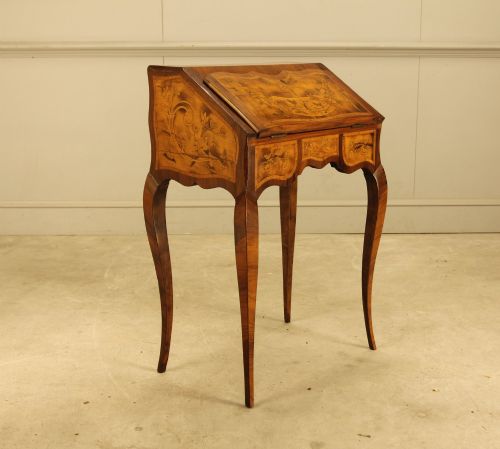
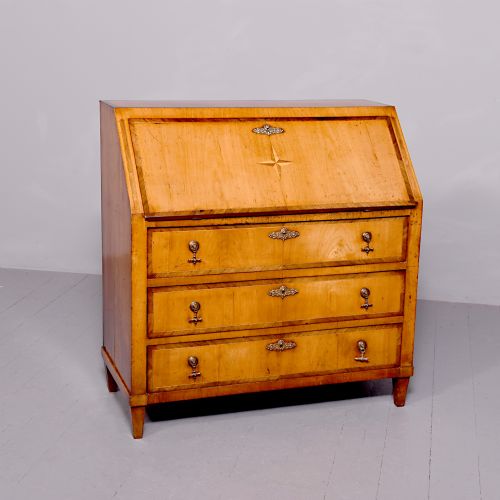
A continental inlaid bureau offers a sloping fall-front desk combined with rich marquetry and walnut surfaces.
Continental Inlaid Bureau
A continental inlaid bureau provides a practical writing surface alongside enclosed storage, appearing in forms such as bureau bookcases, tabletop cabinets, and writing bureaux. These pieces combine fitted internal compartments with drawers or cupboards below.
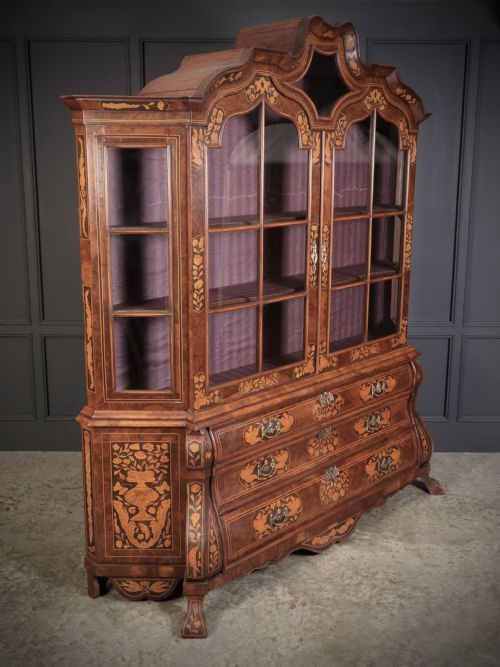
The materials and styles span walnut, fruitwood, rosewood, and brass, taking forms from Dutch Baroque and South German Baroque to 18th century Italian and Neoclassical designs. Many examples feature intricate marquetry and inlay work across the fall-front and drawer fronts.
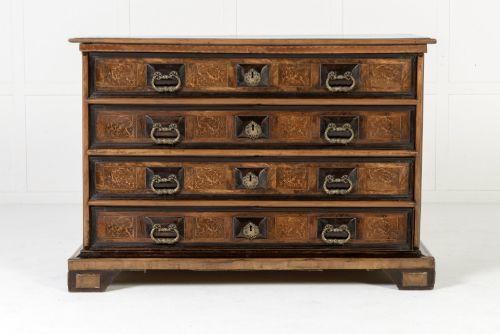
Buyers encountering this page will find bureau cabinets, chest of drawers, and bombé shaped cabinets alongside standard bureaux. The construction dates range from the seventeenth century through the nineteenth century and into the early twentieth century.
Materials and construction
Cabinet makers utilised solid woods and veneers, selecting walnut, burr walnut, rosewood, and fruitwood as the primary surfaces. These timbers provided rich grain patterns suitable for detailed cutting and matching.
Inlay and marquetry techniques formed pictorial or geometric designs across the exterior, employing contrasting woods. Brass hardware such as handles and escutcheons completed the structural assembly of the drawers and doors.
Continental Inlaid Bureau Retail Price Guide 2026
Typical asking prices for continental inlaid bureau among the pieces listed under this phrase on Sellingantiques today, from the lower quarter to the upper quarter. They describe what is for sale here now, not the wider market.
One tabletop escritoire even incorporates a revolving tabernacle for secret storage.
Quality variations
The standard of workmanship shows in the precision of the marquetry and the choice of veneers, where burr walnut and multi-wood fruitwood inlay demand advanced cabinet-making skill. Superior pieces exhibit seamless alignment across drawers and fall-fronts.
Structural complexity influences the character of the piece, distinguishing simpler writing bureaux from elaborate bureau bookcases with revolving tabernacles or bombé profiles. The depth of historical detail in the regional styles, from Dutch to South German traditions, affects the visual weight.
The Continental Inlaid Bureau Glossary
- Bureau
- A writing cabinet featuring a sloping lid that opens to form a desk and covers internal pigeonholes and small drawers.
- Marquetry
- Decorative veneer work arranged in patterns or pictures using thin slices of wood and other materials.
- Bombé
- A swelling, outward-curving contour found on the front and sides of certain chests and cabinets.
- Escritoire
- A writing desk, often taking the form of a cabinet with drawers and a fold-down flap.
- Burr walnut
- Wood taken from a walnut tree outgrowth, prized for its swirling, highly figured grain pattern.
Continental Inlaid Bureau: Frequently Asked Questions
What is a continental inlaid bureau?
A continental inlaid bureau is a writing desk with a sloping fall-front lid, originating from European workshops and decorated with wood inlay or marquetry.
These pieces typically include interior compartments for papers alongside lower storage drawers or cupboard space.
How were these bureaux used?
Owners used them for correspondence and record keeping, folding down the sloping front to serve as a writing surface.
When closed, the cabinet concealed private papers and kept the room tidy while displaying decorative wood veneers.
How do I identify Dutch marquetry?
Dutch marquetry often displays floral and foliage patterns executed in lighter fruitwoods against a darker walnut or rosewood background.
These designs frequently cover the entire exterior surface, including the drawer fronts and the sloping desk lid.
How do I live with a bureau?
Place the bureau in a study or living area where the fall-front can be opened safely without obstructing movement.
Maintain stable humidity levels to protect the delicate wood veneers and marquetry work from drying out.