




Continental Ceramic Ornaments
Continental ceramic ornaments are sculptural porcelain and earthenware figures, inkstands, and vases that bring detailed Rococo and Victorian character to a room.
Continental Ceramic Ornaments
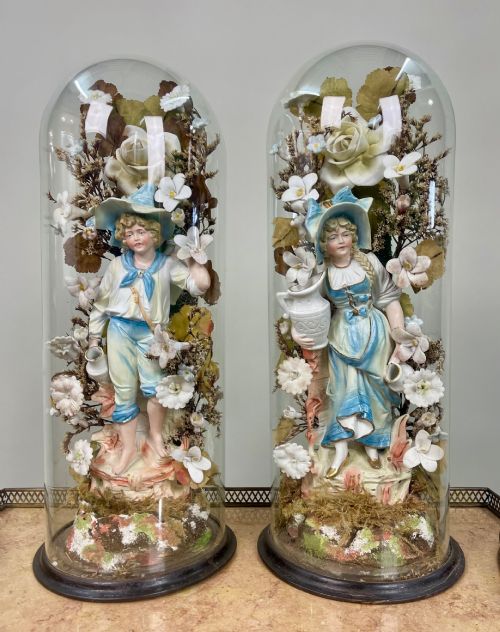
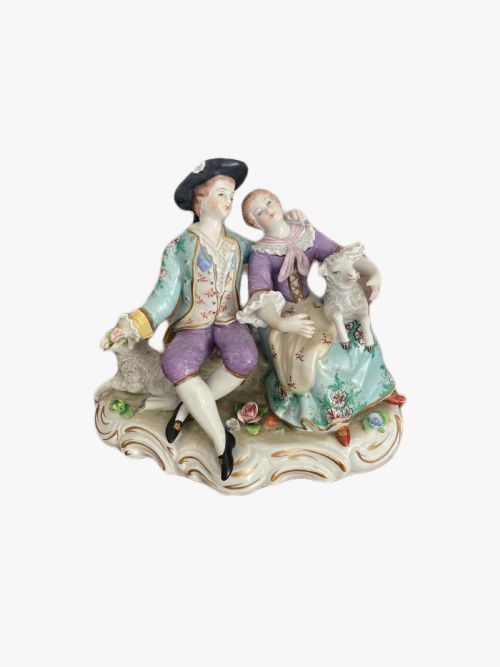
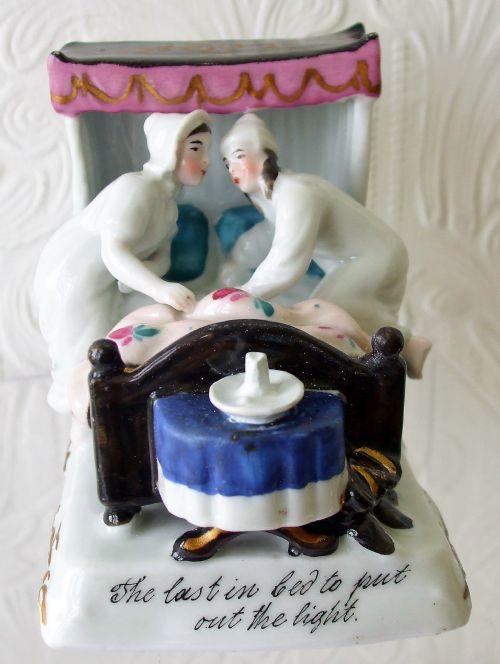
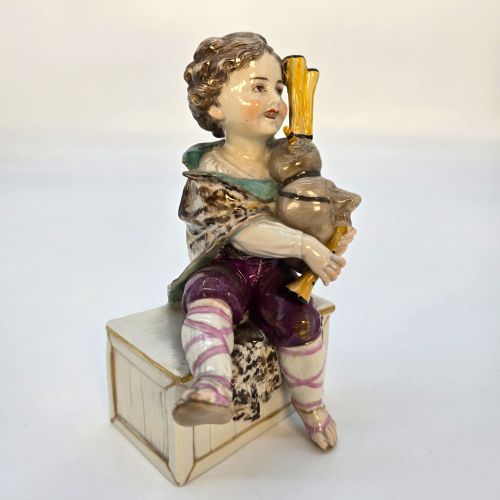
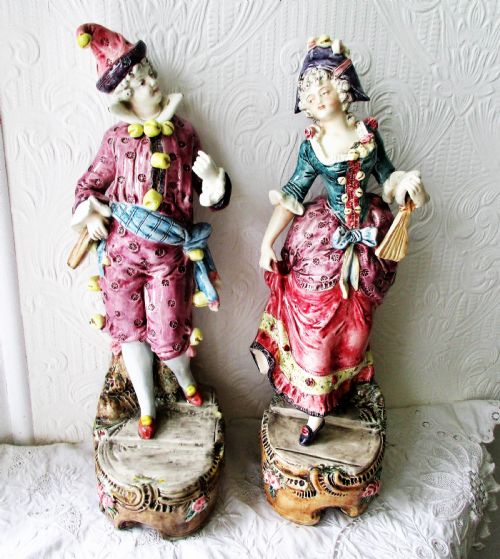
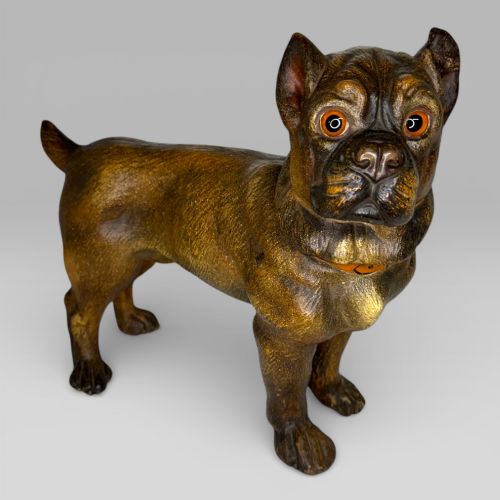
When you search for continental ceramic ornaments, you encounter decorative objects originating from European factories and potteries across the eighteenth, nineteenth, and early twentieth centuries. The selection spans pastoral groups, allegorical figures, and animals moulded in hard-paste porcelain, bisque, terracotta, and earthenware. Figurines and porcelain groups dominate the selection, often reflecting historic German, French, and Austrian traditions.
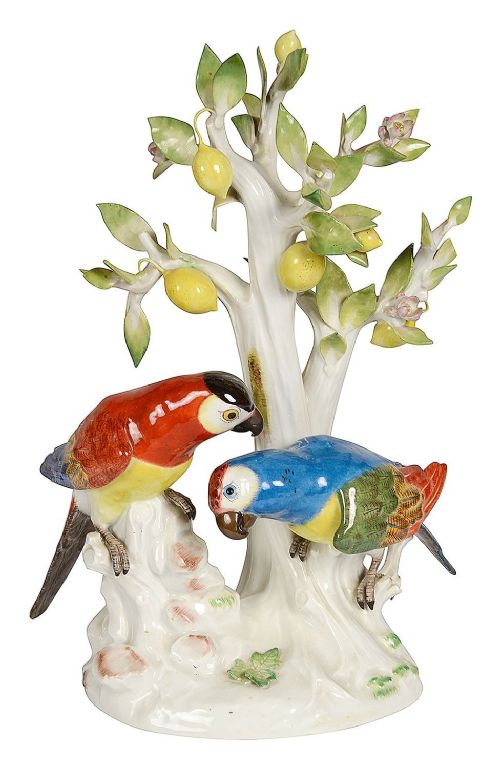
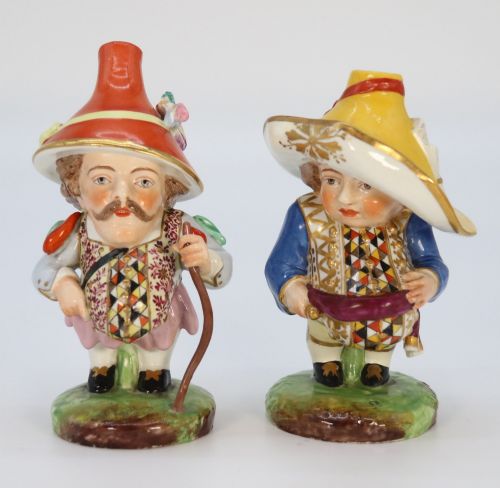
The nineteenth century provides the greatest number of examples, ranging from Victorian interpretations of earlier styles to detailed pieces by continental makers like Meissen, Volkstedt, and Samson of Paris. You will frequently find figures arranged in pairs, such as parrots, dancers, or allegorical representations of the seasons and elements. These works function primarily as mantel or cabinet ornaments, capturing elaborate narratives in fired clay and porcelain.
How they were made
Makers utilised hard-paste porcelain, earthenware, terracotta, and unglazed bisque porcelain, shaping the clay through meticulous moulding and hand-modelling. Fine details like lace, leaves, and facial expressions were applied by hand before the piece underwent high-temperature firing.
Painters applied enamel colours and gold leaf or gilt highlights directly onto the glazed or biscuit surface, often following established eighteenth-century models. Some pieces incorporate specialised techniques like the pyramidal Schneeballen encrustation, where tiny porcelain blossoms cover the entire body of an inkstand or vase.
Continental Ceramic Ornaments Retail Price Guide 2026
Typical asking prices for continental ceramic ornaments among the pieces listed under this phrase on Sellingantiques today, from the lower quarter to the upper quarter. They describe what is for sale here now, not the wider market.
Listings feature hard-paste porcelain, terracotta, and bisque porcelain across nineteenth-century German and French styles.
What varies in quality
The fidelity to historical styles also marks the distinction between master workshops and later followers. Pieces produced by established factories such as Meissen demonstrate greater anatomical precision and compositional balance than generic decorative figures from the broader Bohemian or Victorian market.
Meissen·Volkstedt Rudolstadt Factory·Samson of Paris·Eugene Clauss of Paris·Royal Dux·Ludwigsburg
The Continental Ceramic Ornaments Glossary
- Hard-paste porcelain
- A durable ceramic composition of kaolin and petuntse fired at very high temperatures, producing a dense, vitreous body used extensively by European factories.
- Bisque porcelain
- Un-glazed porcelain with a matte, tactile finish resembling marble, popular for nineteenth-century sculptural figures and portrait busts.
- Schneeballen
- A dense covering of tiny, handmade porcelain snowball blossoms applied to the surface of vases and inkstands, originating in eighteenth-century German kilns.
- Rococo Revival
- A nineteenth-century design style emulating the exuberant, asymmetric curves, scrolling foliage, and shell motifs of the mid-eighteenth century.
- Allegorical figure
- A sculptural representation personifying an abstract concept, such as a season, an element, or an emotion, through symbolic attributes.
Continental Ceramic Ornaments: Frequently Asked Questions
What are continental ceramic ornaments?
These pieces are decorative European figures, vases, and inkstands shaped from clay or porcelain during the eighteenth, nineteenth, and early twentieth centuries.
They encompass diverse forms ranging from large terracotta puppy sculptures to delicate porcelain pairs of dancers and pastoral groups.
How were continental porcelain figures used?
Historically, these items served as decorative table centrepieces, cabinet displays, and mantel ornaments in wealthy European households.
They functioned as conversation pieces that displayed the owner's taste for classical mythology, pastoral romance, and fine craftsmanship.
How do I distinguish eighteenth-century pieces from nineteenth-century copies?
Distinguishing the periods requires examining the paste, the chemical composition of the glaze, and the precision of the hand-painting.
Earlier pieces often exhibit specific factory marks, lighter bodies, and softer enamel palettes compared to heavier nineteenth-century revivals.
Where should I display antique ceramic figures?
These ornaments suit enclosed glass cabinets or stable mantelpieces where they remain protected from accidental knocks and heavy foot traffic.
Keeping them away from direct sunlight helps preserve the vibrancy of the hand-painted enamel colours and gilt highlights.