
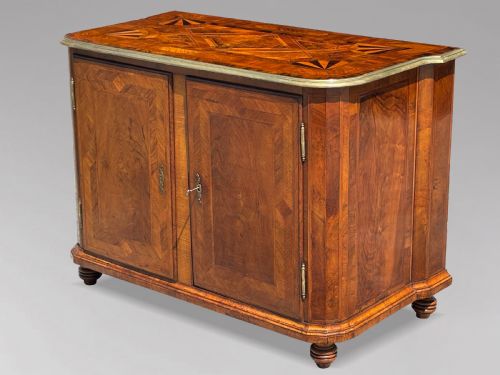
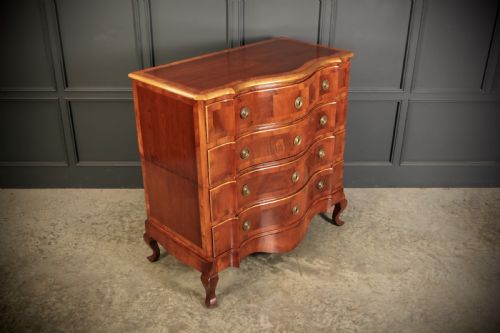


Continental Sideboard
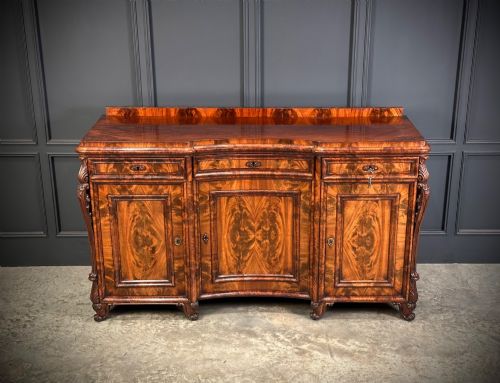
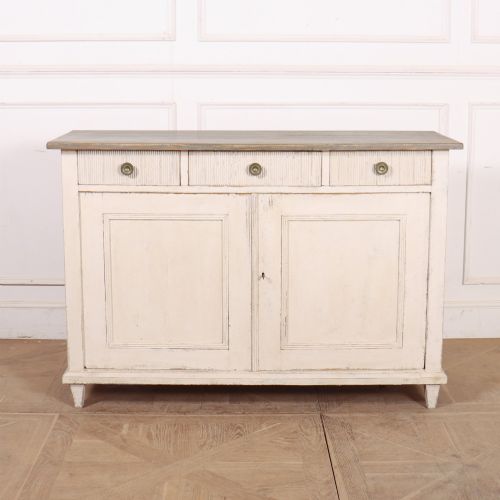
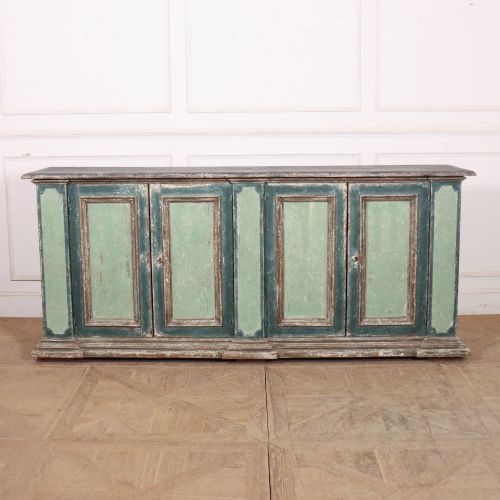
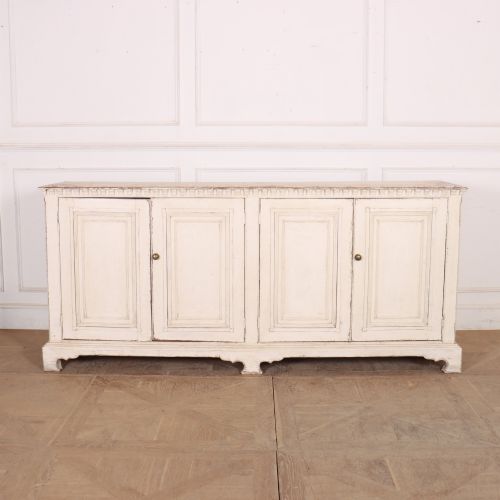
A continental antique sideboard brings heavy regional character into a dining room through rich woods and bold architectural silhouettes.
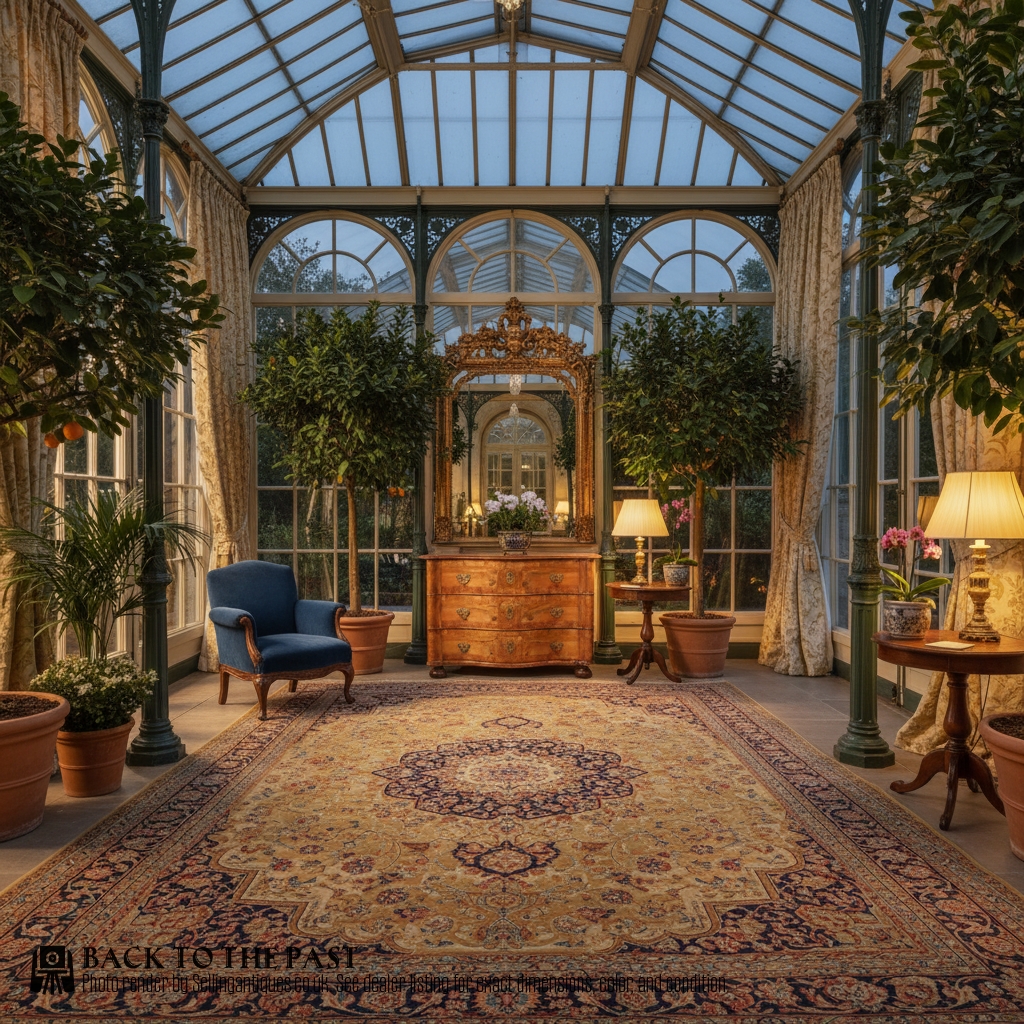
Continental Sideboard
A continental antique sideboard covers substantial dining room storage forms from across Europe, ranging from low commodes and enfilades to monumental credenzas. When searching for a continental antique sideboard, buyers most frequently encounter pieces originating from Italy, Austria, and the Netherlands spanning several centuries.
The selection on this page relies heavily on walnut, oak, and pine construction, often detailed with intricate marquetry, paint, or marble tops. Forms vary from serpentine commodes and breakfront cabinets to heavy baroque cupboards and provincial sideboards.
Origin details shape the visual weight of each piece, distinguishing ornate Italian styles like Rococo and Neoclassical from the cleaner lines of Biedermeier or Arts and Crafts movements. Buyers navigate a diverse landscape of storage furniture built for European dining spaces and halls.
What varies in quality
Quality rests primarily on the integrity of the timber selection and the precision of the cabinetmaker's joinery, especially across curved serpentine and bombe fronts. Superior examples maintain crisp carving in walnut or oak without loss of structural rigidity.
The sophistication of surface decoration distinguishes exceptional pieces, whether through finely executed floral marquetry, original painted finishes, or the precise matching of flame mahogany veneers. Integrated materials like fitted marble tops must sit true to the supporting timber frame.
Listings feature walnut, oak, pine, and painted wood materials across eighteenth-century and nineteenth-century periods.
The Continental Sideboard Glossary
- Commode
- A low cabinet or chest of drawers designed for storage, frequently featuring a marble top.
- Credenza
- A grand sideboard or display cabinet originating in Italy, often monumental in scale and heavily carved.
- Marquetry
- Decorative veneer work arranged in intricate patterns or pictures using various coloured woods.
- Serpentine
- A curved furniture front featuring a convex centre flanked by concave ends, creating a gentle wave shape.
- Parquetry
- Geometric mosaic woodwork used for decorative floors and cabinet surfaces.
Continental Sideboard: Frequently Asked Questions
What is a continental antique sideboard?
A continental antique sideboard is a large storage unit, commode, or cabinet originating from mainland European countries like Italy, Austria, and the Netherlands.
These pieces reflect distinct regional furniture styles ranging from simple painted pine to highly carved walnut baroque designs.
How do I identify Italian styles?
Italian styles often feature bold architectural shaping, extensive carving, or painted surfaces reflecting periods like the Renaissance, Baroque, and Neoclassical.
Look for characteristic silhouettes including serpentine fronts, bombe curves, and rich walnut timbers.
Where were these sideboards used?
These sideboards and commodes served primarily in grand dining rooms, halls, and parlours for storing silver, linen, and serving dishes.
Their heavy construction and decorative marble tops also made them suitable as display surfaces in formal European homes.
What woods are most common?
Walnut and oak form the backbone of these continental storage pieces, complemented by pine in provincial workshops.
Cabinetmakers also utilised mahogany, elm, and painted wood finishes alongside decorative veneers.
How do I care for marble tops?
Marble and Carrara marble tops require gentle cleaning with mild, non-acidic soap and water to protect the stone surface.
Avoid harsh chemical cleaners that can etch the polish or damage the underlying timber frame.