

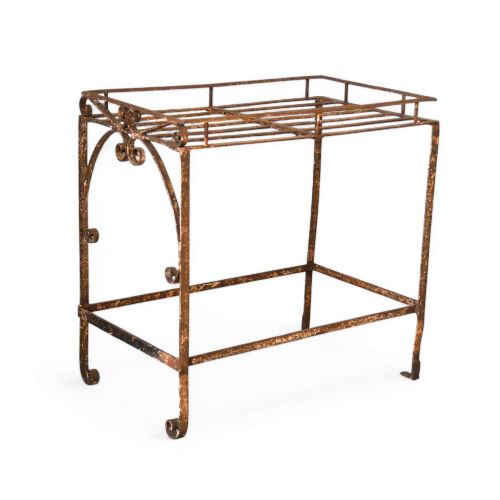

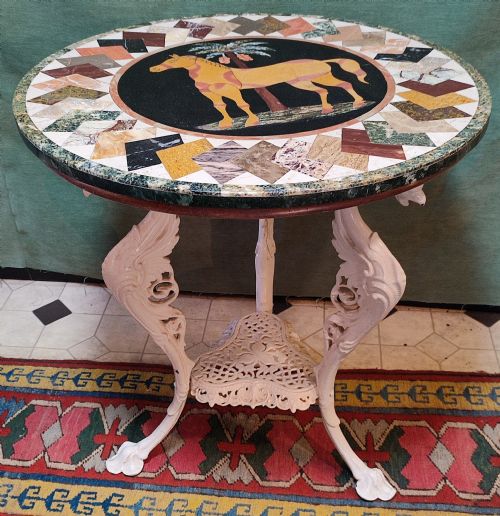


Conservatory Side Tables
Conservatory side tables bring light structural elegance and practical surfaces to garden rooms, featuring iron, marble, cane and wood from the nineteenth and early twentieth centuries.
Conservatory Side Tables
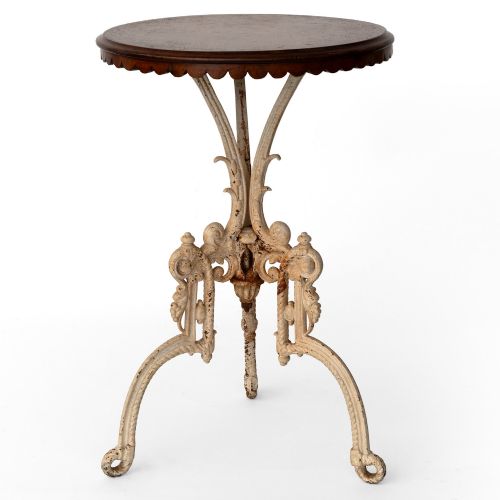
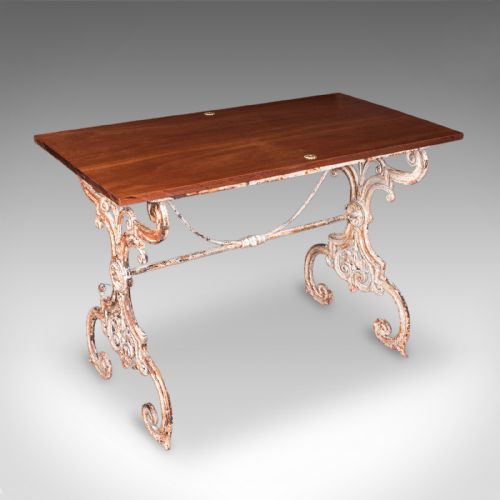
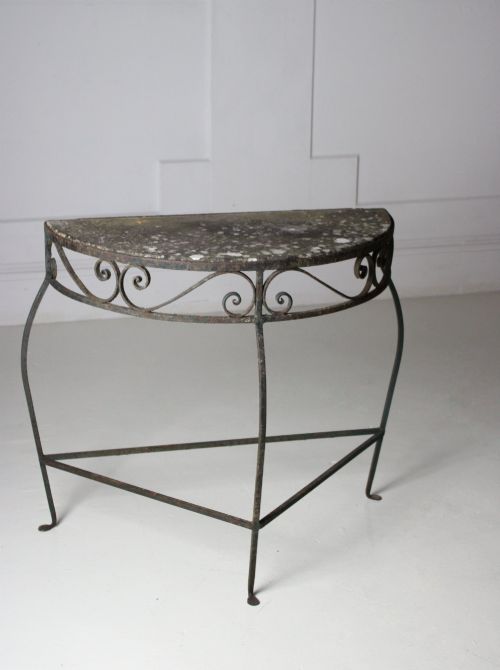
Conservatory side tables encompass occasional pieces, plant stands, console tables and garden tables designed for light-filled rooms, orangeries and verandas. Buyers seeking conservatory side tables encounter diverse forms ranging from French rustic designs to formal Victorian scroll work.
The material palette of these tables spans cast iron, wrought iron, marble, glass, wood, brass, cane and rattan. Pieces originate across the nineteenth century, the Edwardian era, nineteen hundred, nineteen-twenty and nineteen-thirty.
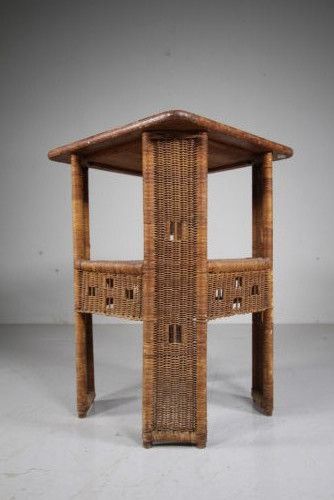
Makers and workshops of the period, such as Dryad of Leicester and Lloyd Loom, produced notable wicker and loom furniture alongside traditional metal and stone constructions. Common configurations include round marble tops, mirrored surfaces and estate-made wrought iron frameworks.
How they were made
Metal frames rely heavily on cast iron and wrought iron, frequently shaped into intricate scroll work, strapp work or structural bases designed to support heavy tops. Brass details and verdigris copper tops appear across French bistro and orangery tables.
Stone and glass integration involves fitting heavy marble or mirrored surfaces securely into metal or wooden frames. Woven elements utilise cane, rattan and wicker materials, including pieces produced by Dryad of Leicester and Lloyd Loom.
Wood construction draws upon oak and other timber for oval and occasional tables, while estate-made garden pieces combine robust metalwork with decorative details.
Conservatory Side Tables Retail Price Guide 2026
Typical asking prices for conservatory side tables among the pieces listed under this phrase on Sellingantiques today, from the lower quarter to the upper quarter. They describe what is for sale here now, not the wider market.
Styles represented include Victorian, Edwardian, Arts and Crafts, Art Deco and various French regional traditions.
What varies in quality
Quality variation manifests in the intricacy of the metal casting, such as the definition within Victorian scroll work and strapp work. Heavier, more complex ironwork contrasts with simpler utilitarian frames.
The selection and finish of top materials dictate overall refinement, from thick specimen marble slabs and verdigris copper to finely woven cane and intact mirrored glass. Maker attribution, including stamped Dryad of Leicester or Lloyd Loom examples, significantly elevates historical interest.
Dryad of Leicester·Lloyd Loom
The Conservatory Side Tables Glossary
- Cast iron
- A strong, rigid iron alloy poured into moulds to create decorative scroll work, plant stands and table bases. It provides heavy stability for conservatory and garden use.
- Wrought iron
- Iron beaten and worked by hand into structural and decorative shapes. It appears frequently in estate-made garden racks and console tables.
- Dryad of Leicester
- A prominent English workshop founded in Leicester that produced distinctive wicker and cane furniture. Their pieces represent notable early twentieth-century craftsmanship.
- Lloyd loom
- A patented furniture manufacturing process using twisted wire woven into fabric and attached to cane frames. This technique defined popular seating and tables of the nineteen-thirties.
- Verdigris
- A green patina formed naturally on copper, brass or bronze through atmospheric weathering. It provides a distinct aged surface on nineteenth and twentieth-century garden tables.
Conservatory Side Tables: Frequently Asked Questions
What periods do these tables come from?
The selection includes pieces spanning the Victorian and Edwardian eras, alongside items dated around nineteen hundred, nineteen-twenty and nineteen-thirty. Styles reflect French country, provincial, bistro and rustic designs alongside British estate pieces.
Material choices vary from cast iron and marble to wicker, rattan and brass. Each era contributed distinct decorative details and construction methods suitable for light-filled spaces.
Can these tables be used outdoors?
Many of these pieces were originally constructed for gardens, potting sheds, orangeries and conservatories using durable materials like cast iron, wrought iron and copper. They withstand covered outdoor environments well.
However, delicate materials such as mirrored glass, polished wood, cane and rattan benefit from sheltered placement away from persistent moisture and harsh weather.
How do I identify wicker versus Lloyd loom?
Traditional wicker utilises natural plant fibres such as rattan, cane or reed woven tightly around a structural frame. Lloyd loom employs a specific patented process using twisted wire wrapped in paper and woven into a smooth fabric.
Lloyd loom furniture often carries manufacturer labels, particularly pieces from the nineteen-thirties, while traditional wicker work shows distinct natural cane variations.
What is strapp work?
Strapp work refers to metalwork fashioned into flat bands or straps, commonly utilised in nineteenth and early twentieth-century garden and conservatory furniture. It creates strong, open geometric patterns.
This technique provides both structural integrity and decorative visual lightness, frequently seen supporting marble or metal tabletops.