



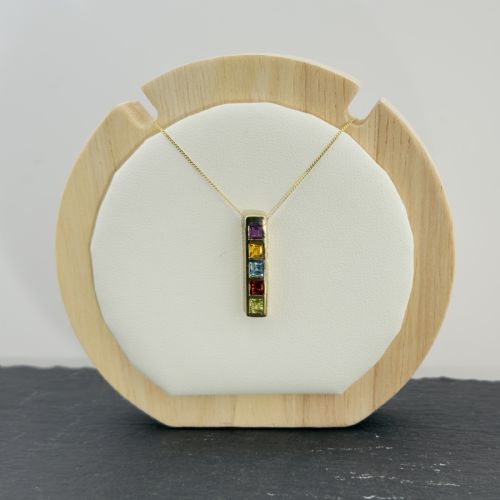


Coloured Gemstone Jewellery
Coloured gemstone jewellery brings together vibrant stones and precious metals across periods from Victorian to mid-century.
Coloured Gemstone Jewellery
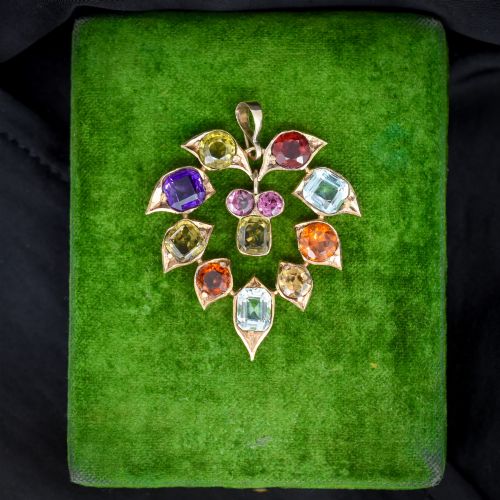
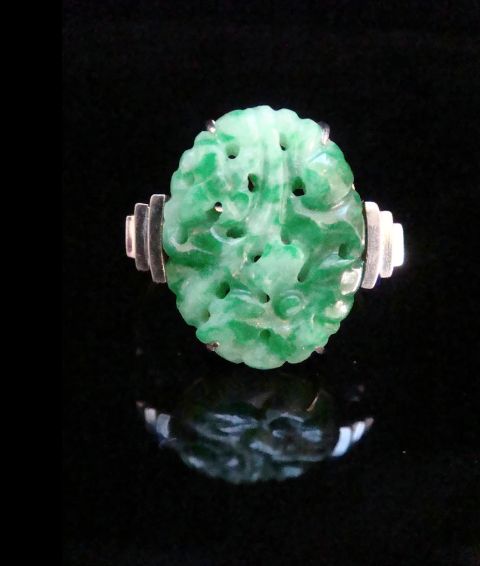
Coloured gemstone jewellery spans rings, pendants, bracelets, earrings, and brooches set with stones like amethyst, peridot, sapphire, and jade. These pieces bridge several decades, with examples hailing from Victorian, Edwardian, Art Deco, and mid-century eras.
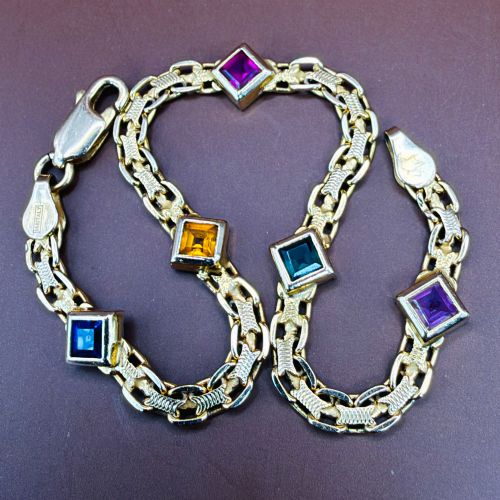
The assortment on this page draws heavily from the early twentieth century and the mid-century decades. Buyers encounter delicate seed pearl and peridot necklaces alongside bold princess-cut multi-gemstone bracelets.
Materials and construction
Goldsmiths utilised yellow gold, white gold, and platinum as foundations for these stones. Metal purity ranges across nine-carat, fifteen-carat, and eighteen-carat standards depending on the period.
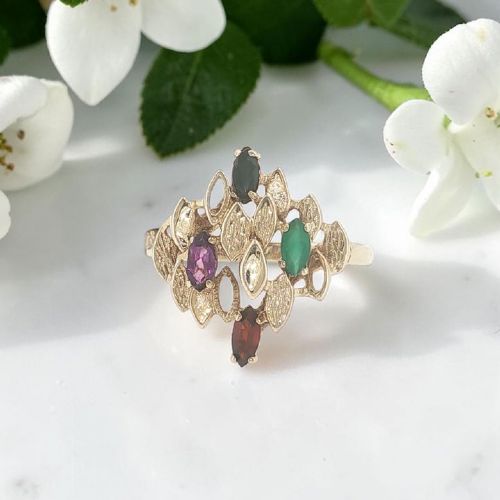
Settings combine claw mounts, bezel enclosures, and cluster arrangements to secure stones like moonstone, tourmaline, and spinel. Drop pendants and multi-stone clusters involve fine wirework and precise stone cutting.
Coloured Gemstone Jewellery Retail Price Guide 2026
Typical asking prices for coloured gemstone jewellery among the pieces listed under this phrase on Sellingantiques today, from the lower quarter to the upper quarter. They describe what is for sale here now, not the wider market.
Listings feature items from the Victorian, Edwardian, Art Deco, and mid-century periods utilising platinum and gold.
Quality factors
The depth of colour and clarity in stones such as amethyst, sapphire, and emerald dictate visual impact. Master lapidaries cut stones to maximise light return within the metal mount.
The integrity of the original metalwork, from delicate Edwardian filigree to robust mid-century bracelet links, separates standard production from finer output. Secure stone settings and balanced proportions define superior craftsmanship.
The Coloured Gemstone Jewellery Glossary
- Seed pearl
- A very small natural pearl, often drilled and threaded, frequently utilised in Edwardian and Victorian cluster designs.
- Cluster
- A stone setting arrangement where a central gemstone is surrounded by a ring of smaller accent stones.
- Princess cut
- A square or rectangular gemstone cut featuring numerous facets to enhance brilliance, common in mid-century items.
- Filigree
- Ornamental work of fine wire formed into delicate openwork patterns, prevalent in Edwardian and Art Deco mounts.
Coloured Gemstone Jewellery: Frequently Asked Questions
What periods do these pieces span?
The items range from the Victorian and Edwardian eras through the Art Deco period and into mid-century decades like the nineteen-fifties and nineteen-sixties.
Design motifs shift across these decades from organic floral motifs to geometric lines and bold multi-stone clusters.
Which metals are used in these settings?
Jewellers utilised platinum, white gold, and yellow gold across varying purities including nine-carat, fifteen-carat, and eighteen-carat.
The choice of metal often reflects the prevailing style of the era, such as platinum for Art Deco work.
How do I care for antique gemstone pieces?
Gentle cleaning with a soft cloth helps maintain the metal and stones without disturbing delicate claw settings or seed pearls.
Store items separately to prevent softer gems like pearls or moonstones from scratching against harder stones.
What stone types appear most often?
Amethyst, peridot, sapphire, and tourmaline appear regularly alongside pearls, jade, and diamonds.
Combinations of mixed stones feature prominently in multi-gem rings, pendants, and cluster earrings.