


Colonial Planter Chair
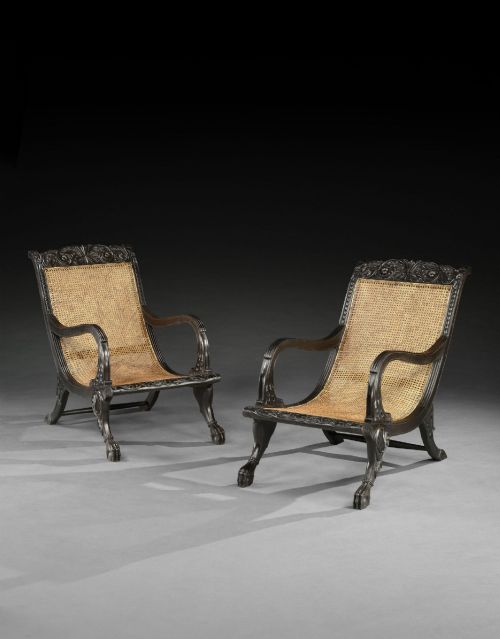
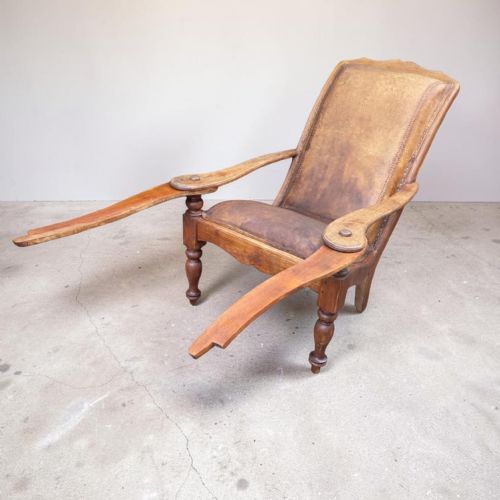
These colonial planter chair examples are sweeping seats built for hot climates, offering long extending arms to rest your feet upon.
Colonial Planter Chair
A colonial planter chair is a deep-seated armchair designed for tropical lounging, characterised by distinctive long arms that double as leg rests. You will most frequently meet nineteenth-century examples on this page, spanning Victorian and Anglo-Indian colonial styles.
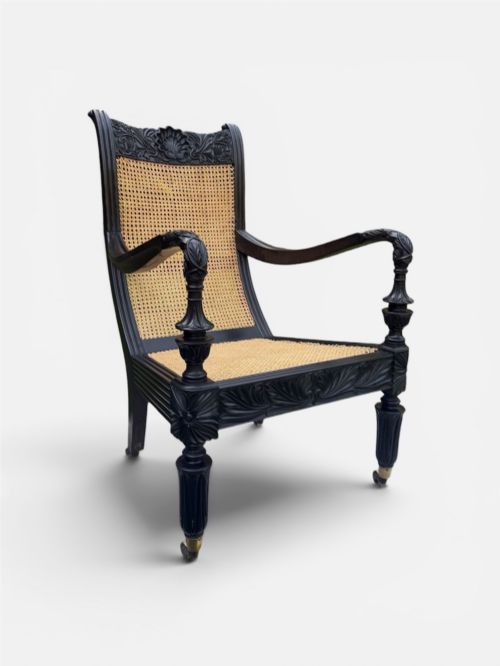
The forms vary from reclining plantation chairs to occasional chaise lounge variants and pairs of armchairs. Teak and ebony predominate amongst the woods, often paired with cane or original leather upholstery.
Makers shaped these seating forms across the nineteenth and early twentieth centuries, drawing on British colonial presence in regions such as Ceylon and Bombay. The resulting pieces combine robust domestic utility with sprawling comfort suited to verandahs.
Materials and construction
Construction relies heavily on dense tropical hardwoods like teak, ebony, walnut, and rosewood, chosen for their resilience in humid climates. Carpenters joined heavy timber frames to support deep reclining seats and long extending armrests.
Surfaces frequently incorporate woven cane panels or fitted leather upholstery secured with metal studs. These breathable materials kept sitters cool before the invention of mechanical climate control.
Some chairs include sneaky pull-out footrests hidden inside the arms, proving colonial planters took lounging very seriously.
Assessing quality
Quality rests in the choice of dense timber, such as solid ebony or finely figured teak, and the structural integrity of the extending arm mechanism. Superior examples display crisp joinery and well-preserved original cane or leather work.
Proportion and scale dictate the visual weight of the piece, with monumental chairs commanding presence through balanced carving and substantial framing. Lesser items show simpler turned members and more utilitarian construction.
The Colonial Planter Chair Glossary
- Extending arms
- Armrests designed to pull out or lengthen so the sitter can elevate their legs. This feature defines the planter chair form.
- Cane
- Woven rattan material used for seat and back panels to provide ventilation. It offers flexibility and airflow in warm climates.
- Anglo-Indian
- Describing furniture made in India during the British period, combining British forms with local materials and craftsmanship. These pieces often feature native hardwoods.
- Plantation chair
- An alternative term for a planter chair, referencing use on colonial estates. They prioritise deep reclining angles and extended armrests.
- Chaise lounge
- An upholstered couch shaped for reclining, appearing occasionally alongside standard armchairs in colonial styles.
Colonial Planter Chair: Frequently Asked Questions
How do you use the extending arms?
The long arms pivot or pull out to create a leg rest for the seated person. This allows the sitter to recline fully without needing a separate footstool.
Operating the mechanism requires gentle handling, especially on nineteenth-century timber frames where joints have settled over decades of use.
Where were these chairs made?
These chairs were produced in British colonies, notably regions of India and Ceylon, by local and regional workshops. They catered to colonial administrators and planters seeking relief from tropical heat.
Materials reflect local resources, utilising native timbers such as teak, rosewood, and ebony rather than European oak or mahogany.
How should I care for teak and cane?
Maintain teak and ebony woodwork with occasional light waxing to keep the dense grain nourished. Avoid placing them near direct heat sources that cause timber to split.
Keep woven cane panels clean with a soft brush and avoid heavy downward pressure on dry, brittle strands. Humidity helps maintain cane elasticity.
How do I distinguish nineteenth-century pieces?
Nineteenth-century examples show hand-turned wooden members, traditional joinery without modern adhesives, and dense native hardwoods. Patina on the timber and wear on leather or metal studs indicate age.
Later twentieth-century versions often feature simpler construction methods and lighter framing whilst retaining the traditional profile.