

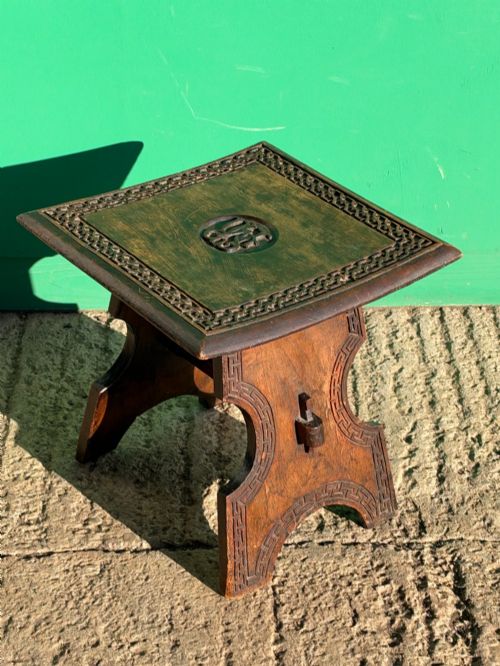



Colonial Low Stool
A colonial low stool brings robust timber and distinctive carving into a room, offering both a compact seat and a grounded visual presence.
Colonial Low Stool
A colonial low stool is a compact seating piece typically encountered from the nineteenth century, including examples dated around 1880, 1890, and 1930. These pieces emerge from various stylistic traditions such as Anglo-Indian, Late Victorian, Colonial Safari, and Batavian Baroque.
The forms on this page include stools, footstools, ottomans, coffee tables, and drum tables. The most frequent encounters are low Anglo-Indian rosewood and teak stools featuring traditional carved details.
How they were made
Maker construction relies heavily on dense timbers like hardwood, rosewood, and teak, shaped through traditional woodworking and deep relief carving. These sturdy materials provide the structural foundation for both small footstools and larger ottoman forms.
Surfaces and seats incorporate diverse tactile elements, ranging from woven rattan and natural fibre to upholstered fabric and zebra hide. This combination of heavy timber and organic coverings defines the physical character of the group.
Colonial Low Stool Retail Price Guide 2026
Typical asking prices for colonial low stool among the pieces listed under this phrase on Sellingantiques today, from the lower quarter to the upper quarter. They describe what is for sale here now, not the wider market.
Even a humble footstool can pack a zebra hide or a set of hooves if the safari mood strikes.
What varies in quality
Depth and precision of carved ornamentation separate standard examples from finer works, particularly on nineteenth-century rosewood and teak surfaces. Crisp floral and geometric motifs reflect the skill invested by the maker.
The integrity of the timber frame and the condition of original materials like woven rattan or hide determine the overall calibre of a piece. Substantial proportions and well-preserved joinery elevate certain stools above simpler iterations.
The Colonial Low Stool Glossary
- Anglo-Indian
- A design style produced during the British colonial period in India, merging British furniture forms with local craftsmanship and dense native timbers.
- Batavian Baroque
- An ornate style associated with the Dutch colonial administration in Batavia, featuring lavish carved details and substantial wood construction.
- Rosewood
- A heavy, durable hardwood with rich dark grain patterns, frequently utilised for nineteenth-century colonial seating and tables.
- Rattan
- A naturally pliable vine material woven to create resilient seating surfaces and textural panels on colonial furniture.
- Ottoman
- A low upholstered seat or footstool without a back, often adapted in colonial contexts to serve multiple domestic functions.
Colonial Low Stool: Frequently Asked Questions
What is a colonial low stool?
A colonial low stool is a compact nineteenth-century seat or footrest fashioned from dense timbers like teak and rosewood.
These pieces often display intricate carving and diverse seating surfaces such as woven rattan or hide.
How were these stools used?
They functioned primarily as low seats, footstools, or resting surfaces for tired feet in colonial drawing rooms.
Larger versions also crossed into service as low coffee tables or drum tables within domestic interiors.
What materials are typical?
Hardwoods form the core structure, with rosewood and teak appearing most frequently across the listed items.
Surfaces incorporate textured elements like natural fibre, woven rattan, fabric, and occasionally zebra hide.
How do styles differ?
Styles range from the deep relief carving of Anglo-Indian pieces to the ornate flourishes of Batavian Baroque.
Late Victorian and colonial safari aesthetics further diversify the group through utilitarian forms and unconventional coverings.