

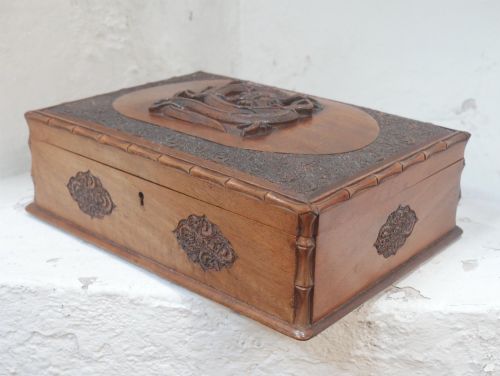
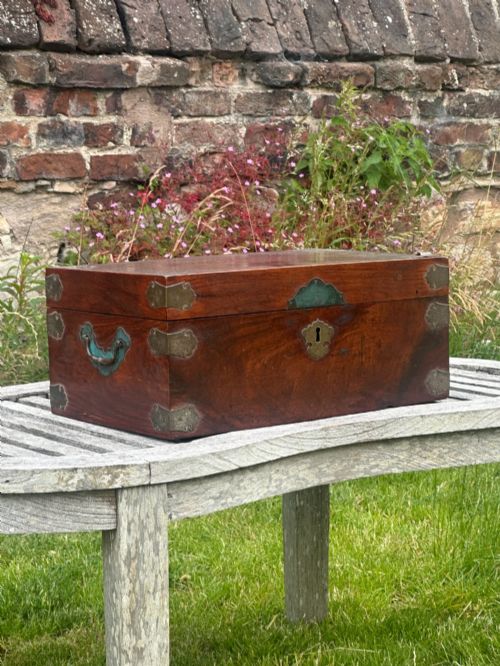
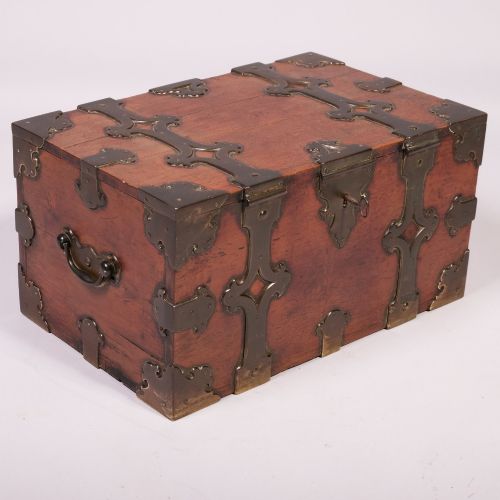
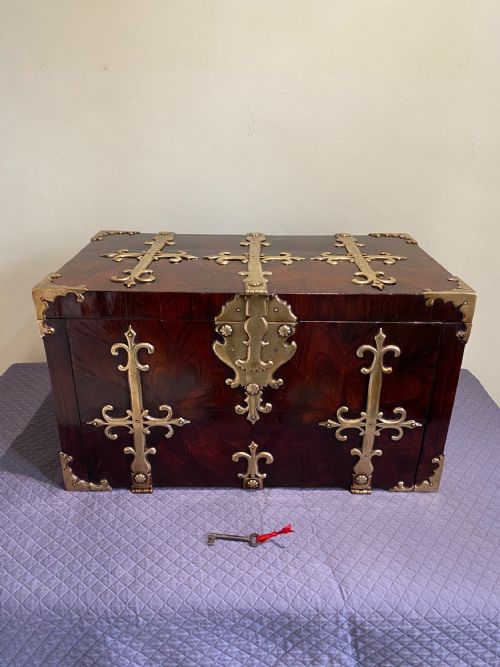




Colonial Document Chest
A colonial document chest provides sturdy travel storage and tidy desktop organisation, forged for distant postings.
Colonial Document Chest
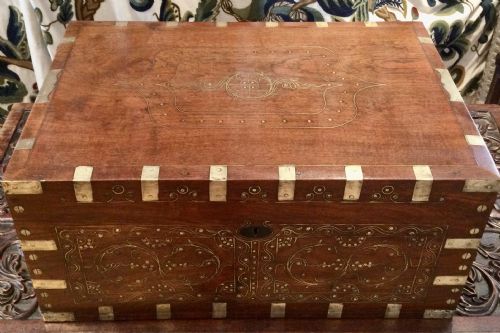
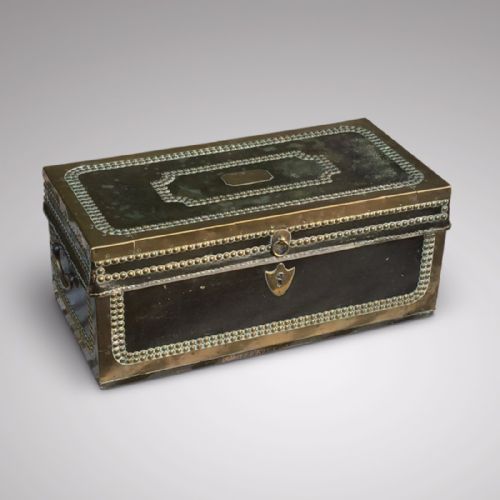
A colonial document chest represents travel storage and correspondence protection from distant postings, built to withstand tropical conditions. These pieces range from small deed boxes and writing slopes to camphor caskets and miniature campaign trunks.
You are most likely to meet 19th century examples on this page, alongside 18th century pieces and occasional 17th century works. Forms include dome top tin caskets, correspondence boxes, and strongboxes in various regional styles.
Originating across different global outposts, these boxes carry distinct cultural aesthetics such as Anglo-Indian, Anglo-Chinese Colonial, Iberian Baroque, and Spanish Colonial. They serve as both functional containers and decorative objects for the home.
How they were made
The construction relies heavily on durable exotic timbers such as teak, camphor wood, padouk, ebony, kingwood, and walnut, chosen for their resilience against humidity and pests. Wood surfaces frequently feature carved decoration or plain polished finishes.
Metal reinforcement is integral to the manufacture, utilising brass mounts, corner brackets, and banding to protect edges during transit. Leather covering also appears on specific campaign pieces designed for military or administrative use.
Colonial Document Chest Retail Price Guide 2026
Typical asking prices for colonial document chest among the pieces listed under this phrase on Sellingantiques today, from the lower quarter to the upper quarter. They describe what is for sale here now, not the wider market.
Styles span Anglo-Indian, Spanish Colonial, Iberian Baroque, and Victorian Campaign.
What varies in quality
The calibre of a chest rests upon the selection of timber and the precision of the joinery, distinguishing solid ebony or padouk builds from simpler constructions. Fine execution shows in the crispness of carved details and the careful fitting of internal compartments.
Hardware integration further separates examples, with flush-fitting brass handles and sturdy corner bindings indicating higher workshop standards. The presence of functioning locks and original keys elevates the integrity of the piece.
The Colonial Document Chest Glossary
- Campaign trunk
- A portable chest designed for military officers or administrators on the move, featuring recessed brass handles and reinforced corners.
- Writing slope
- A box with an angled lid that opens to reveal a slanted writing surface and pigeonholes for stationery.
- Padouk
- A dense tropical hardwood prized for its reddish-brown colour and durability, often utilised in Anglo-Indian cabinetmaking.
- Camphor wood
- An aromatic timber frequently selected for campaign chests to protect contents from insects and dampness.
- Cofre forte
- A strongbox or chest designed for secure storage of valuables, often fitted with complex locking mechanisms.
Colonial Document Chest: Frequently Asked Questions
How were these chests used?
Owners utilised them to transport official papers, legal documents, and personal correspondence while moving between stations. Many doubled as writing desks when opened.
Inside, compartments and small drawers kept ink, quills, and wax seals organised alongside stationery.
How do I live with a colonial document chest?
These chests function well as coffee table storage, accent pieces on sideboards, or desktop organisers in a study. Their rich timber tones complement both traditional and modern interiors.
Keep them away from direct heat sources and sudden humidity changes to protect the wood and brass fittings.
How can I tell the periods apart?
Earlier pieces from the seventeenth and eighteenth centuries often display heavier baroque influences, thick walnut or camphor construction, and hand-forged iron or brass mounts. Nineteenth-century examples frequently show precise campaign styling with flush brass banding.
Examining the locking mechanisms, timber types, and decorative carving styles helps determine the era of manufacture.