





Collie Dog Art
Collie dog art captures the intelligence and faithful character of these working dogs through traditional oil painting.
Collie Dog Art
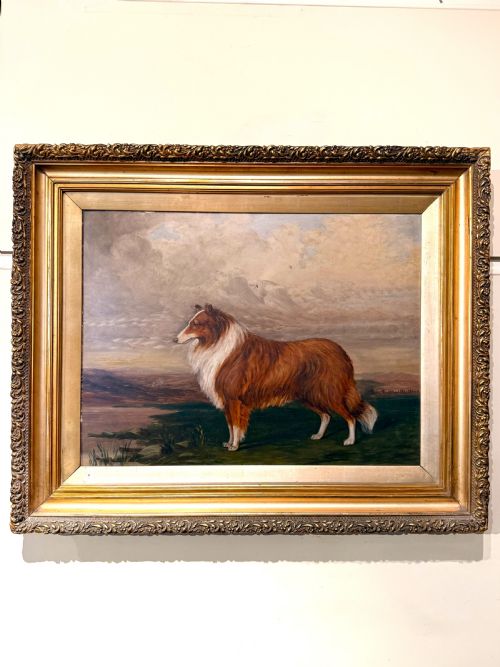
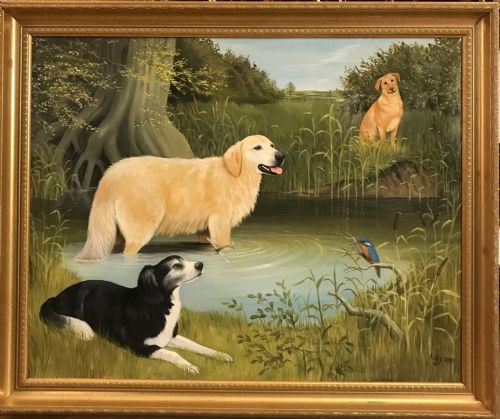
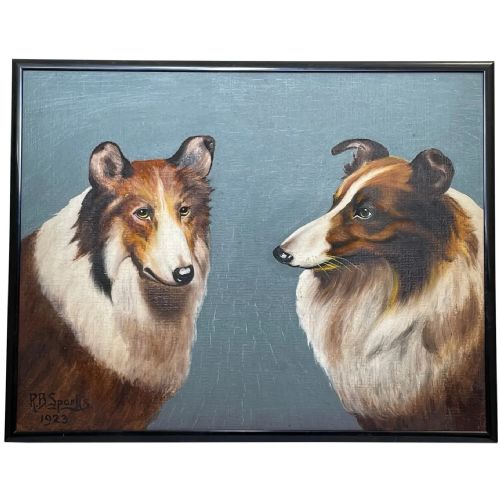
Collie dog art primarily comprises oil paintings on canvas and board depicting rough collies, border collies, and sheepdogs in various settings. These works range from intimate canine portraits to expansive landscape scenes featuring livestock.
The pieces available span from the Victorian era into the twentieth century, reflecting shifting tastes in animal portraiture. Buyers will encounter traditional realism alongside English naive school interpretations and French school compositions.
Many works celebrate the working relationship between the collie and its environment, often placing the dog outdoors in a pastoral landscape. Painters of this subject utilised canvas and wooden boards to record the distinct coat and alert expression of the breed.
Materials and methods
The physical works rely on oil paint applied to prepared canvas or wooden board surfaces. Artists layered pigments to capture the dense texture of the collie coat and the play of natural light across the landscape.
Many of these historic paintings retain their original frames, occasionally incorporating wood, giltwood, and gold leaf. The combination of oil on canvas and ornate wooden surrounds defined the presentation of fine art during the nineteenth century.
Collie Dog Art Retail Price Guide 2026
Typical asking prices for collie dog art among the pieces listed under this phrase on Sellingantiques today, from the lower quarter to the upper quarter. They describe what is for sale here now, not the wider market.
Several sheepdogs are immortalised gazing intently into the middle distance, perhaps pondering the whereabouts of missing ewes.
Judging quality in collie dog art
Quality rests upon the artist's ability to render the anatomy and distinct expression of the collie rather than a generic canine form. Superior works demonstrate a confident handling of brushwork in the rendering of fur and surrounding foliage.
The prominence of the maker influences the standing of a piece, with documented nineteenth-century animal painters commanding greater attention. The preservation of the original paint surface and the condition of the supporting canvas or board also separate standard examples from finer works.
John Emms·John Trivett Nettleship·Daniel Pasmore·GW Horlor·George Earl·Benedict Angell Hyland
The Collie Dog Art Glossary
- Oil on canvas
- Pigments suspended in a drying oil applied to a stretched woven fabric support. This traditional method allows for subtle blending of tones and rich texture.
- Board
- A rigid wooden or composition panel used as a painting surface instead of fabric. Artists often utilised boards for smaller studies and quicker outdoor sketches.
- Giltwood
- Wood carved and coated with a thin layer of gold leaf or metallic powder. It provides a reflective and ornate border for traditional oil paintings.
- English Naive School
- A descriptor for paintings created outside the formal academic tradition, often characterised by a direct perspective and charming simplicity. These works offer a sincere record of domestic and working animals.
- Victorian Naturalism
- An artistic approach focusing on the accurate depiction of the natural world and animal subjects without romantic idealisation. Painters working in this style observed their subjects with careful attention to anatomical detail.
Collie Dog Art: Frequently Asked Questions
What periods do these paintings come from?
The available artworks predominantly date from the nineteenth century, including specific Victorian and Edwardian examples. Later pieces extend into the mid-twentieth century.
This timeline demonstrates the enduring popularity of canine portraiture among painters across several generations.
Are these works painted on canvas?
Many examples are executed in oil paint upon traditional woven canvas supports. Other pieces are painted directly onto wooden boards.
Both methods were standard practice for artists working during the Victorian period and later.
How should I hang an oil painting?
Oil paintings require stable indoor environments away from direct sunlight and excessive moisture. Proper picture wire and wall fixings should match the weight of the canvas and its frame.
Regular dusting with a soft, dry brush helps maintain the surface of the paint and the surrounding giltwood.
How do I identify different artistic schools?
Academic works often display refined brushwork and anatomical precision, whereas naive school pieces show a simpler perspective. French school paintings may feature distinct compositional choices compared to their British counterparts.
Comparing the handling of light and background details helps clarify the origin of an unsigned work.