



Collectible French Clock
A collectible French clock brings together heavy brass, enamelled dials, and moulded glass from the nineteenth and early twentieth centuries.
Collectible French Clock
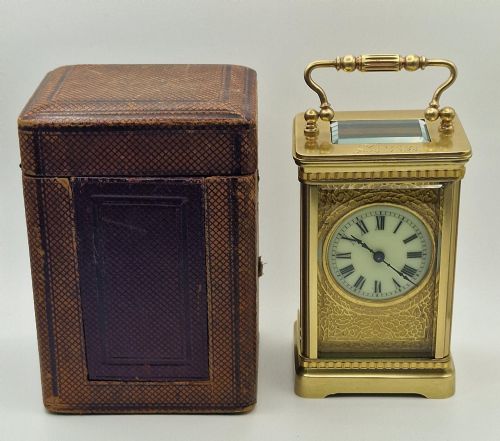
When you search for a collectible French clock, you are looking at timepieces that range from heavy brass carriage clocks designed for travel to glass mantel pieces created in the Art Deco period. These objects span the nineteenth century through the nineteen-thirties, reflecting shifts in both engineering and decorative tastes across France.
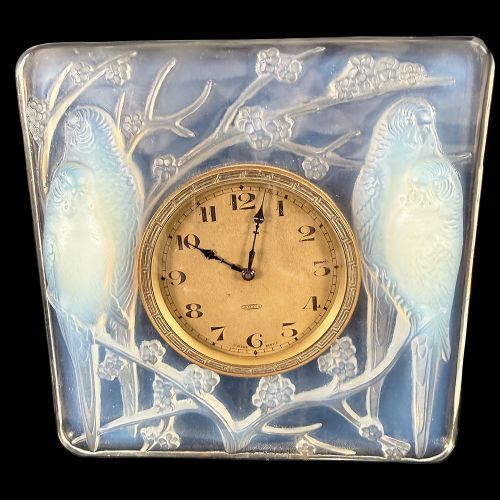
The most common versions met on this page are carriage clocks housed in brass cases, often featuring striking mechanisms, repeaters, or alarms. Alongside these sit glass sculptural works from makers such as R Lalique, utilising opalescent or frosted finishes to depict motifs like love birds and cockerels.
How they were made
The makers of these timepieces relied primarily on cast brass for the structural cases of carriage clocks, often finished with a gilded surface to catch the light. Dials were frequently fashioned from white enamel with painted numerals, protected beneath bevelled glass panels.
For the later Art Deco examples, production shifted towards moulded glass techniques. Workshops utilised clear, frosted, and opalescent glass to cast sculptural clock faces and bodies featuring intricate animal and avian subjects.
Collectible French Clock Retail Price Guide 2026
Typical asking prices for collectible french clock among the pieces listed under this phrase on Sellingantiques today, from the lower quarter to the upper quarter. They describe what is for sale here now, not the wider market.
Several clocks on this page feature sculptural love birds and cockerels trapped forever inside glowing opalescent glass.
What varies in quality
Quality in these timepieces rests largely on the complexity of the internal movement and the crispness of the exterior casting. Carriage clocks with additional complications such as alarm functions, striking mechanisms, or sweep seconds demonstrate a higher grade of horological workmanship.
In glass pieces, the distinction lies in the depth of the moulding and the subtlety of the opalescent finish. Pieces that retain sharp detail in the figural motifs and come with their original fitted boxes represent the upper end of the range.
R Lalique·Mappin and Webb
The Collectible French Clock Glossary
- Carriage clock
- A portable spring-driven timepiece developed for travellers in the nineteenth century. They are typically housed in brass cases with glass panels that reveal the escapement.
- Repeater
- A mechanism in a clock that chimes the hours and quarters upon demand when a lever or button is pressed. This complication adds significantly to the intricacy of the movement.
- Opalescent glass
- Glass that displays milky, blue-white or iridescent tones depending on the light. It was widely utilised by glassmakers during the Art Deco era to create sculptural depth.
- Striking mechanism
- An internal system that sounds the hours or half-hours automatically on a bell or gong. It marks the passage of time audibly.
- Gilded brass
- Base metal treated with a thin layer of gold or gold-coloured wash to provide a rich metallic sheen. This finish was standard for many nineteenth-century carriage clock cases.
Collectible French Clock: Frequently Asked Questions
What is a carriage clock?
A carriage clock is a portable timepiece originally built for travel in the nineteenth century. They feature protective brass frames with glass windows on all sides.
Inside, spring-driven movements keep time without the need for a pendulum. Many examples include striking mechanisms or alarms for daily use.
How do I wind a carriage clock?
Most carriage clocks use a dedicated winding key that fits onto square arbors on the back plate. Care must be taken not to over-wind the mainspring.
It is also important to move the hands in the correct direction when setting the time to protect the escapement.
What is Art Deco glass?
Art Deco glass refers to decorative pieces produced during the nineteen-twenties and thirties. These objects embrace geometric or stylised natural forms.
Artists utilised moulding and acid-etching techniques to create frosted, clear, and opalescent finishes on clocks and decorative sculptures.
How do I date a French clock?
Dating these timepieces involves examining the style of the brass case, the design of the enamel dial, and the type of escapement. Victorian and nineteenth-century pieces often display traditional platform escapements.
Signatures, maker marks, and registration numbers stamped on the movement plates or glass bases also provide clear chronological markers.