

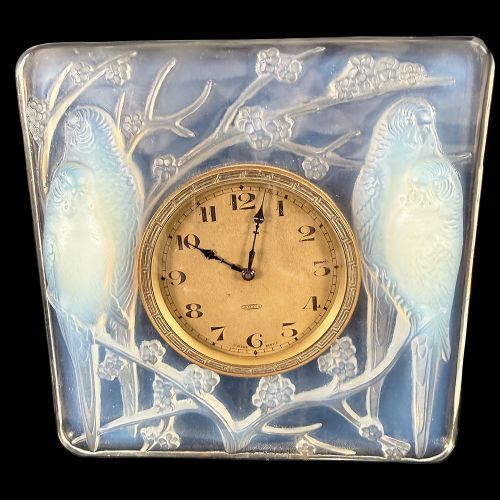


Collectable Vintage Clock
A collectable vintage clock brings mechanical movement and period design into a room, offering brass cases, glass dials and traditional striking mechanisms.
Collectable Vintage Clock
When you search for a collectable vintage clock, you encounter pieces spanning the Victorian and Edwardian eras, alongside Art Deco and Mid-Century Modern designs. The selection frequently includes carriage clocks in brass and gilt brass, alongside glass mantel pieces and desk clocks.
Carriage clocks dominate the offerings, appearing in simple brass housings as well as more elaborate formats with alarm functions and striking repeaters. Alongside these, glass works from the 1920s and 1930s introduce opalescent finishes and sculptural motifs into the horological mix.
How they were made
The construction relies heavily on brass and gilt brass frameworks, housing mechanical gear trains designed for travel or domestic placement. Glass panels enclose many of the movements, allowing a view of the escapement and gear wheels.
Decorative elements incorporate enamel for dial faces, whilst select pieces feature opalescent glass moulded into sculptural forms depicting birds and other subjects. Timber housings such as mahogany also appear alongside leather finishes in certain portable designs.
Collectable Vintage Clock Retail Price Guide 2026
Typical asking prices for collectable vintage clock among the pieces listed under this phrase on Sellingantiques today, from the lower quarter to the upper quarter. They describe what is for sale here now, not the wider market.
What varies in quality
Quality rests upon the precision of the mechanical movement and the complexity of its functions, such as striking repeaters, alarm complications and sweep seconds hands. Maker attribution significantly elevates interest, particularly pieces bearing signatures from established houses.
The materials used for the outer housing also dictate standard, moving from plain brass cases to gilt brass mountings and heavy moulded glass. The retention of original fitted boxes and matching components adds tangible substance to the piece.
Mappin and Webb·Rene Lalique·Jaeger Le Coultre
The Collectable Vintage Clock Glossary
- Carriage clock
- A portable spring-driven timepiece with a carrying handle, originally designed for travel during the nineteenth century. These items typically feature brass cases with glass panels.
- Striking repeater
- A mechanism that repeats the last hour or quarter-hour struck when a lever or button on the case is pressed. This complication was valued for telling time in the dark.
- Opalescent glass
- Glass that displays a milky, semi-translucent appearance with shifting tones of colour depending on the light. It gained prominence in decorative objects during the Art Deco period.
- Gilt brass
- Base metal covered with a thin layer of gold or gold-coloured wash to provide a bright finish. It appears frequently on nineteenth-century and twentieth-century clock cases.
- Escapement
- The internal mechanism that controls the release of power in a clock to maintain regular impulses to the pendulum or balance wheel. It forms the heart of mechanical timekeeping.
Collectable Vintage Clock: Frequently Asked Questions
What is a carriage clock?
A carriage clock is a small, portable mechanical timepiece housed in a brass case with glass sides, designed to be carried during travel.
These pieces use a spring-driven movement rather than a pendulum, allowing them to keep time while moved from room to room or on journeys.
How do striking repeater clocks work?
A striking repeater mechanism sounds the time on command when the owner depresses a plunger or lever on the case.
This function allowed travellers to check the hour at night without needing to light a candle or view the dial directly.
Where should I place a glass clock?
Glass and opalescent pieces suit stable mantelpieces or display desks where natural light can pass through the material.
Positioning them away from direct heat sources and vibrations ensures the delicate glass housings and mechanical movements remain protected.