

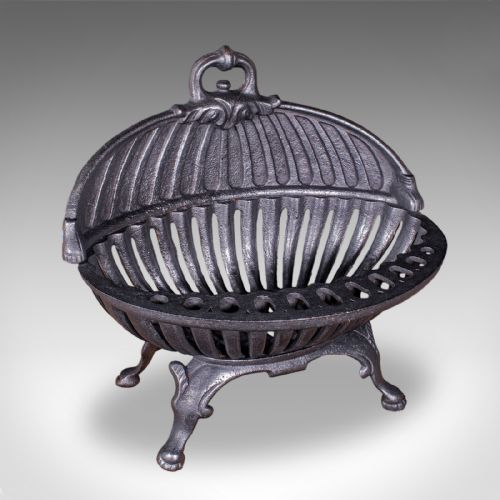
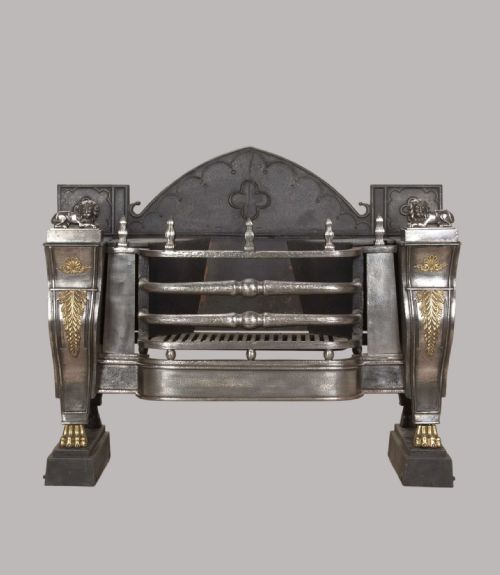
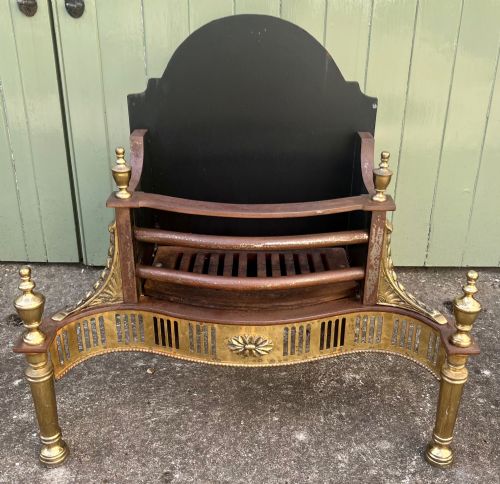


Coal Grate Fireplace
A coal grate fireplace provides a functional hearth centrepiece, bringing period character and traditional warmth to a room through robust metalwork.
Coal Grate Fireplace
A coal grate fireplace comprises freestanding baskets, inserts, and hob grates designed to hold solid fuel within a domestic hearth. These pieces span the nineteenth century and the early twentieth century, incorporating Victorian, Regency, Adam Style, and Arts & Crafts designs.
Buyers most frequently encounter cast iron examples in smaller proportions, alongside pieces combining iron and brass. Free standing fire baskets and register grates represent the primary forms available on this page.
Materials and construction
Makers utilised cast iron for structural bodies and decorative mouldings, often pairing it with wrought iron for fire baskets and bars. Brass elements appear as bright highlights on classical and Adam style pieces.
Internal components frequently incorporate firebrick to withstand intense heat during use. Casting and forging techniques allowed workshops to produce both utilitarian register grates and ornate classical designs.
Coal Grate Fireplace Retail Price Guide 2026
Typical asking prices for coal grate fireplace among the pieces listed under this phrase on Sellingantiques today, from the lower quarter to the upper quarter. They describe what is for sale here now, not the wider market.
Materials recorded across these items include cast iron, brass, wrought iron, and firebrick.
Judging quality and craftsmanship
The distinction between standard utility grates and superior examples lies in the crispness of the casting and the integration of brass mounts. Classical motifs and refined proportions separate classical hob grates from simpler utilitarian forms.
Heavier metal gauge and intricate hand-wrought detailing indicate higher grade production across nineteenth-century and early twentieth-century examples.
The Coal Grate Fireplace Glossary
- Hob grate
- A type of fireplace featuring raised side ledges, or hobs, historically used for heating Kettles or keeping food warm.
- Register grate
- A framed fireplace insert equipped with a movable flap or damper to regulate the draught and airflow up the chimney.
- Fire basket
- An open metal basket designed specifically to hold coal or wood within a fireplace opening without a full surround.
- Adam style
- A neoclassical design style popularised in the eighteenth century, characterised by graceful classical ornamentation and urn motifs.
Coal Grate Fireplace: Frequently Asked Questions
What is a coal grate fireplace?
A coal grate fireplace is a metal insert or freestanding basket built to contain solid fuel inside a domestic hearth. These items focus heat efficiently into a room while serving as a decorative architectural focal point.
Most surviving examples date from the nineteenth century and early twentieth century, constructed from cast iron, wrought iron, and brass.
How do I install a fire grate?
Installation depends on whether the piece is a freestanding basket or a built-in register grate designed to fit an existing fireplace opening. Professional builders or sweeps should check chimney flues and hearth clearances before fitting any metal insert.
Weight and dimensions dictate placement, particularly with heavier cast iron models that require secure hearth positioning.
Can I still burn coal in these grates?
Many historic grates remain structurally capable of holding solid fuel, provided the metal shows no deep structural cracks. Firebrick linings protect the outer iron frame from extreme thermal shock during operation.
Modern environmental regulations and local smokeless zone rules often dictate whether solid fuel or gas alternatives are appropriate for daily use.
How do I clean cast iron?
Routine maintenance involves removing ash and debris from the bars and base using a soft brush or specialised vacuum attachment. Applying traditional grate polish helps preserve the dark finish and deters surface oxidation.
Harsh chemical cleaners should be avoided to prevent permanent damage to the historic metal surface.