


Clodion Bronze Statue
A clodion bronze statue brings lively classical mythology into the room through animated figures of putti, satyrs and dancing maidens.
Clodion Bronze Statue
A clodion bronze statue captures the spirit of French mythological sculpture through dynamic groups of putti, fauns, and dancing maidens. These pieces follow the classical and rococo revival styles popularized by Claude Michel Clodion, featuring intricate figural arrangements.
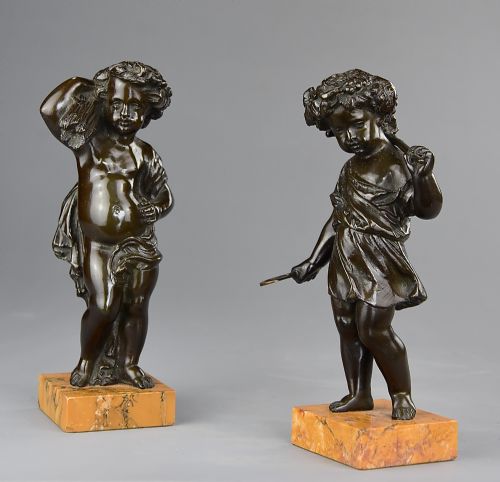
Most examples found here date from the nineteenth century, including grand tour pieces and works created in the manner or after the models of the artist. Buyers encounter single figures as well as dramatic matched pairs mounted on stone supports.
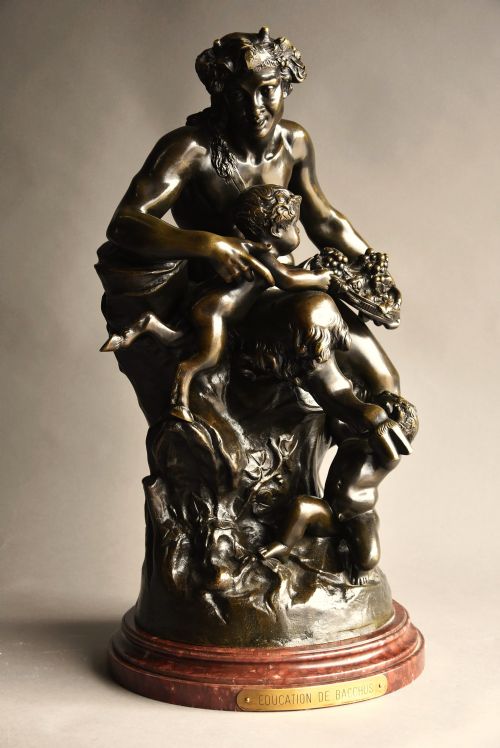
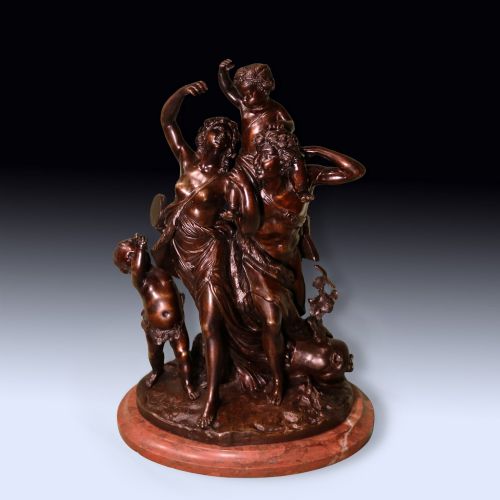
The subjects draw heavily on classical bacchanalian themes, showing satyrs, bacchus groups, and sea putti with conch shells in animated motion. These sculptures range from cabinet-sized table pieces to substantial figural groups.
Materials and Construction
These sculptures are produced using traditional casting methods in bronze, often finished with a dark patination that highlights the musculature and drapery of the figures. The metal is worked to achieve fine details in hair, expression, and floral garlands.
Many nineteenth-century figural groups are mounted on heavy marble bases that provide stability and elevate the bronze composition. The integration of metalwork and stone creates a distinct weight and presence characteristic of the period.
Several pieces capture tipsy fauns and dancing maidens caught mid-twirl, bringing permanent merriment to nineteenth-century drawing rooms.
Assessing Quality and Execution
The distinction between standard nineteenth-century foundry work and exceptional pieces lies in the crispness of the chasing and the expressiveness of the faces. Superior examples retain sharp definition in fingers, hair, and the surrounding flora without softening from repetitive casting.
The depth and nuance of the bronze patina significantly affect the visual impact, distinguishing carefully finished surfaces from flat, uniform coloration. Furthermore, the integration with fitted marble bases demonstrates the original ambition of the piece.
Claude Michel Clodion
The Clodion Bronze Statue Glossary
- Clodion bronze statue
- A figural sculpture in bronze depicting mythological subjects in the style of the French sculptor Claude Michel Clodion. These works typically feature animated groups of putti, satyrs, or dancers.
- Patinated bronze
- Metal sculpture treated with chemical solutions to produce a controlled surface colour or dark tone. This finish protects the metal and defines sculptural details.
- Grand tour
- The traditional trip through Europe undertaken by upper-class young men in the eighteenth and nineteenth centuries, resulting in the acquisition of classical bronzes and souvenirs.
- Putti
- Depictions of plump, winged infant figures frequently used in classical and rococo art. They appear often in these bronze groups alongside satyrs and nymphs.
- Rococo revival
- A nineteenth-century design movement that resurrected the ornate, flowing forms and playful mythological themes of the French eighteenth century.
Clodion Bronze Statue: Frequently Asked Questions
What subjects appear on these statues?
The subjects are drawn primarily from classical mythology, featuring dancing maidens, satyrs, fauns, and playful putti.
Bacchus and harvest themes also recur frequently across these nineteenth-century figural groups.
Are these pieces from the eighteenth century?
Most pieces available date from the nineteenth century, produced during revivals of rococo and classical styles.
Works bearing signatures or attributed to the manner of the master generally reflect later nineteenth-century manufacturing.
Why do some statues have marble bases?
Marble bases were commonly added during the nineteenth century to provide physical stability and visual weight to taller bronze groups.
These stone mounts complement the dark patination of the metal figures.
How do I display a bronze group?
These statues suit placement on sturdy side tables, pedestals, or mantelpieces where the detailed casting can be viewed from multiple angles.
Ensure the surface supports the combined weight of the bronze and its stone base.