



Clear Cut Glass Shade
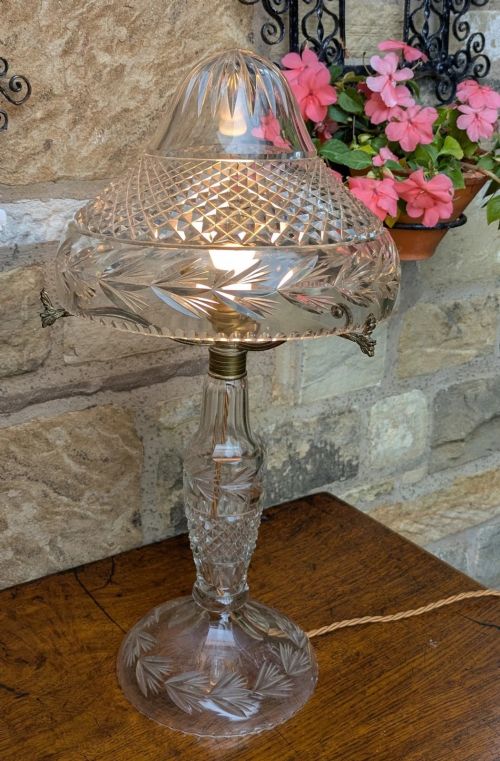
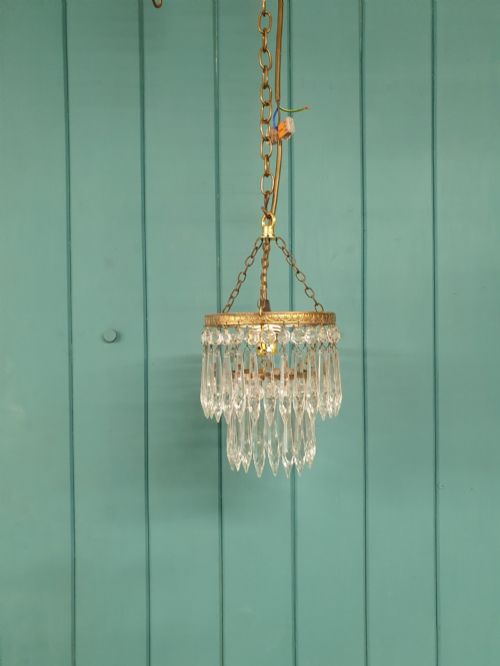
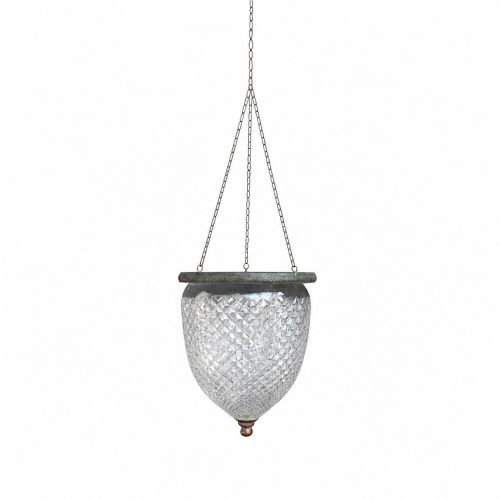
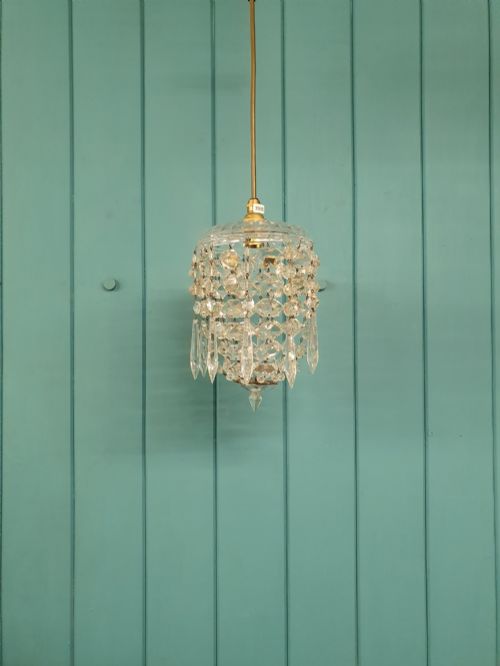
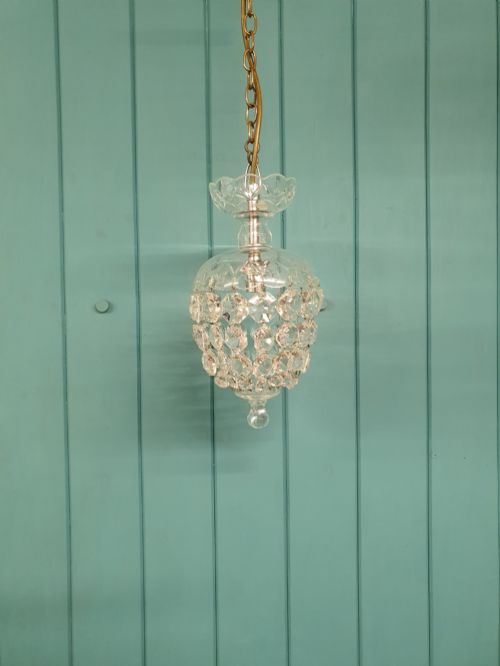
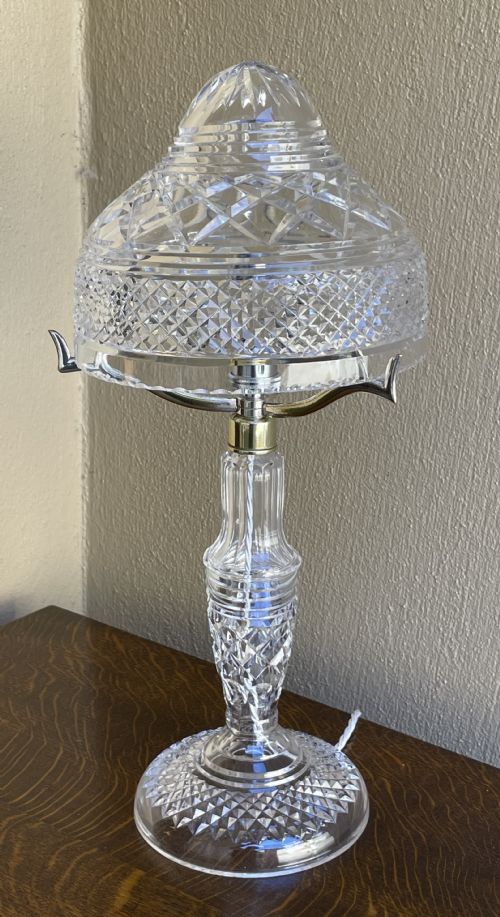
These clear cut glass shade examples span table lamps, pendants and chandeliers designed to refract light brilliantly across a room.
Clear Cut Glass Shade
A clear cut glass shade brings together functional illumination and decorative glasswork spanning the Victorian, Edwardian and Art Deco periods. These pieces appear primarily as ceiling lights, pendant lights, chandeliers and table lamps, with many examples originating from English and French workshops.
Buyers seeking a clear cut glass shade will encounter various forms, from mushroom lamps and bell jar lanterns to plafonniers and dish lights. The selection includes modest six-inch chandeliers alongside larger pendant fixtures mounted in brass, chrome or silver plate.
Materials and construction
Makers utilised heavy lead crystal and glass, shaping bowls, domes and shades through hand blowing and deep diamond cutting. These glass components are combined with structural mounts in brass, gilt bronze, chrome or silver plate to form hanging lanterns and lamp bases.
Detailing relies on precision wheel cutting to create faceted patterns that catch and scatter light. Metal fittings provide both structural support and decorative framing, securing prisms, spikes and shades with threaded collars and screws.
Materials documented across the inventory include brass, cut crystal, chrome, lead crystal, and silver plate.
Markers of quality
Quality rests upon the depth and clarity of the glass cutting, where sharper facets produce superior light refraction. Heavy lead crystal and thick-walled glass denote higher grade production compared to thinner, lighter alternatives.
The sophistication of the metalwork mounts also distinguishes finer items, with substantial brass, gilt bronze or silver-plated fittings outperforming simpler utility metals. Original matching components and undamaged crystal prisms elevate the integrity of the piece.
Stuart Crystal·Messengers·Harrods
The Clear Cut Glass Shade Glossary
- Plafonnier
- A ceiling-mounted bowl light that sits flush or close to the ceiling surface. This French form directs illumination downwards into the room.
- Bag chandelier
- A light fixture featuring a top metal ring from which numerous glass crystal strands drop downward to form a basket or bag shape. The lower section gathers into a tight cluster or pendant drop.
- Dish light
- A shallow bowl-shaped shade suspended by chains from a central ceiling canopy. It distributes ambient light evenly across an interior space.
- Prism
- A small cut crystal pendant hung from a metal armature to refract light. Prisms dangle from chandeliers and sconces to create sparkling visual effects.
- Lead crystal
- Glass containing metallic lead oxide to increase weight, brilliance and refractive index. This material allows for deeper and sharper cutting than standard glass.
Clear Cut Glass Shade: Frequently Asked Questions
What rooms suit a clear cut glass shade pendant?
Pendant lights and dish lights work well in hallways, dining spaces and bedrooms where focused downward illumination or ambient overhead sparkle is desired. Their compact dimensions make them adaptable for lower ceiling heights.
They also pair effectively with period interiors from the Edwardian and Art Deco eras, adding a bright focal point without overwhelming smaller architectural proportions.
How do I clean a cut glass shade?
Remove delicate glass shades or crystal drops from their metal mounts when possible and wash them gently in lukewarm water with mild soap. Avoid harsh chemicals that might damage antique brass, silver plate or chrome fittings.
Dry each component thoroughly with a soft lint-free cloth to restore maximum sparkle to the faceted glass surfaces before reassembly.
How do I date a clear cut glass shade fixture?
Examine the metal mounts, wiring methods and glass cutting styles to determine the era of production. Victorian and Edwardian examples often feature heavy brass galleries and deep hand-cut patterns.
Later pieces from the 1930s tend toward streamlined mushroom shapes and chrome or simplified metal frames, reflecting the shift towards Art Deco design principles.
Can I use modern bulbs in these antique lights?
Most antique fixtures accommodate standard modern lamps, provided the electrical wiring and bulb holders have been professionally checked and updated to current safety standards. Low-heat LED bulbs are particularly suitable for older enclosed glass shades.
Consult a qualified electrician to ensure that the internal wiring and structural hanging points safely support the weight of the crystal and metal assembly.