




Claw Foot Log Bin
These claw foot log bin pieces bring functional hearthside storage into the room with robust metal and timber construction.
Claw Foot Log Bin
When you search for a claw foot log bin, you are looking at fireside accessories designed to hold fuel near the hearth, most commonly encountered in Victorian and Edwardian forms from the nineteenth and early twentieth centuries. These vessels appear as log bins, coal buckets, scuttles, and cauldrons intended for practical use beside the fireplace.
Originating predominantly from English workshops, these pieces range from plain utilitarian vessels to heavily embossed decorative containers. They serve equally well today as fireside stores or as large interior planters.
Materials and construction methods
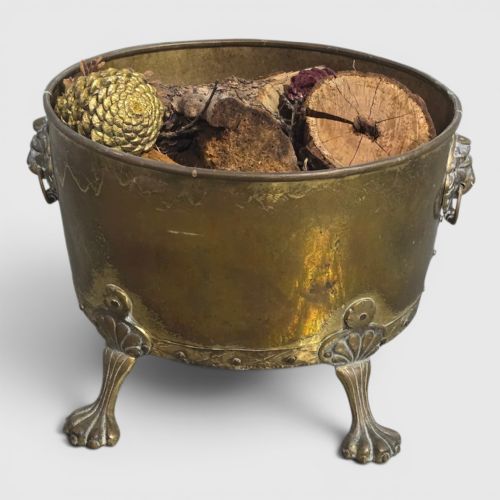
Makers formed these containers primarily from sheet brass and handbeaten copper, often joining the metal seams with visible rivets and reinforcing the rims with contrasting copper bands. The metal was frequently worked cold, utilising hammers to create textured relief patterns such as floral embossing across the body.
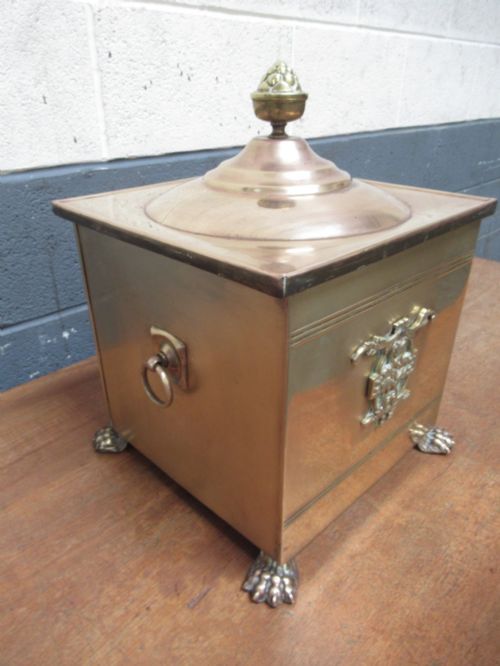
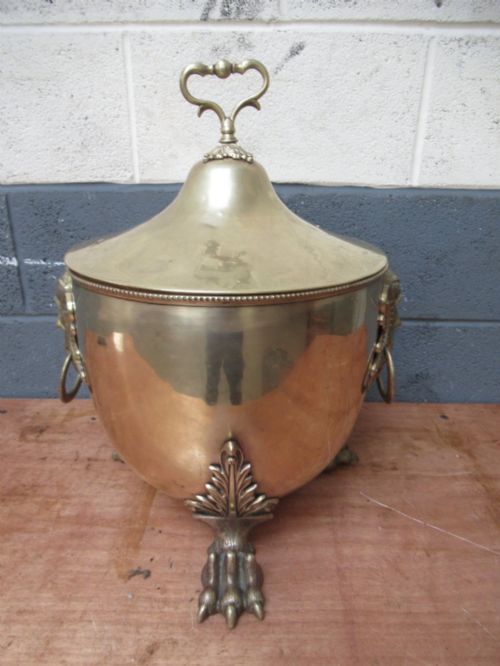
Wooden examples rely on traditional pine construction, sometimes accented with dark ebony details for contrast. The defining claw feet are typically cast in brass and securely fastened to the base to support the considerable weight of logs or coal.
Claw Foot Log Bin Retail Price Guide 2026
Typical asking prices for claw foot log bin among the pieces listed under this phrase on Sellingantiques today, from the lower quarter to the upper quarter. They describe what is for sale here now, not the wider market.
Listings span the Victorian and Edwardian periods, featuring brass, copper, cast brass, pine, gilt metal, and ebony.
Evaluating quality and craftsmanship
The distinction between ordinary utility items and superior examples lies in the weight of the metal and the crispness of the handbeaten or embossed decoration. Heavier gauge copper and thick cast brass feet indicate a higher grade of production intended for affluent Victorian interiors.
Attention to detail in construction also separates the ranges, seen in the quality of the riveted joints, the integration of sturdy drop handles, and the presence of maker attribution stamps such as those from William Soutter and Sons.
William Soutter And Sons
The Claw Foot Log Bin Glossary
- Claw foot
- A furniture or vessel support shaped to resemble an animal foot grasping a sphere. This stylistic feature appears frequently on Victorian metalwork to lift containers clear of damp hearth floors.
- Log bin
- A deep cylindrical or oval container designed to hold firewood beside a fireplace. They are built to withstand heavy daily use and often include secure handles for transport.
- Coal scuttle
- A bucket or box specifically shaped for carrying and storing coal, usually featuring a wide mouth and a hinged handle. Many Victorian examples double as general log stores.
- Handbeaten
- A surface finish produced by manually striking sheet metal with a hammer to shape the vessel and create a textured pattern. This method leaves subtle artisan marks across the copper or brass.
- Aesthetic Movement
- A late nineteenth-century design style that emphasised visual beauty over narrative function. Pieces from this period often incorporate refined materials and understated decoration.
Claw Foot Log Bin: Frequently Asked Questions
What is a claw foot log bin?
A claw foot log bin is a heavy metal or wooden container used to store firewood beside a fireplace, traditionally elevated on cast metal feet. These vessels date primarily from the Victorian and Edwardian eras.
They combine practical fuel storage with decorative metalwork, often featuring embossed surfaces or contrasting copper bands designed to complement nineteenth-century hearths.
How were these bins used originally?
In Victorian and Edwardian homes, these vessels sat beside the fireplace to hold ready supplies of coal or logs for the hearth. Their sturdy handles allowed servants to transport fuel easily from cellar to living room.
Today, many owners continue to use them for logs, while others repurpose them as large umbrella stands or interior plant holders.
How do I identify a Victorian log bin?
Victorian examples typically feature heavy gauge brass or handbeaten copper construction, often decorated with floral embossing or paired with reinforcing metal bands. The presence of cast metal claw feet is a common design trait of the period.
Makers' marks stamped into the base, such as those associated with William Soutter and Sons, can also help confirm a nineteenth-century origin.
Can I use copper log bins outdoors?
While copper and brass are durable metals that weather naturally, these antique pieces were designed for indoor domestic use. Exposing them to continuous outdoor elements can damage the historical surface and destabilize wooden elements like pine.
Interior placement in dry living spaces preserves the original metal patina and any decorative embossing.