

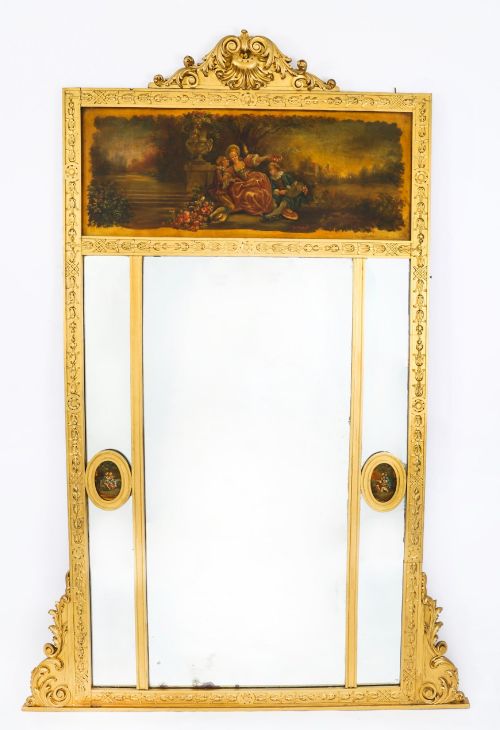
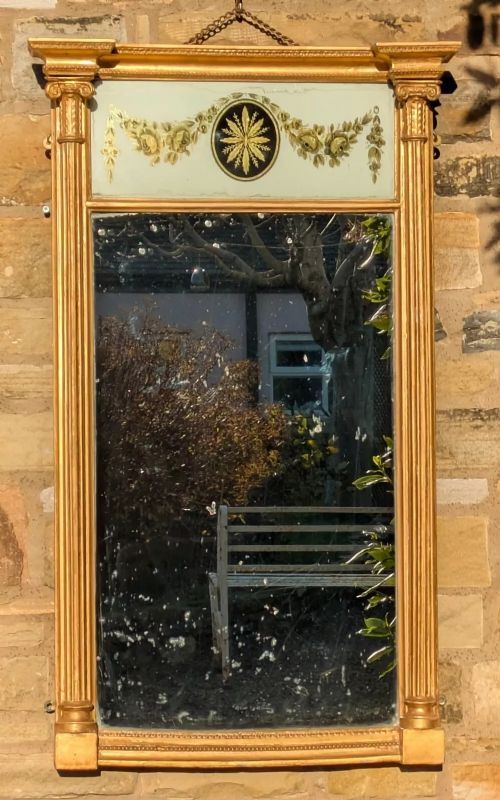
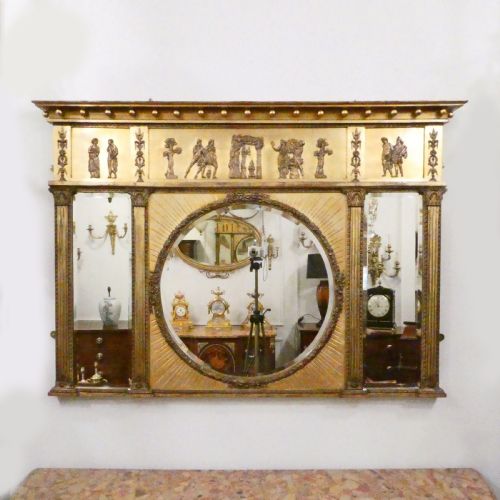


Classical Panel Mirror
Classical panel mirror designs combine architectural framing with decorative upper sections, offering both light and period character to a room.
Classical Panel Mirror
The selections recorded here span from the early nineteenth century through to the Edwardian era, encompassing Regency, Victorian, and Neoclassical stylistic revivals. Wall mirrors and landscape formats predominate, often displaying rectangular proportions suited to placement above fireplaces or console tables.
Origin points vary between British workshops and French ateliers, bringing distinct regional interpretations to classical motifs. While some examples remain restrained in their geometry, others adopt elaborate architectural framing with columns and applied ornamentation.
Materials and construction methods
Construction relies heavily on timber frames finished with gesso and gold leaf or paint, creating the characteristic gilded and ebonised surfaces seen across the collection. Wood provides the structural carcass, whilst moulded gesso allows for the crisp application of classical relief details such as acanthus leaves and egg-and-dart moulding.
Upper panels incorporate a range of decorative techniques, including reverse painting on glass known as verre eglomisé, oil paintings on canvas or wood, and moulded relief plaster. These panels sit above the main mirror glass, which is frequently divided into multiple plates held by internal muntins.
Classical Panel Mirror Retail Price Guide 2026
Typical asking prices for classical panel mirror among the pieces listed under this phrase on Sellingantiques today, from the lower quarter to the upper quarter. They describe what is for sale here now, not the wider market.
Certain French panels depict cheerful cherubs alongside Bacchus, ensuring the household drinks under mythological supervision.
Distinctions in craftsmanship
Quality rests in the crispness of the hand-carving and the depth of the gilding applied over the gesso ground. Finer examples display sharp definition in architectural elements like columns and relief panels, whereas lesser pieces rely on softer, shallower mouldings.
The integrity of the upper panel also dictates standing, with hand-painted verre eglomisé work or detailed oil panels representing a higher level of artisanal skill than plain timber or standard decoration. Original mercury glass plates with aged patination further separate standard production from superior pieces.
The Classical Panel Mirror Glossary
- Verre eglomisé
- A process of cold painting and gilding on the reverse side of glass to produce a metallic, translucent decorative panel. This technique frequently appears in the upper sections of Regency pier glasses.
- Trumeau
- A decorative wall mirror featuring an upper panel containing a painting, carving, or mirror plate. Originating in French interior design, these pieces function as permanent wall fixtures.
- Gesso
- A plaster-like mixture applied to wooden frame surfaces to create a smooth base for subsequent gilding or painting. It allows craftsmen to carve intricate relief details before applying gold leaf.
- Pier glass
- A tall mirror designed specifically to hang on the narrow section of wall between two windows. They often incorporate lower console tables or stand above architectural pedestals.
- Triptych
- A mirror plate divided into three distinct vertical sections within a single frame. This layout is common in nineteenth-century overmantel mirrors designed for landscape proportions.
Classical Panel Mirror: Frequently Asked Questions
Where should I hang a classical panel mirror?
These pieces traditionally occupy the space above a fireplace mantelpiece, where their horizontal landscape format balances the hearth below. They also function effectively on main reception room walls to reflect natural light from windows.
When positioning the mirror, consider eye level and the surrounding furniture scale to ensure the architectural frame anchors the room properly.
How do I distinguish a Regency piece from a Victorian revival?
Regency and early nineteenth-century examples typically display leaner architectural proportions, precise carved details like acanthus leaves, and specific decorative panels such as verre eglomisé. The gilding often uses traditional bole preparations beneath gold leaf.
Victorian and later nineteenth-century revivals tend towards heavier framing, broader proportions, and sometimes machine-moulded composition ornament rather than hand-worked gesso.
What is the upper panel usually made of?
The panel above the main glass plate varies by origin and style, frequently taking the form of a reverse-painted verre eglomisé panel in British pier glasses. French trumeau examples more commonly feature oil paintings on canvas or wood, or moulded relief panels depicting classical figures.
Some simpler decorative versions utilise plain painted wood or a smaller secondary mirror plate within the upper section.
Can these mirrors support daily use in a modern home?
These pieces were built as durable architectural furnishings, using solid timber frames and sturdy backing boards designed to last centuries. While original mirror plates may show foxing or age spots, the structural integrity remains robust for everyday placement.
Standard wall fixings rated for heavy weights are necessary due to the substantial combination of wood, gesso, and multiple glass plates.