

Classical Marble Lamps
Classical marble lamps bring architectural solidity and restrained ornamentation to a room, combining substantial stone bodies with metal mounts.
Classical Marble Lamps
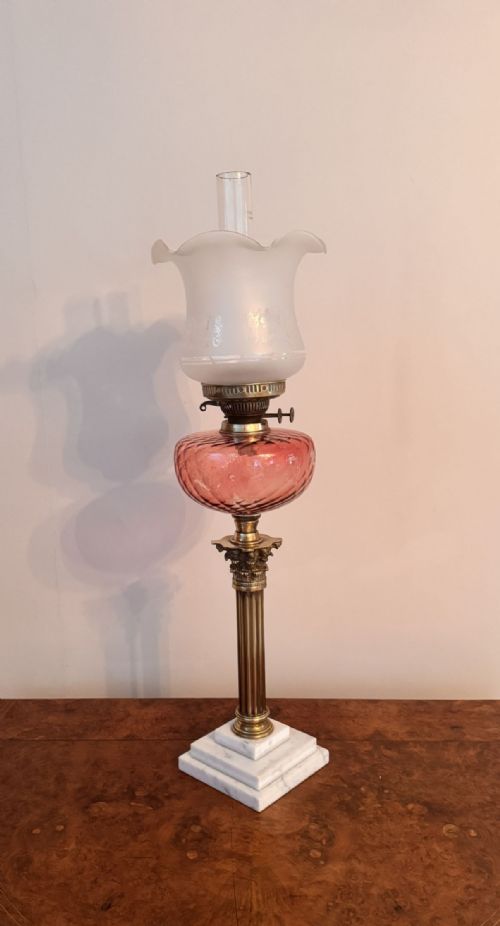
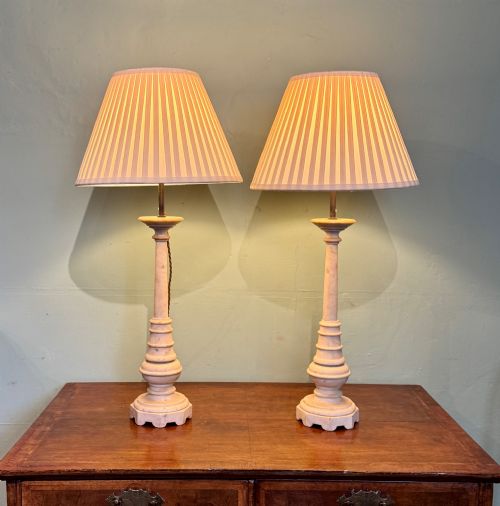
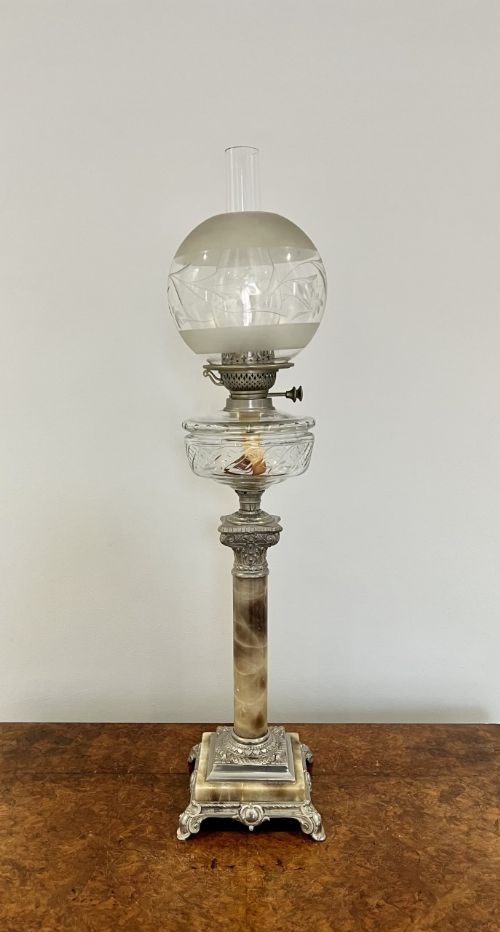
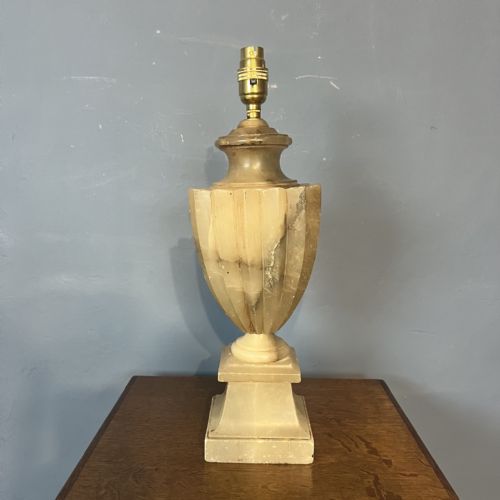
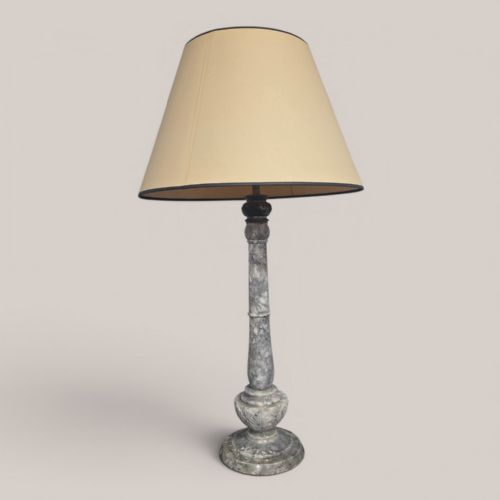
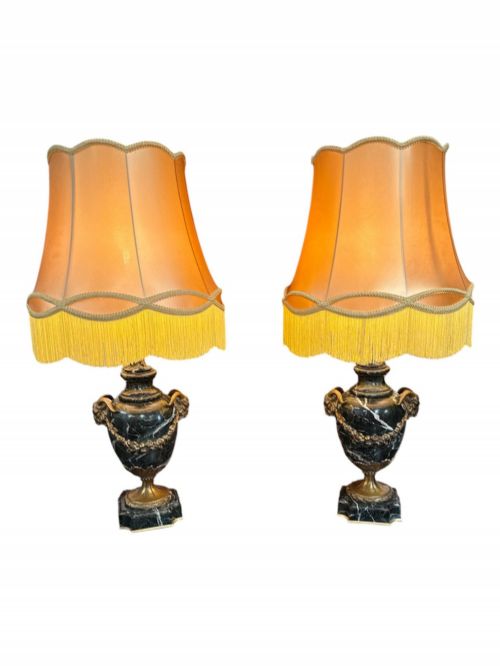
Classical marble lamps bridge the gap between antique lighting and sculptural objects, drawing heavily on architectural forms from antiquity. When searching for classical marble lamps, buyers encounter items ranging from converted oil lamps and slender columns to heavy urns and cassolettes adapted for electricity. These pieces span the nineteenth and early twentieth centuries, capturing periods from the Victorian era through the Edwardian years and the nineteen-twenties.
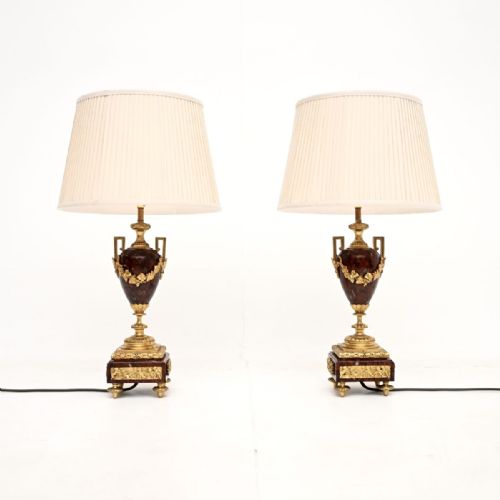
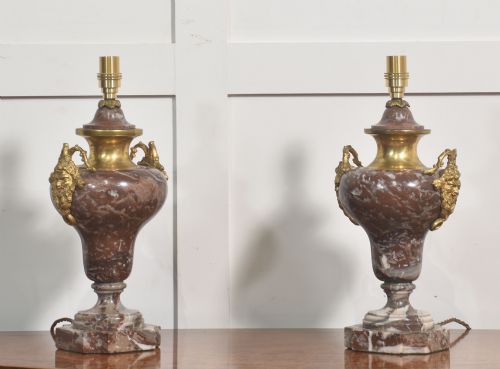
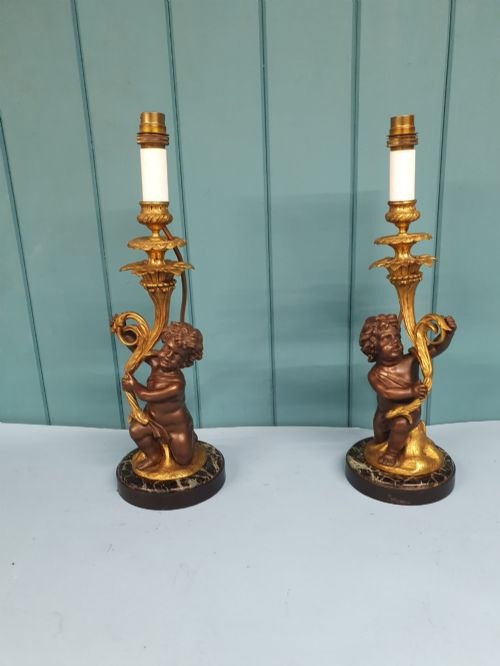
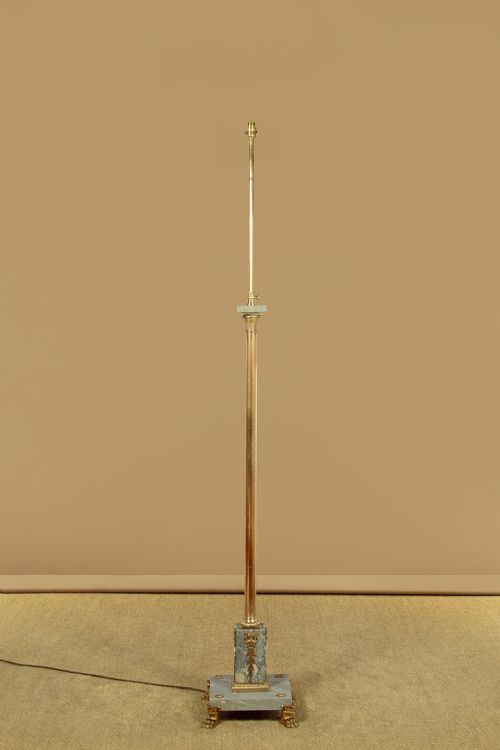
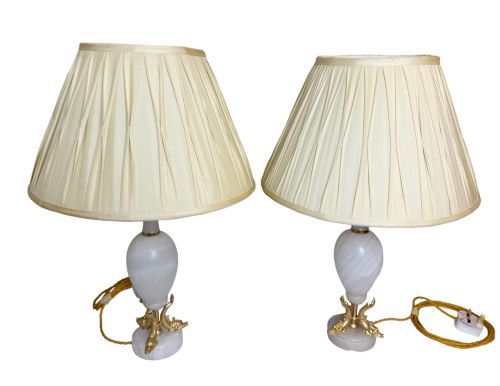
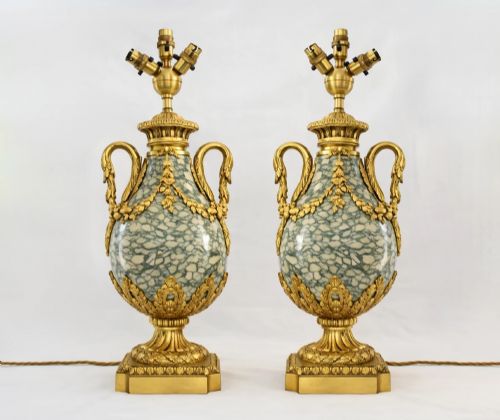
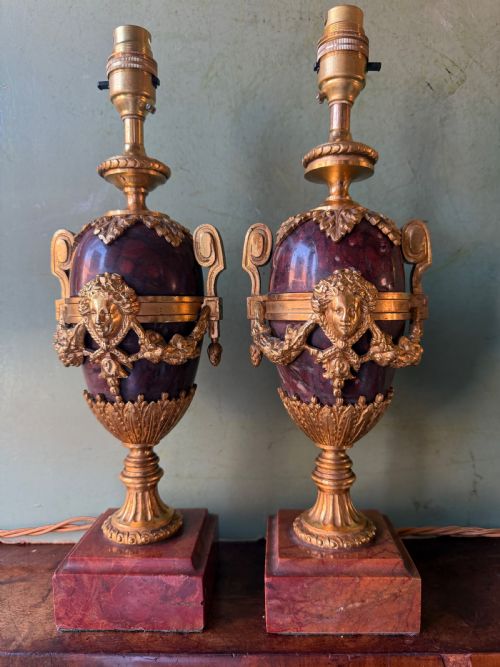
The aesthetic leans heavily on historical revivals, most notably French Neoclassical, Louis XVI, and French Empire styles. Forms include pairs of table lamps resting on gilt bronze or ormolu bases, alongside occasional floor lamps and taller torcheres. White, rouge, and green marble frequently appear alongside translucent alabaster and banded onyx bodies.
Materials and construction
The construction relies on turning and carving dense natural stone, paired with cast metal components. Masons shaped white, rouge, or green marble and alabaster into urns, columns, and amphorae, often drilling the stone vertically to accommodate electrical wiring during later conversions or original manufacture. Onyx provides a banded, translucent alternative to opaque marble.
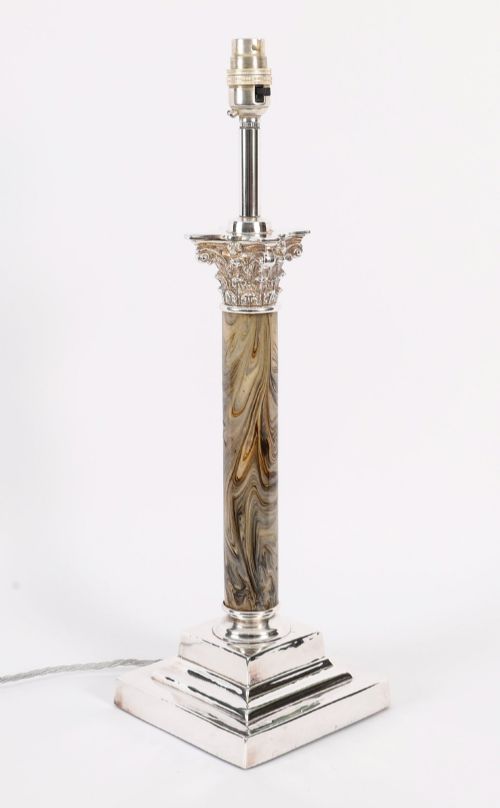
Metalwork provides structural support and decorative contrast through the use of brass, gilt bronze, ormolu, and silver plating. Foundries cast mounts, paw feet, and Corinthian capitals that were then chased and fitted directly to the stone bodies, sometimes securing them with central threaded brass rods.
Classical Marble Lamps Retail Price Guide 2026
Typical asking prices for classical marble lamps among the pieces listed under this phrase on Sellingantiques today, from the lower quarter to the upper quarter. They describe what is for sale here now, not the wider market.
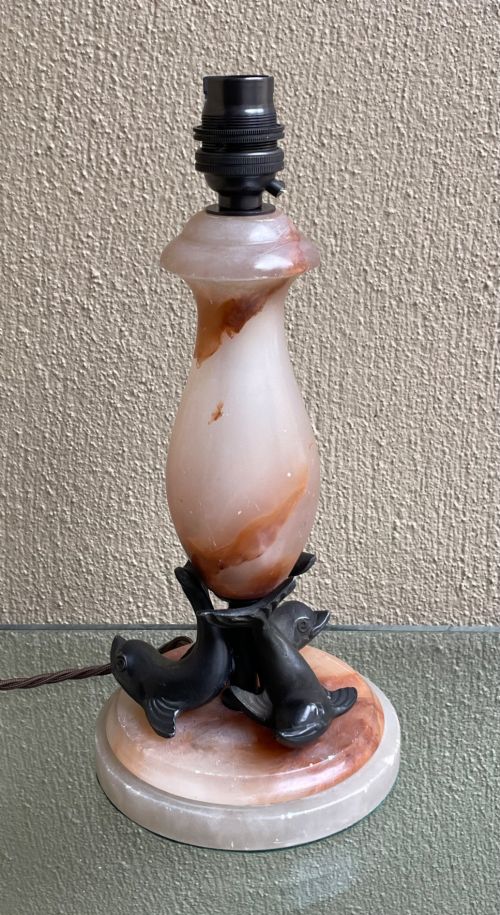
The material palette recorded here ranges from natural stone and onyx to cast bronze, ormolu, and frosted glass figures.
Assessing quality
Quality rests primarily on the crispness of the metal cast and the selection of the stone. Superior examples feature finely chased ormolu or gilt bronze mounts with sharp detail, whereas lower-tier pieces rely on plain, pressed brass fittings that lack definition.
The stone itself dictates the visual weight of the piece, with evenly figured marble or richly banded onyx marking out the better productions. Heavy, well-balanced bases and tightly integrated metal mounts without wobble separate standard utilitarian conversions from finer decorative lighting.
F. De Luca·Baccarat
The Classical Marble Lamps Glossary
- Ormolu
- Gilded bronze mounts applied to furniture and decorative objects. The technique involves mercury gilding cast bronze to achieve a rich golden finish.
- Cassolette
- A decorative vase featuring a reversible lid that functions either as a solid urn or an incense burner. In lighting, these are often converted into table lamps.
- Corinthian column
- An architectural column order characterised by ornate capitals decorated with acanthus leaves. This form frequently translates into tall table lamps.
- Gueridon
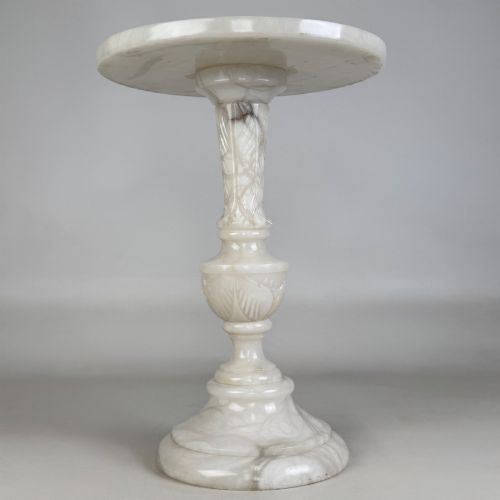
- A small decorative stand or table, sometimes included among classical marble furnishings. They typically feature a circular top supported by a central pillar or columns.
- Alabaster
- A fine-grained, translucent stone used for carving lamps and figures. It allows light to diffuse softly when a bulb is placed behind or within it.
Classical Marble Lamps: Frequently Asked Questions
What periods do these lamps come from?
The selection spans the nineteenth century through the nineteen-twenties, encompassing Victorian, Edwardian, and early twentieth-century production.
Design influences stretch back further into French Empire and Louis XVI revival styles, reflecting enduring classical tastes.
Were these originally made as electric lamps?
Many examples began life as oil lamps, cassolettes, or candlesticks before receiving conversion wiring later in their lifespan.
Some early twentieth-century pieces were manufactured specifically to house electrical components from the outset.
How do I distinguish marble from alabaster?
Marble is an opaque metamorphic rock with dense veining, whereas alabaster is a softer, gypsum-based stone with a translucent quality.
Alabaster often allows light to pass through its surface when illuminated internally.
How do I care for antique stone and metal?
Dust the stone gently with a dry microfibre cloth and avoid using harsh chemical cleaners that can etch the polished surface.
Metal mounts require minimal intervention; simply wipe them carefully to prevent the accumulation of moisture and grime.