



Classical Marble Fireplace
A classical marble fireplace brings architectural gravity to a room, combining sculpted stone with neoclassical restraint.
Classical Marble Fireplace
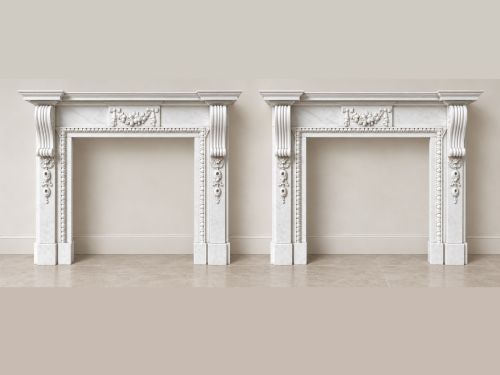
When you search for a classical marble fireplace, you are looking at carved stone surrounds dating from the Victorian and Edwardian periods. These architectural pieces frame a hearth using traditional classical motifs drawn from French Louis XVI and Edwardian neoclassical styles.
The version you are most likely to meet on this page is a carved white marble fireplace from the Edwardian era. These surrounds balance clean horizontal shelves with restrained pilasters and traditional hearth openings.
How they were made
These surrounds rely entirely on white marble, shaped through hand carving and polished to varying degrees of smoothness. Stonemasons cut the stone blocks to form mantel shelves, jambs, and friezes following classical architectural proportions.
Carvers applied decorative elements such as dentils, fluting, and floral patras directly onto the marble surface. The precision of the chisel work determines the sharpness of the neoclassical details found on each surround.
Classical Marble Fireplace Retail Price Guide 2026
Typical asking prices for classical marble fireplace among the pieces listed under this phrase on Sellingantiques today, from the lower quarter to the upper quarter. They describe what is for sale here now, not the wider market.
Listings feature white marble and brass materials across Victorian and Edwardian periods.
What varies in quality
The distinction between ordinary and exceptional work lies in the depth and crispness of the stone carving. Superior examples display undercut foliage and sharply defined architectural mouldings rather than shallow, mechanical incisions.
The choice of marble block also dictates quality, with uniform white stone lacking grey veining generally prized for formal classical designs. Subtle variations in the polish and the symmetry of the assembled jambs separate standard pieces from masterworks.
James Ritchie And Son·Deniere And Cailleaux
The Classical Marble Fireplace Glossary
- Frieze
- The central horizontal band beneath the mantel shelf. This flat or carved panel often forms the visual centrepiece of the surround.
- Jamb
- The vertical post or side support of a fireplace framing the opening. Jambs carry the weight of the mantel shelf and frequently feature fluting or console brackets.
- Mantel shelf
- The projecting horizontal shelf top running along the upper edge of the fireplace. It provides a display surface above the hearth.
- Neoclassical
- A revival style drawing inspiration from classical Greek and Roman architecture. It prioritises symmetry, restraint, and orderly decorative motifs.
- Pilaster
- A rectangular column projecting slightly from the wall or fireplace jamb. It mimics structural support while remaining largely decorative.
Classical Marble Fireplace: Frequently Asked Questions
How do I measure for a marble fireplace?
Measure the height and width of your structural wall opening before checking the internal dimensions of the marble surround. Ensure the hearth clearance matches the depth and projection of the specific fireplace frame.
Account for any hearth rug placement and surrounding flooring levels so the base sits evenly. Professional stone fitters usually require precise wall plumb measurements to install heavy marble surrounds safely.
How do I clean a white marble fireplace?
Use warm water and a soft cloth to wipe down dust and soot accumulation from the stone surface. Avoid acidic cleaners or household detergents that can etch the polished marble.
Dry the stone thoroughly with a clean microfiber cloth to prevent water spotting. Stubborn marks require specialist stone poultices rather than abrasive scrubbing.
Can these fireplaces be used with real fires?
Many antique marble surrounds accommodate traditional hearth fires, though inner firebricks or register grates are necessary to protect the stone. Excessive direct heat can sometimes stress old marble if thermal insulation is inadequate.
Consult a qualified installer to assess the draught, flue, and heat resistance of your specific fireplace setup. Modern gas or electric inserts are often utilised to protect delicate antique stone from smoke damage.
How do I distinguish Edwardian from Victorian styles?
Edwardian neoclassical designs generally favour lighter proportions and crisp, restrained carving influenced by eighteenth-century revival tastes. Victorian examples often display heavier massing, deeper mouldings, and bolder architectural presence.
Look at the overall geometry of the pilasters and shelf profiles to identify the period aesthetic. Edwardian pieces tend towards brighter white marble and simplified classical symmetry.