





Classical Hanging Light
A classical hanging light brings architectural dignity and warm illumination to high ceilings through enduring bronze, brass, and alabaster forms.
Classical Hanging Light
A classical hanging light represents a distinct tradition of interior illumination, drawing heavily on French Neoclassical, Empire Revival, and Classical Revival styles. These fixtures descend from grand European salons and hallways, bringing formal decorative language into domestic spaces through symmetrical arrangements and classical motifs.
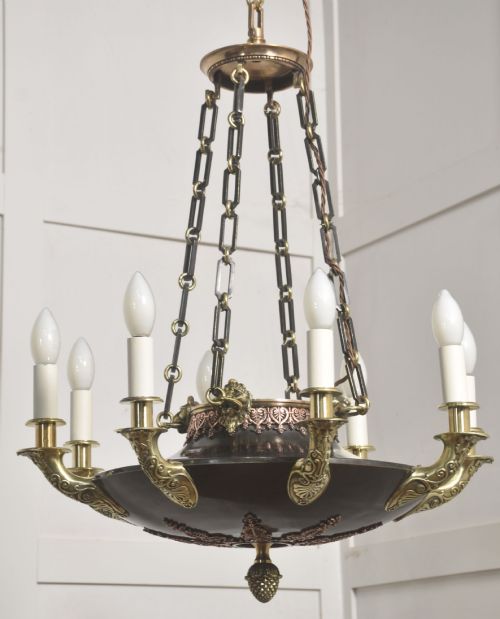
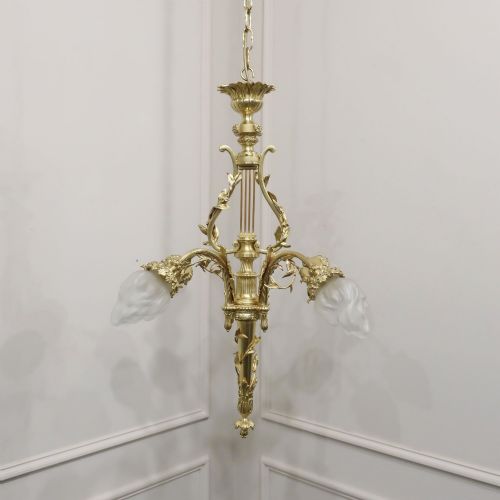
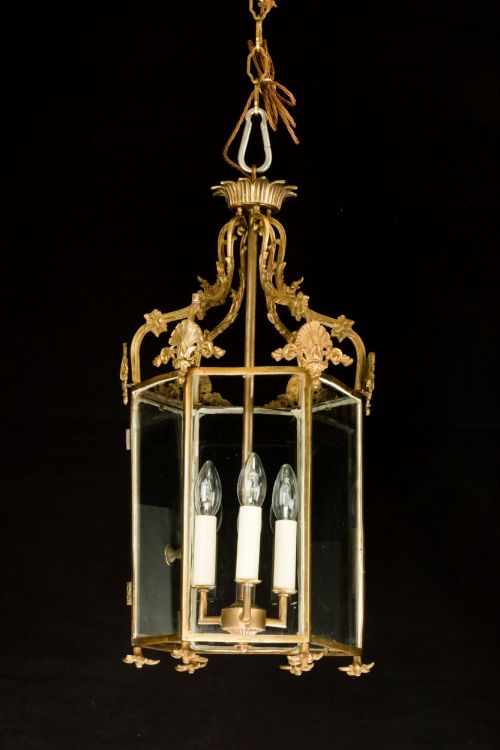
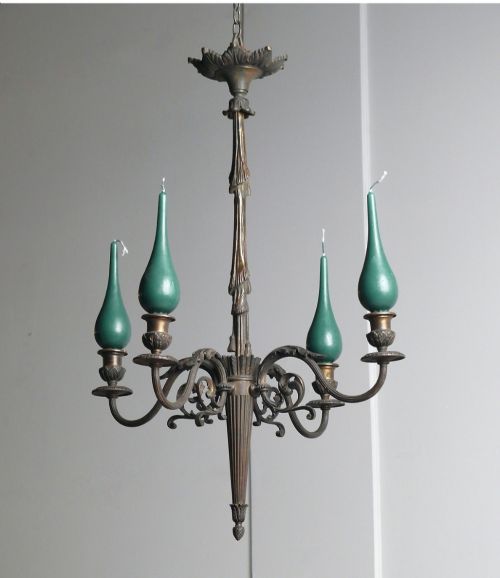
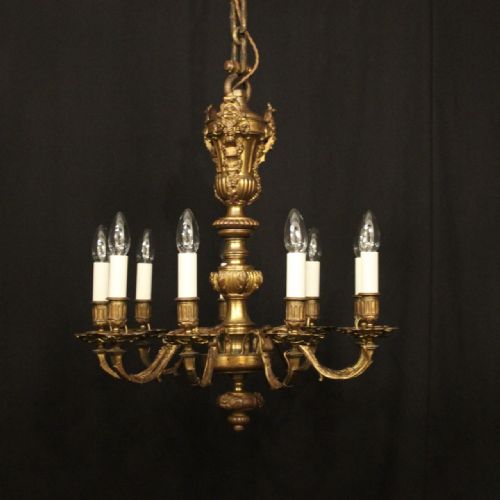
Buyers browsing this selection encounter a variety of forms, ranging from multi-tiered bronze chandeliers to single-bulb alabaster dish lights and glazed brass lanterns. The examples span from the nineteenth century through the Edwardian period and into the nineteen-twenties, showing a persistent preference for stately proportions.
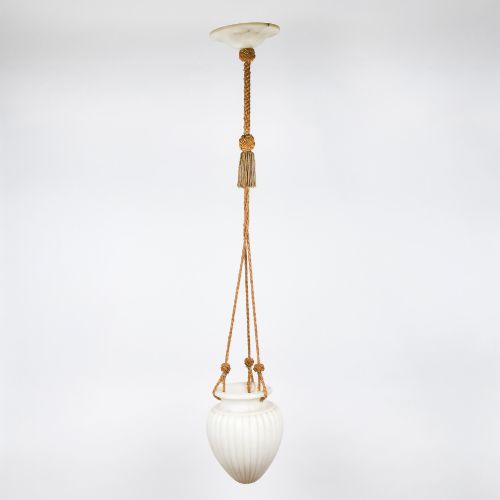
French origins dominate the selection, often taking the shape of multi-armed candle-style chandeliers or convex hall lanterns designed to catch and refract light. Alongside these, English white alabaster dish lights offer a softer, more diffused form of ceiling suspension utilising braided cord.
How they were made
Metalwork forms the backbone of these pieces, utilising cast bronze, solid brass, and copper shaped into structural frames and arms. Guilders applied fine layers of gold or silver gilt to bronze surfaces, enhancing the reflective quality of the metal under candlelight or early electric bulbs.
Glass and stone play an essential role in softening the illumination, seen in white alabaster bowls and painted glass plafonnier light shades. Artisans suspended these heavy components using robust chains, braided cord, and structural metalwork designed to bear substantial weight securely from the ceiling.
Classical Hanging Light Retail Price Guide 2026
Typical asking prices for classical hanging light among the pieces listed under this phrase on Sellingantiques today, from the lower quarter to the upper quarter. They describe what is for sale here now, not the wider market.
Listings feature pieces spanning the nineteenth century, the Edwardian era, and the nineteen-twenties, constructed primarily from bronze, brass, and alabaster.
What varies in quality
The refinement of the casting and chasing distinguishes the execution of the metal elements, where crisp botanical details and classical drapery emerge with sharper definition in superior pieces. Heavier bronze structures and thick cast brass demonstrate a commitment to substantial materials rather than thin pressed metal.
The choice of secondary materials marks a clear division in grade, particularly the purity and translucency of the white alabaster bowls and the quality of the original gilding. Intact glass shades and sophisticated multi-tiered configurations indicate a higher original commission designed for principal rooms.
The Classical Hanging Light Glossary
- Plafonnier
- A ceiling-mounted or closely suspended glass light shade that directs illumination downwards into a room.
- Ormolu
- Gilt bronze, where a finely ground gold-mercury amalgam is applied to a bronze base and heated to leave a rich gold coating.
- Lyre
- A stringed musical instrument motif frequently incorporated into the openwork backplates or central frames of Neoclassical light fixtures.
- Chasing
- The hand-tooling of metal surfaces after casting to sharpen details, add texture, and refine decorative motifs.
- Alabaster
- A fine-grained, translucent stone used for carved bowls and dishes that diffuse light evenly across a space.
Classical Hanging Light: Frequently Asked Questions
How do I hang a heavy bronze chandelier safely?
Suspension of heavy bronze and alabaster fixtures requires securing the hanging mechanism directly into ceiling joists or using a rated structural steel box. Professional installation ensures the combined weight of the metal frame and glass components is supported without straining plaster.
Adjusting the height depends on ceiling clearance and the intended room function, keeping the fixture high enough for unobstructed passage while maintaining a strong visual anchor in the space.
What is the difference between an Empire Revival and a Neoclassical light?
Neoclassical lighting draws inspiration from ancient Greek and Roman architecture, featuring restrained symmetry, urn motifs, and delicate acanthus leaves. These pieces often emphasise lightness and refined proportions derived from eighteenth-century design.
Empire Revival pieces, by contrast, reflect the heavier, more militaristic grandeur favoured during the Napoleonic era. They incorporate bolder classical elements, robust bronze casting, and prominent laurel wreaths or sphinx motifs.
How do I clean an antique alabaster dish light?
Alabaster is a porous stone that absorbs moisture and oils easily, meaning it should be dusted gently with a dry, soft cloth. Avoid using water, chemical solvents, or household detergents, which can stain or pit the stone surface permanently.
For stubborn grime, professional conservation methods are recommended to preserve the natural translucency and matte finish of the material without altering its aged character.
Can these vintage lights be wired for modern electrical standards?
Most antique fixtures accommodate modern electrical wiring, though older internal channels may need rewiring by a qualified electrician to meet current safety codes. Standard sockets can be fitted discreetly into existing candle tubes or central brass housings.
Using low-heat LED bulbs helps protect fragile elements like painted glass shades and dried braided cords from thermal degradation over prolonged use.