

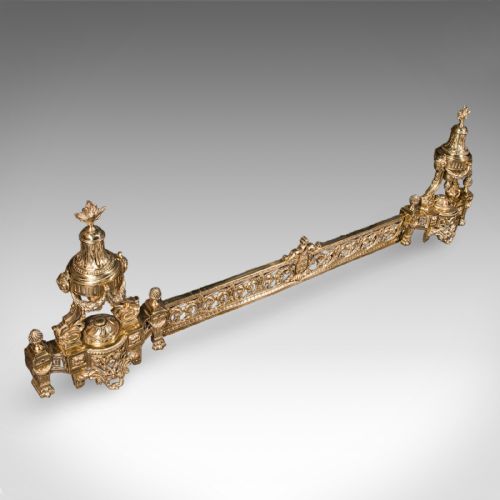


Classical Fire Surround
These classical fire surrounds bring architectural proportion and disciplined ornament to a room, anchoring the hearth in the time-tested grammar of the antique.
Classical Fire Surround
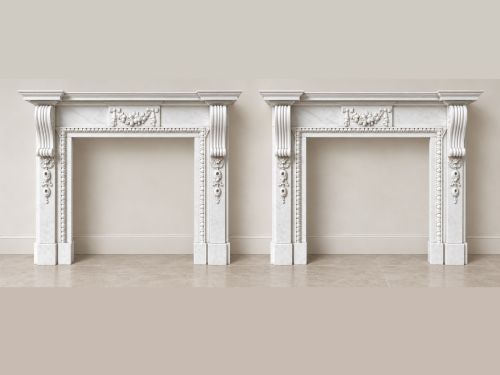
A classical fire surround provides the architectural framework for a fireplace, framing the hearth with the formal geometry and ornament of antiquity. When searching for a classical fire surround, buyers encounter architectural chimney pieces and companion hearth furniture designed to organise the fireplace wall.
The pieces on this page span the Georgian, Regency, Victorian and Edwardian eras, reflecting the enduring appeal of neoclassical design across more than a century of domestic building. Examples range from monumental marble chimney pieces to adjustable metal fire fenders and carved wooden surrounds.
Surrounds and fenders in this selection often display the restrained symmetry of the neoclassical taste, drawing on architectural orders and classical motifs such as urns, drapery and foliate carving. While some pieces are grand architectural installations in stone or marble, others are domestic fittings in carved pine or polished brass.
How they were made
Masons and carvers worked white marble and statuary marble with chisels and rasps to achieve the crisp, linear enrichment characteristic of neoclassical chimney pieces. Timber surrounds relied on seasoned pine and gesso, the latter moulded or built up to take fine, sharp relief decoration before painting or finishing.
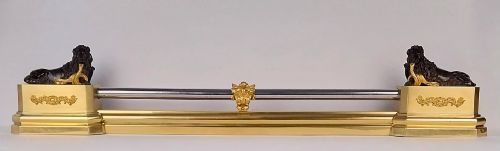
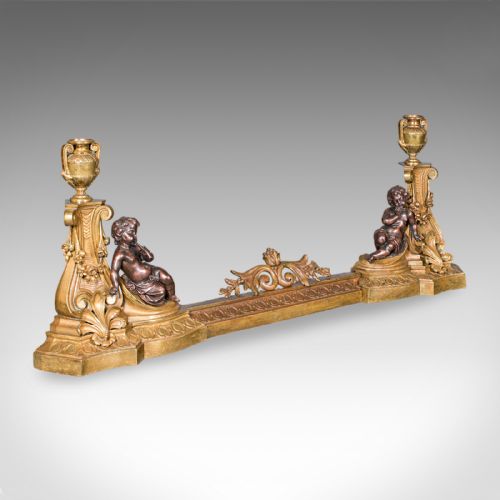
Metalwork for fenders and hearth furniture involved casting brass, bronze and ormolu, alongside forged steel for adjustable kerbs and pierced gallery rails. Artisans combined these techniques to produce durable functional ironwork and decorative bronze mounts that complemented the stone and timber architecture of the fireplace.
Classical Fire Surround Retail Price Guide 2026
Typical asking prices for classical fire surround among the pieces listed under this phrase on Sellingantiques today, from the lower quarter to the upper quarter. They describe what is for sale here now, not the wider market.
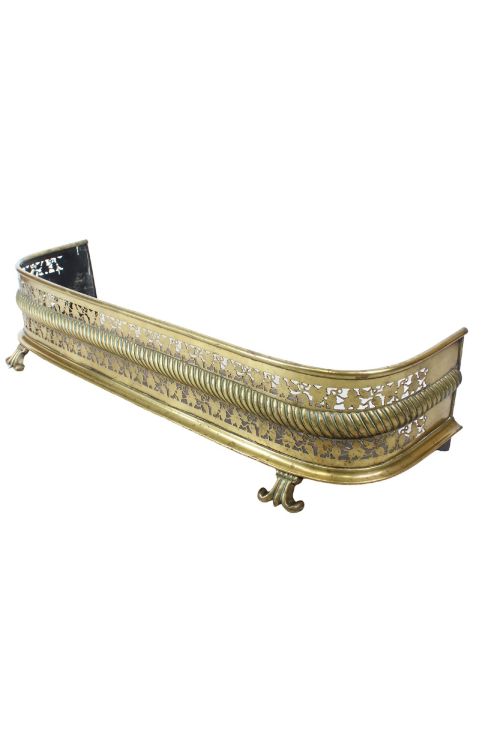
Adjustable Victorian fire kerbs let nineteenth-century households adapt a single piece of heavy brass to fit different hearths as coal grates moved house.
What varies in quality
Quality in a classical fire surround lies in the depth of architectural understanding shown by the carver or designer, where proportion and relief work together harmoniously. The crispness of the modelling in marble, gesso or cast bronze dictates whether the ornament reads with architectural authority or appears soft and indistinct.
The choice of material and the integrity of its construction set the hierarchy among pieces, distinguishing solid statuary marble and finely figured timber from simpler painted pine or utilitarian ironwork. Superior examples maintain structural truth in their joints and refined finishing in every exposed surface.
The Classical Fire Surround Glossary
- Neoclassical
- A style originating in the mid-eighteenth century that revived the classical architecture and ornament of ancient Greece and Rome. It prioritises symmetry, straight lines and classical motifs such as fluting, swags and paterae.
- Fender
- A low metal or stone barrier placed on the hearth in front of a fireplace to contain sparks and rolling embers. Many examples in this tradition feature pierced brass galleries or adjustable width mechanisms.
- Gesso
- A plaster-like mixture applied to wood surfaces and modelled or carved while pliable to receive fine decorative detail. It provides a smooth, crisp ground for gilding or painting on period surrounds.
- Statuary marble
- A fine-grained, pure white marble prized by sculptors and makers of grand chimneypieces for its uniform texture and subtle translucency. It allows for exceptionally sharp, shallow carving in neoclassical friezes.
- Chimney piece
- The complete architectural frame surrounding a fireplace opening, comprising jambs, a frieze and a mantel shelf. It serves as the primary focal point of a period room.
Classical Fire Surround: Frequently Asked Questions
What is a classical fire surround?
A classical fire surround is an architectural chimney piece or hearth furniture piece designed according to the formal principles of ancient Greek and Roman architecture. These pieces include stone or timber mantels and metal fenders that organise the hearth.
They bring formal symmetry and proportion to a room, utilising traditional materials such as marble, pine, brass and bronze to frame the fireplace opening.
How do I measure for a fire surround?
Measuring for a surround requires accurate dimensions of the fireplace opening width and height, alongside the available wall space for the mantel shelf and outer jambs. You must also account for the hearth depth if you are adding a matching fender.
Careful measurement ensures the architectural proportions of the classical piece align correctly with the proportions of your room and fireplace insert.
What periods do these fire surrounds come from?
The pieces listed span from the Georgian period through the Regency, Victorian and Edwardian eras. Each period reinterpreted classical motifs in distinct ways, from the refined restraint of the eighteenth century to the heavier proportions of the Victorian age.
Victorian and Edwardian makers frequently looked back to Georgian and earlier neoclassical models, producing both grand marble chimney pieces and versatile brass fenders.
What is the difference between a surround and a fender?
A surround is the upright architectural frame fixed to the wall around the fireplace opening, consisting of jambs and a mantel. A fender is a low barrier placed on the floor of the hearth to contain coal and ash.
Both items served functional and decorative roles in the period interior, often designed with matching classical ornament to create a cohesive fireside arrangement.
How should I care for a marble fire surround?
Marble fire surrounds require gentle cleaning with soft cloths and neutral, non-abrasive cleaners to protect the stone surface from staining and soot accumulation. Avoid acidic substances that can etch the polished marble.
Regular dusting preserves the crisp detail of the carved neoclassical ornament without risking the integrity of the historic material.