


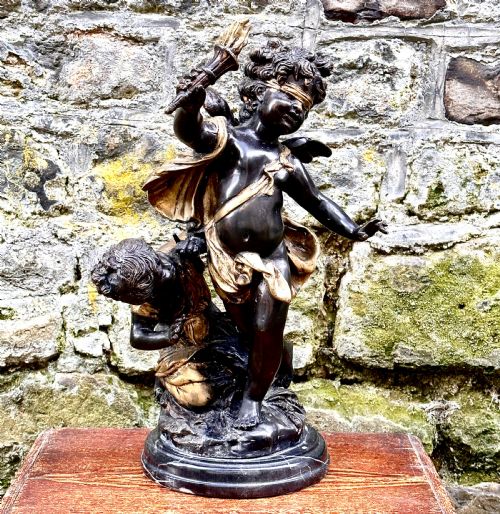
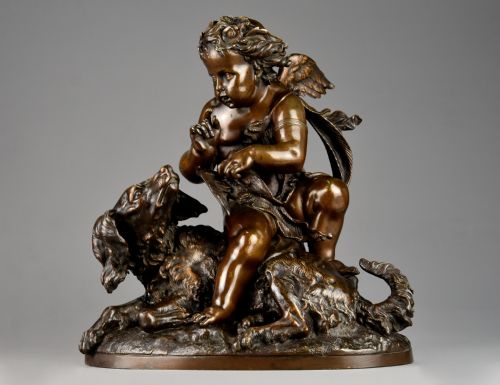


Classical Cupid Statue
A classical cupid statue captures the enduring appeal of mythological love in bronze, marble, and soft-paste porcelain.
Classical Cupid Statue
A classical cupid statue embodies the mythological figure of love, most frequently encountered in nineteenth-century French bronze and marble sculptures. These pieces range from intimate tabletop figures of winged putti to large neoclassical works depicting classical narratives.
The selection here encompasses diverse interpretations of the theme, including terracotta and soft-paste porcelain figures alongside metal and stone. Buyers will find nineteenth-century representations alongside Georgian and Art Deco pieces that maintain neoclassical lines.
Makers and sculptors of the period rendered the subject with varying focal points, from standalone cherubs to complex allegorical groups involving Cupid and Psyche. Each sculpture reflects the prevailing aesthetic tastes of its era while adhering to classical sculptural traditions.
How they were made
Sculptors utilised traditional casting and carving methods, employing bronze, gilt bronze, patinated bronze, and white marble as primary media. Metal figures were cast using the lost-wax technique, allowing for intricate rendering of wings, drapery, and anatomical details.
Clay and soft-paste porcelain formed the basis for ceramic works, requiring precise kiln firing and hand-painting or glazing. Marble and terracotta pieces relied on skilled hand-carving and modelling to achieve the fluid contours characteristic of neoclassical art.
Classical Cupid Statue Retail Price Guide 2026
Typical asking prices for classical cupid statue among the pieces listed under this phrase on Sellingantiques today, from the lower quarter to the upper quarter. They describe what is for sale here now, not the wider market.
Father Time is caught in the act of clipping Cupid's wings in an eighteenth-century porcelain group, putting a temporary halt to romantic mischief.
What varies in quality
Quality in these sculptures rests upon the crispness of the casting or the finesse of the stone carving. Superior bronze works exhibit sharp chisel work and nuanced patination that accentuates muscle tone and feather detail.
The presence of an artist's signature or foundry mark elevates a piece, as seen on works by recognised sculptors. Furthermore, the fluidity of the composition and the naturalism of the anatomy distinguish masterworks from standard decorative foundry output.
Antonio Canova·Richard Avrilli·Louis Auguste Moreau·Aug. Moreau·Denise Delavigne·B. Rezl
The Classical Cupid Statue Glossary
- Putto
- A plump, naked male child, often winged, frequently depicted in classical and Renaissance art. These figures are often synonymous with cherubs and cupids in nineteenth-century sculpture.
- Neoclassical
- A Western cultural movement drawing on the art and culture of classical antiquity. This style informs the balanced compositions and mythological subjects seen in many nineteenth-century sculptures.
- Patinated bronze
- Bronze that has been treated with chemical solutions to produce a specific surface colour and finish. This process protects the metal while enhancing the visual depth of the sculpture.
- Soft-paste porcelain
- A ceramic material composed of clay and glass frit, fired at lower temperatures than hard-paste porcelain. It allows for a warm, creamy glaze that absorbs light differently than stone or metal.
Classical Cupid Statue: Frequently Asked Questions
What materials were used for a classical cupid statue?
Sculptors of these pieces primarily worked in bronze, white marble, terracotta, and soft-paste porcelain. Metal versions often feature patinated or gilt finishes to highlight the surface details.
Choice of medium frequently depended on the period and the intended setting, with bronze and marble reserved for monumental or finely detailed salon sculptures.
How do I identify a nineteenth-century bronze cupid?
Nineteenth-century bronzes are identified by their weight, casting quality, and the nature of their patination. Many bear signatures from known French ateliers or individual sculptors on the base.
Examining the underside and attachment points can also reveal the casting methods typical of the period, such as sand casting or lost-wax techniques.
What is the difference between Cupid and a putto?
Cupid specifically represents the Roman god of erotic love, usually identified by his bow, arrows, and wings. A putto is a generic motif of a small winged infant, which may appear individually or in groups without narrative context.
In nineteenth-century sculpture, the two terms often overlap as artists utilised the putto form to represent various manifestations of love.
How should I display a marble or bronze sculpture?
These sculptures require stable display surfaces away from direct heat sources and strong sunlight to protect patinas and stone surfaces. Bronze benefits from occasional dusting with a soft cloth, while marble can be cleaned gently with a dry or slightly damp cloth.
Placement should ensure the piece is secure from accidental knocks, particularly for heavier marble and bronze works.