


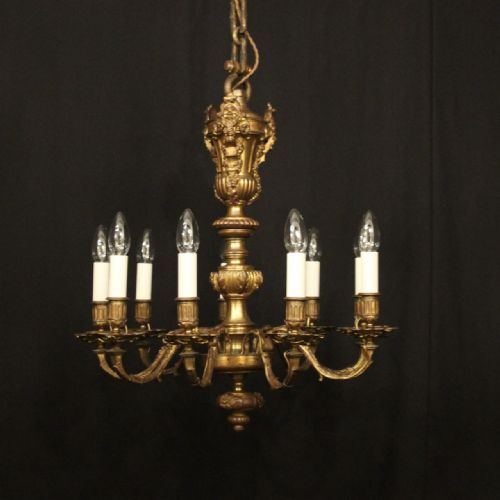

Classical Brass Candle Lamp
A classical brass candle lamp brings tactile warmth and period weight to a room through heavy metalwork and traditional silhouettes.
Classical Brass Candle Lamp
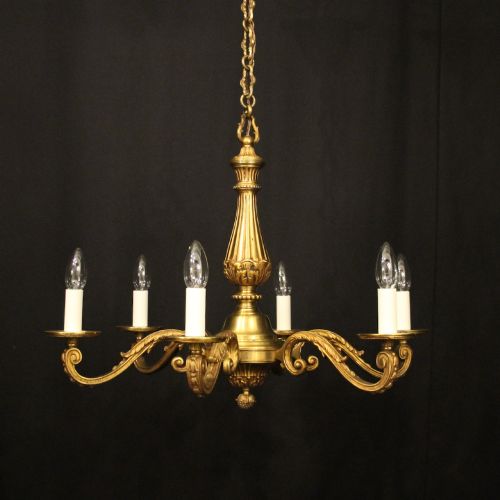
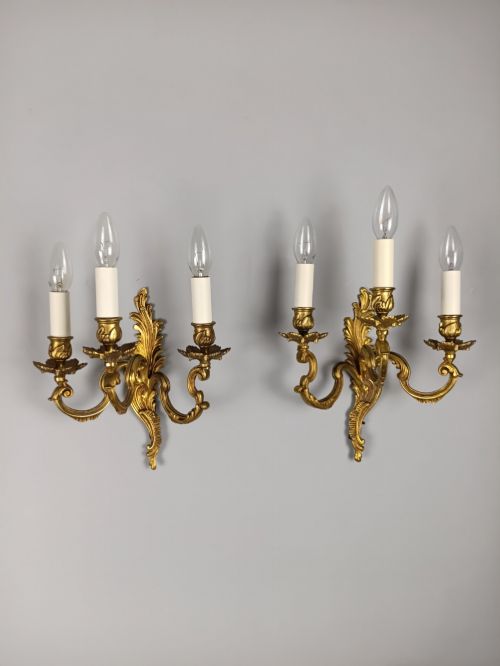
When you search for a classical brass candle lamp, you encounter items shaped by French Neoclassical, French Rococo, Italianate-Baroque, and Edwardian design traditions. The physical evidence on this page spans the nineteenth century, the Edwardian era, and the early twentieth century up to nineteen thirty.
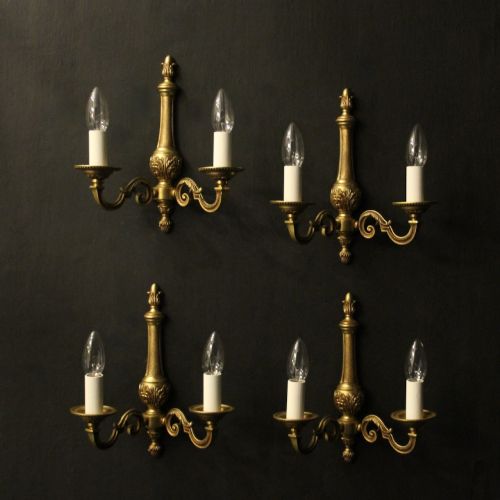
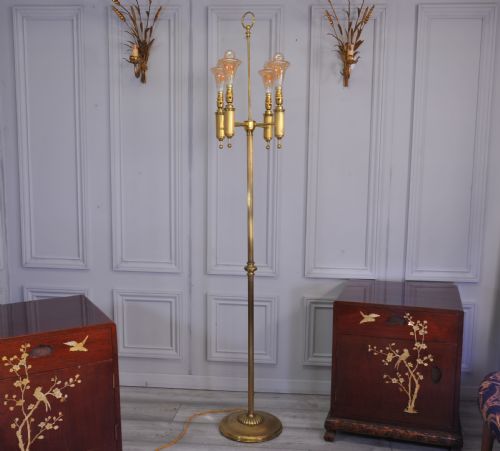
The forms extend beyond single desk pieces to encompass larger lighting installations in metal, bronze, gilded brass, ormolu, and cut glass. Wall lights, multi-arm chandeliers, standard floor lamps, and bouillotte standard lamps dominate the selection.
Most examples hail from French workshops, executed in bronze and gilded metal with explicit stylistic links to classical antiquity, the Empire revival, and chateau aesthetics. These objects bridge the gap between historic candle-holders and electrified period lighting.
How they were made
The construction relies heavily on cast bronze, brass, and ormolu, often utilising mercury gilding or fire-gilding techniques to achieve a deep, lustrous surface on the metalwork. Artisans cast these components in sections before chasing the details by hand to sharpen the leaf motifs and scrollwork.
Where glass is present, such as on cut glass elements, workers cut and polished the material by hand to refract light from the candles or early bulbs. Marble bases and inserts appear alongside the metal framing, providing stability and visual contrast to the heavy gilt bronze components.
Some bouillotte lamps retain adjustable shades designed to move down the central column as the candles burned lower.
What varies in quality
Heavier gauge metal and substantial bronze content separate the robust examples from lighter stamped brass alternatives. The quality of the gilding, whether a deep ormolu finish or applied leaf, determines how the surface catches the light over decades of handling.
F. and C. Osler
The Classical Brass Candle Lamp Glossary
- Ormolu
- Gilded bronze produced by applying a mixture of gold amalgam to a bronze object and heating it to vaporise the mercury. This technique creates a durable, matte-gold finish characteristic of fine French decorative arts.
- Bouillotte
- A traditional French table lamp featuring a central standard, an adjustable shade, and a basin base designed to hold writing implements or matches. The style originates from the eighteenth-century card game of the same name.
- Chasing
- The manual process of refining a cast metal surface using hammers and small steel punches. It restores crispness to details lost during the casting process and adds texture to background areas.
- Gilded Brass
- Brass that has been treated with a thin layer of gold leaf or chemical gilt to simulate solid gold or high-grade ormolu. It offers a bright decorative surface while utilising a more accessible base metal.
Classical Brass Candle Lamp: Frequently Asked Questions
What is a classical brass candle lamp?
These items are historic lighting fixtures cast in brass, bronze, or ormolu, drawing on French and Italianate classical design vocabularies. They range from bouillotte table lights to heavy multi-arm chandeliers.
Many pieces reflect revival styles from the nineteenth and early twentieth centuries, merging historical aesthetics with functional illumination.
How were these lamps originally used?
They served as primary or supplementary light sources in grand interiors, utilising wax candles before later electrification. Bouillotte versions sat on desks to illuminate card games or writing.
Larger chandeliers and wall lights illuminated salons and dining rooms, reflecting candlelight off gilded surfaces to maximise brightness.
How do I date a brass candle lamp?
Dating relies on stylistic markers such as Rococo asymmetry, Empire neoclassical symmetry, or Edwardian proportions. The manufacturing materials, including the presence of hand-chased ormolu versus stamped brass, also indicate the period.
Construction methods, such as the use of threaded fixings or hand-cut components, help distinguish nineteenth-century examples from later twentieth-century reproductions.
How do I live with a period brass lamp?
Integrate them into contemporary or traditional interiors by placing them on side tables, desks, or mounting wall lights at eye level. Their warm metallic tones complement wood furniture and textiles.
Ensure that any electrical wiring meets modern safety standards while preserving the historic exterior metalwork and patination.