

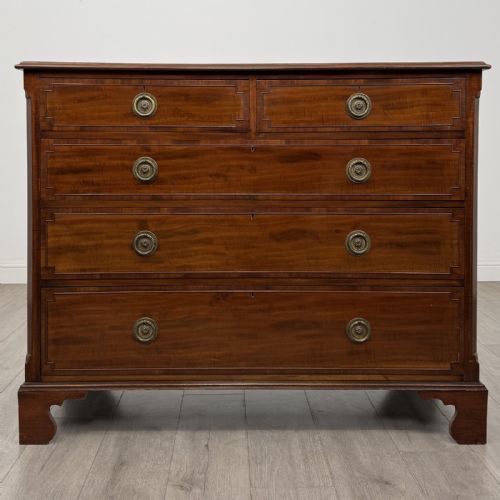
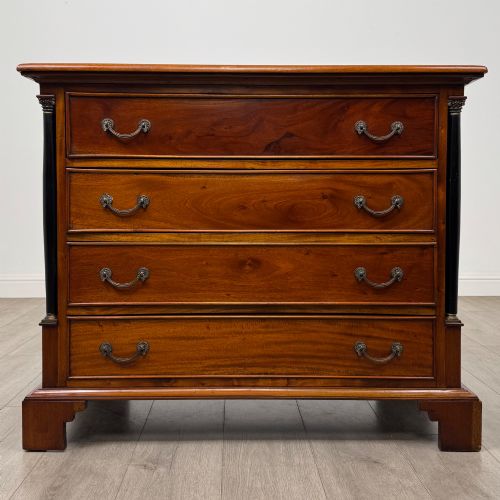
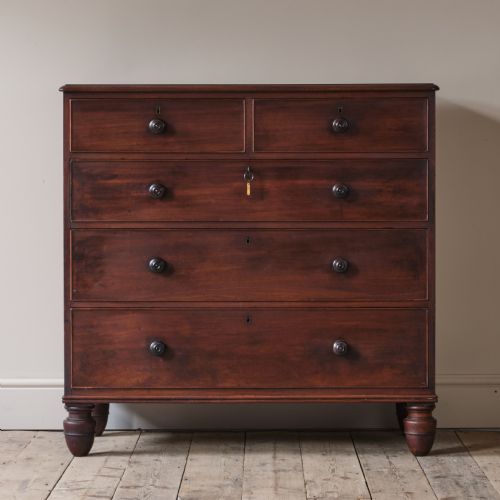
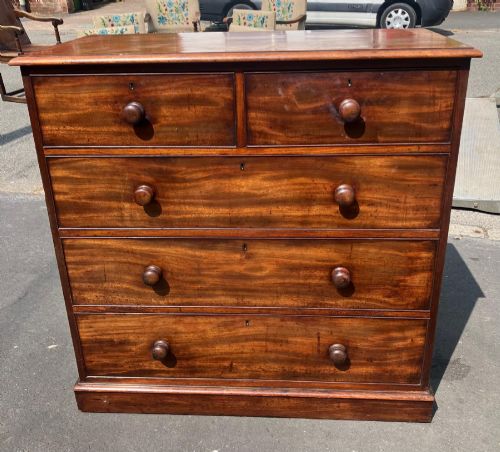




Classic Wood Storage Chest
A classic wood storage chest is a robust house staple, offering deep drawers for linen and clothes while anchoring a room with heavy timber grain.
Classic Wood Storage Chest
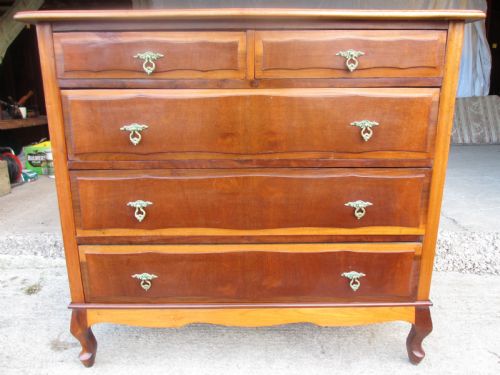
A classic wood storage chest primarily takes the form of a chest of drawers, built to hold household garments and textiles securely. These pieces emerge from periods ranging from the eighteenth century through to the early twentieth century, spanning Georgian, Regency, Victorian, and Edwardian eras.
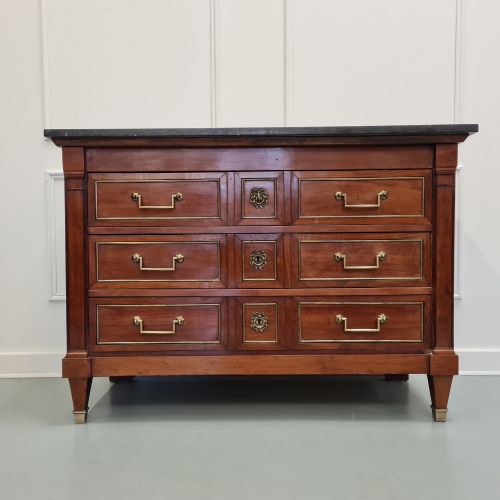
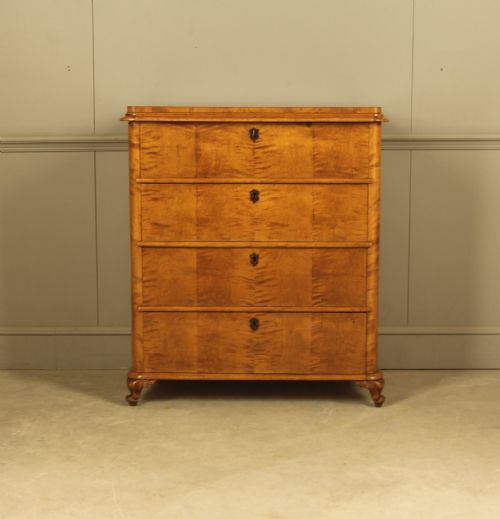
The version most frequently encountered on this page is a mahogany chest of drawers, often featuring a bow front or bracket feet. Examples also appear in walnut, pine, and flame birch, reflecting regional tastes across British, French, and Swedish workshops.
How they were made
Cabinet makers utilised dense hardwoods like mahogany and walnut, frequently applying flame mahogany veneer or flame birch to drawer fronts for visual depth. Carcusses were traditionally constructed from solid secondary timbers such as pine.
Hardware played both a structural and decorative role, with brass handles and escutcheons secured to the drawer faces. Support structures varied from simple bracket feet to bolder French Empire designs.
Classic Wood Storage Chest Retail Price Guide 2026
Typical asking prices for classic wood storage chest among the pieces listed under this phrase on Sellingantiques today, from the lower quarter to the upper quarter. They describe what is for sale here now, not the wider market.
Some nineteenth-century drawers hold their secrets tight, requiring a dedicated brass key just to open the top compartment.
What varies in quality
Quality rests in the selection of timber veneers and the crispness of the joinery, particularly around the drawer linings and bracket feet. Superior pieces exhibit book-matched flame veneers that align symmetrically across the front.
Originality of the brass handles and the stability of the timber grain separate workshop masterworks from later adaptations. The integrity of the internal drawer construction dictates longevity.
T & G Seddon·C. Hindley
The Classic Wood Storage Chest Glossary
- Bow front
- A convexly curved front to a chest of drawers that swells outwards towards the viewer. This curved profile requires specialised woodworking skill to shape accurately.
- Bracket foot
- A foot shaped like a bracket, commonly seen on Georgian and later case furniture. It usually forms a simple L-shape corner support beneath the chest.
- Flame mahogany veneer
- A sliced layer of mahogany showing a distinctive flickering, flame-like grain pattern. Cabinet makers applied this to primary display surfaces for decorative impact.
- Escutcheon
- A protective plate surrounding the keyhole of a drawer or cabinet door. They are frequently cast in brass to complement the handles.
Classic Wood Storage Chest: Frequently Asked Questions
Where should I place my chest?
These timber chests suit bedrooms, hallways, or living spaces where substantial surface area and deep drawer storage are required.
Keep them away from direct heat sources and strong sunlight to protect the polished wood surfaces and delicate veneers from drying out.
How do I clean the wood?
Dust the timber regularly with a soft, dry cloth to prevent particulate buildup on the polished finish. Avoid modern silicone sprays or harsh chemical cleaners that can damage historical polishes.
Apply a traditional beeswax occasionally to nourish the grain and maintain a natural lustre.
Are the drawers interchangeable?
In older handmade pieces, drawers were individually fitted to their specific openings during construction. Swapping their positions can lead to uneven gaps and sticking.
Keep each drawer in its designated slot to ensure smooth operation and preserve the original alignment.
How do I identify the period?
Examine the hardware style, foot construction, and secondary timbers used inside the carcass. Georgian and Regency pieces often display specific bracket feet and cockbeaded drawer edges.
Compare these details against the listed dates and regional styles to establish the likely decade of manufacture.