
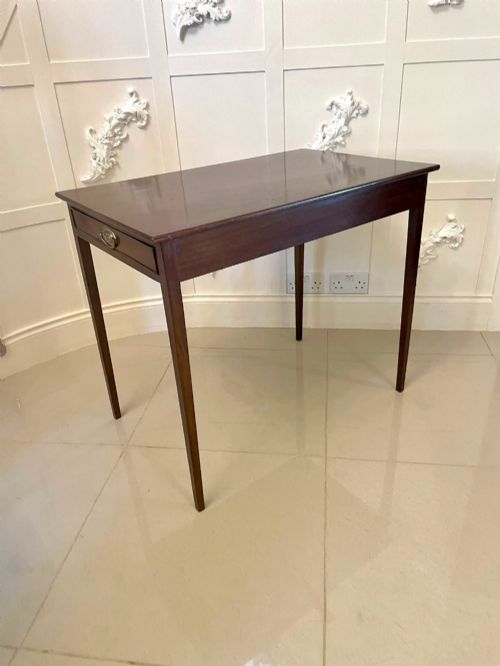
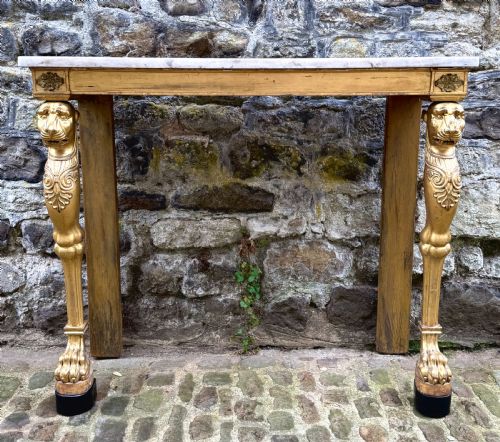
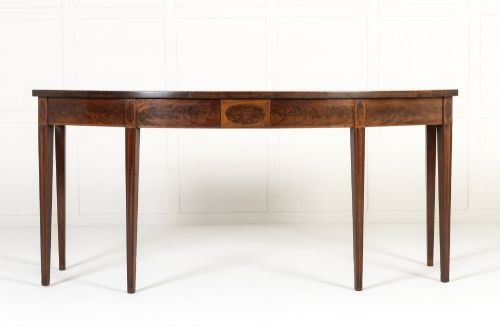


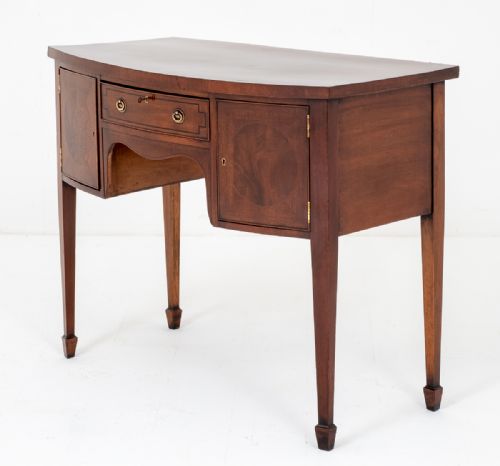

Classic Wood Console
These classic wood console pieces bring architectural presence to a hallway, formed in mahogany, burr birch, and walnut.
Classic Wood Console
A classic wood console sits flat against a wall, serving as a focal point in hallways, living rooms, and dining spaces. These forms range from Regency giltwood and George III mahogany serving tables to 1930s walnut pieces.
Pieces from the Regency and Georgian periods dominate the selection, bringing architectural weight through pedestal bases and satinwood inlay. Revival styles such as Empire Revival and Queen Anne Revival also appear alongside Victorian examples.
Materials and construction
Cabinetmakers built these tables using dense timbers like mahogany, burr birch, and walnut, selecting boards for grain movement and depth. Satinwood inlay provides contrasting detail across friezes and borders.
Giltwood frames and brass mounts add reflective surface and structural accent to Regency and Empire Revival designs. Marble slabs frequently top console tables, requiring sturdy wooden subframes to support the weight of the stone.
The listings on this page span the 18th century, Georgian, Regency, Victorian, and 1930s periods, executed in mahogany, walnut, and giltwood.
Assessing quality and proportion
Proportion and timber selection separate finer examples from standard production, particularly in the handling of pedestal bases and frieze drawers. Grain alignment across secondary timbers reveals the care taken in the workshop.
The crispness of carved giltwood details and the integration of brass mounts indicate the skill level of the maker. Surface finish and the preservation of original patination govern the visual impact of the timber.
Epstein and Co
The Classic Wood Console Glossary
- Console table
- A table designed to be fixed or placed flat against a wall, often supported by brackets or front legs. These pieces anchor entrance halls and formal reception rooms.
- Serving table
- A large side table used in dining rooms for food presentation before the widespread adoption of the sideboard. They frequently feature marble tops and sturdy mahogany frames.
- Satinwood inlay
- A decorative technique where lighter contrasting wood is set into the primary timber surface. This creates geometric or botanical patterns across drawer fronts and borders.
- Giltwood
- Wood that has been coated with gold leaf or gold paint to simulate solid gold. It appears frequently on Regency and revival frames.
- Pedestal base
- A central column or cluster of supports carrying the weight of the tabletop. William IV and Regency tables often utilise this configuration.
Classic Wood Console: Frequently Asked Questions
Where should I place a console table?
Console tables suit entrance halls, narrow corridors, and reception rooms where floor space is limited. Their shallow depth allows them to sit against walls without obstructing movement.
They also function beneath mirrors or paintings to create a balanced focal point in a room.
What is the difference between a console table and a side table?
Console tables are specifically designed to stand against a wall, sometimes requiring wall attachment for stability. Side tables are freestanding and can float within a room layout.
Historically, console tables often featured decorative carving primarily on the front and sides visible to viewers.
How do I care for antique wood surfaces?
Keep wooden furniture away from direct sunlight and heat sources to prevent the timber from drying out and splitting. Regular dusting with a soft, dry cloth preserves the finish.
Avoid silicone-based polishes and apply traditional wax sparingly when the wood appears dry.
How do I identify Regency style?
Regency pieces draw heavily on classical Greek and Roman motifs, featuring bold forms, giltwood accents, and architectural symmetry. Rosewood and mahogany are common timbers from this period.
Look for sabre legs, brass inlay, and carved paw feet as typical indicators of the style.