







Classic Mahogany Server
These classic mahogany server pieces combine timber and form for dining spaces, bringing Georgian and Regency proportion straight into your room.
Classic Mahogany Server
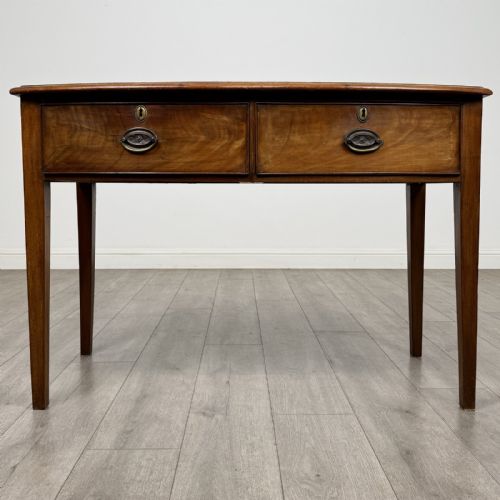
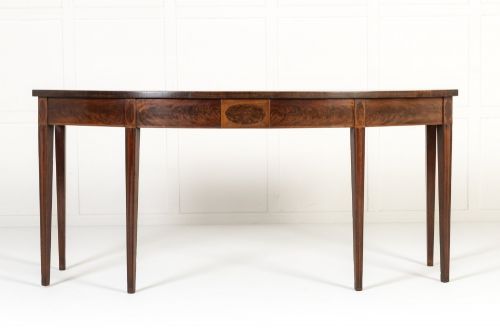
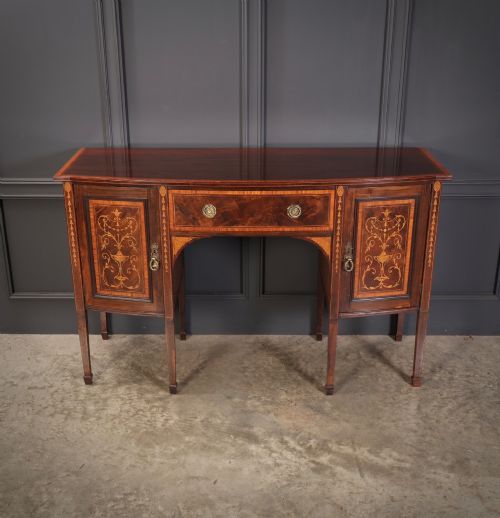
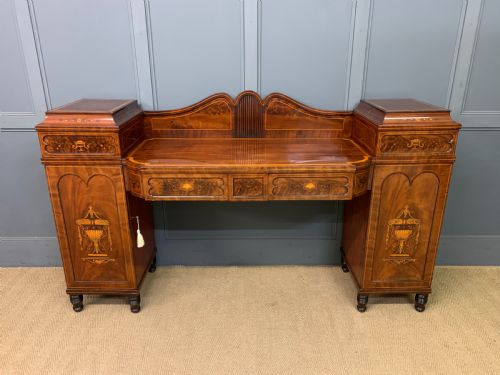
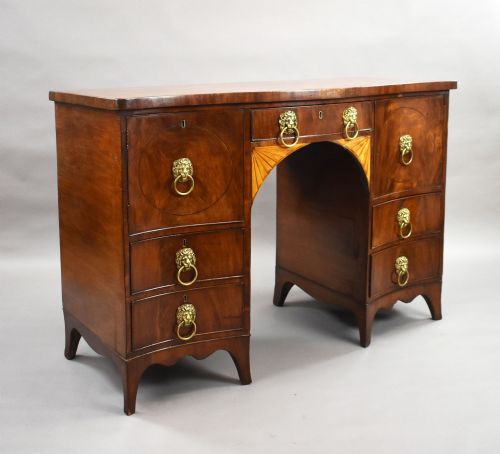
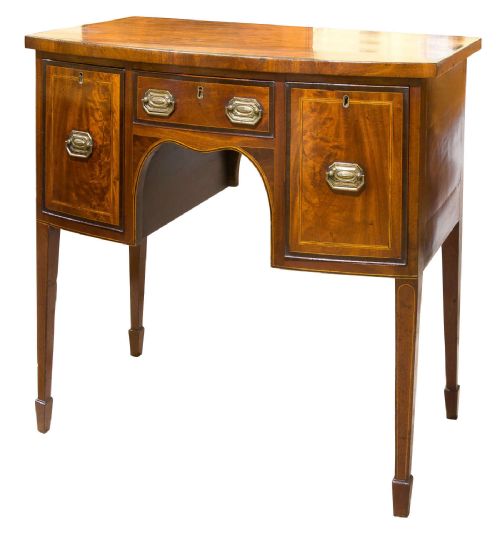
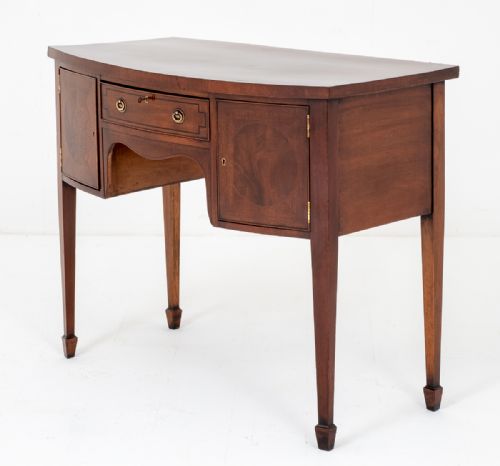
When you search for a classic mahogany server, you encounter forms ranging from serving tables and console tables to bowfront and pedestal sideboards. These dining room pieces span the eighteenth and nineteenth centuries, alongside later revival interpretations.
The most common versions on this page are Georgian and George III items, featuring mahogany timber with occasional boxwood and satinwood inlay. Makers built these forms for dining and service, resulting in shapes that suit modern hallways and dining rooms alike.
Materials and construction
Cabinet makers relied primarily on solid mahogany and flame mahogany veneer, augmented by contrasting stringing in boxwood and satinwood. These timbers provided a rich foundation for formal dining room furniture.
Joinery techniques included tapering legs, serpentine fronts, and bowfront structures, sometimes paired with brass hardware and glass elements. Workshops shaped these elements to balance structural strength with refined aesthetic lines.
Classic Mahogany Server Retail Price Guide 2026
Typical asking prices for classic mahogany server among the pieces listed under this phrase on Sellingantiques today, from the lower quarter to the upper quarter. They describe what is for sale here now, not the wider market.
Current listings span the eighteenth, nineteenth, and early twentieth centuries, featuring solid mahogany, flame veneer, satinwood, boxwood, and brass.
Judging quality in mahogany servers
Quality rests on the depth of the mahogany grain and the precision of the timber matching across serpentine or bowfront surfaces. Subtle figure variation in flame mahogany separates standard utilitarian items from finer examples.
The crispness of inlaid satinwood and boxwood details indicates the level of craftsmanship invested in a piece. Proportions and the integration of tapered legs or pedestals further distinguish standard production from superior output.
The Classic Mahogany Server Glossary
- Bowfront
- A convex curved cabinet front that swells outward in the centre, common in late eighteenth and nineteenth century sideboards. This shape softens room angles and adds visual depth.
- Serpentine
- A furniture front characterised by a double curve, concave in the middle and convex at the ends. It demands high joinery skill to execute successfully in solid timber.
- Flame mahogany
- A veneer cut from timber where the branch meets the trunk, producing a distinctive flame-like pattern. It was utilised on prominent drawer fronts and doors for decorative impact.
- Inlay
- A technique where pieces of contrasting wood, such as boxwood or satinwood, are set into recesses flush with the mahogany surface. This creates fine borders and geometric motifs.
- Pedestal sideboard
- A form comprising two distinct pedestals joined by a central table or serving surface, typical of the late Georgian period. It offers substantial storage and a commanding presence.
Classic Mahogany Server: Frequently Asked Questions
What is a classic mahogany server used for?
These pieces served historically in dining rooms for holding food, silver, and ceramics during large meals. Today, they function effectively as sideboards in dining spaces or as console tables in grand hallways.
Their substantial top surfaces provide practical display space, while internal drawers and cupboards accommodate tableware and linens.
How do I date a mahogany sideboard?
Dating relies on examining construction methods, timber selection, and stylistic details such as leg shape and inlay motifs. Georgian examples often feature straight tapered legs or delicate stringing, while Victorian pieces tend to be heavier in proportion.
Revival pieces from later periods frequently emulate eighteenth century designs but utilise machine-cut elements and different internal secondary woods.
How should I care for mahogany furniture?
Maintain the timber by keeping it away from direct sunlight and extreme temperature fluctuations that cause wood to dry and split. Regular dusting with a soft, dry cloth preserves the polished surface.
Avoid silicone-based polishes and apply traditional wax sparingly when the wood appears dry to maintain its natural lustre.
What is the difference between a serving table and a sideboard?
A serving table is typically an open frame with legs and a top, designed purely for presenting food and dishes during dining. A sideboard incorporates enclosed storage such as drawers and cupboards beneath the main surface.
Both forms utilise mahogany timber and share stylistic traits across the Georgian and Regency periods.