




Classic Gold Studs
Classic gold studs are reliable, everyday jewels that sit close to the lobe, bringing a simple warmth and sparkle to the ear.
Classic Gold Studs
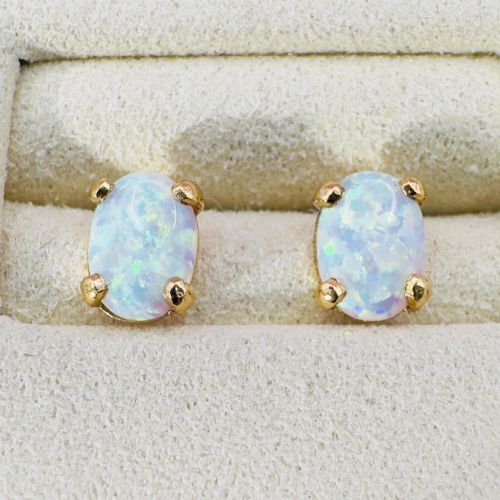
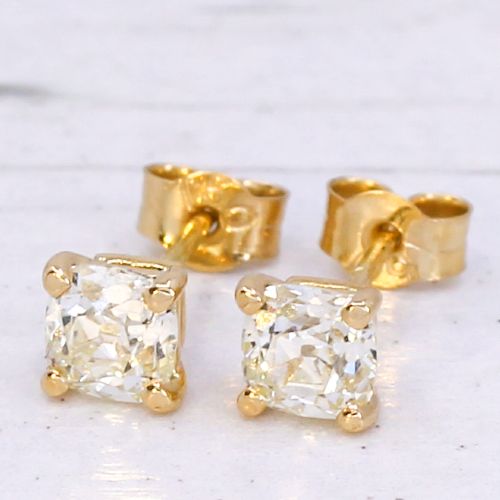
Classic gold studs take the form of small, discreet earrings designed for daily wear, featuring central gemstones held securely against the ear. The selection here ranges from Victorian examples to mid-century pieces from the 1950s and 1960s, alongside later designs.
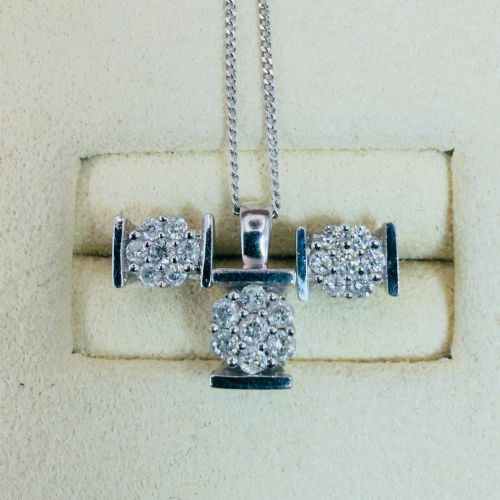
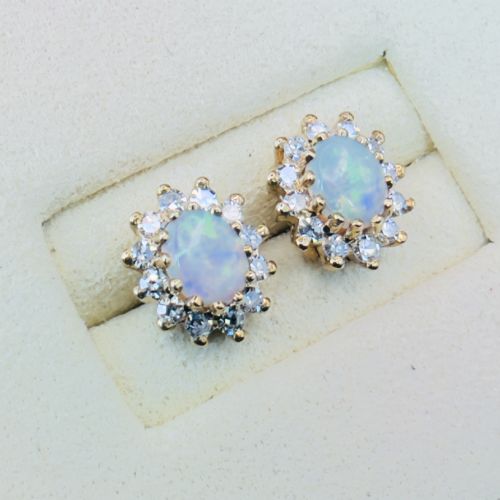
The assortment includes single stones, cluster arrangements with surrounding halo diamonds, and drop variations attached to the stud component. While the vast majority are earrings, the listings also occasionally include unexpected items such as an antique equestrian oil painting depicting a hunting stud in a gilt frame.
How they were made
These items utilise metals such as 9ct gold, 18ct white gold, and 18k yellow gold to form the settings and mounts that secure each stone. Precious and semi-precious gems are shaped into round cuts, oval cabochons, pear cuts, and emerald cuts to catch the light.
Traditional setting techniques position diamonds and coloured stones firmly within gold claws or bezels, often surrounded by smaller accent stones in cluster configurations. White and yellow gold alloys provide contrasting backdrops that enhance the natural colour of the mounted gems.
Classic Gold Studs Retail Price Guide 2026
Typical asking prices for classic gold studs among the pieces listed under this phrase on Sellingantiques today, from the lower quarter to the upper quarter. They describe what is for sale here now, not the wider market.
The current selection spans multiple eras, including Victorian, 1950, 1960, and later than 1960, alongside an oil painting.
What varies in quality
The grade of the central gemstones, such as the clarity and cut of the diamonds or the depth of colour in sapphires and amethysts, dictates the overall refinement of the piece. Superior examples display stones with well-matched colour saturation and precise faceting.
The weight and purity of the gold mount, from standard 9ct to higher 18k and 18ct compositions, influences the durability and substance of the setting. Better construction ensures that the prongs or bezels hold the stones securely while maintaining a balanced proportion on the ear.
The Classic Gold Studs Glossary
- Stud earrings
- Small earrings designed to appear as though they float directly on the earlobe without visible hanging components. They typically fasten with a post and friction back.
- Cluster earring
- A central gemstone surrounded by a ring of smaller accent stones, often diamonds. This arrangement increases the overall visual presence of the jewel.
- Cabochon
- A gemstone with a smooth, rounded, convex top surface rather than faceted edges. This style is frequently used for opals and certain coloured stones to display internal patterns.
- Old mine cut
- An antique diamond cut featuring a roughly square girdle, a high crown, and a small table facet. This historic cut appears in nineteenth-century pieces.
- White gold
- An alloy of gold mixed with white metals such as palladium, silver, or nickel. It provides a silvery finish that complements diamonds and sapphires.
Classic Gold Studs: Frequently Asked Questions
What materials are used in these studs?
The listings feature pieces constructed from 9ct gold, 14k white gold, 18ct white gold, and 18k yellow gold. These metal mounts hold a variety of gems including diamonds, amethysts, rubies, sapphires, emeralds, pearls, opals, blue topaz, and black onyx.
Settings range from simple single-stone mounts to intricate cluster designs incorporating smaller accent diamonds around a central coloured stone.
How do I date an older pair?
Dating relies on stylistic clues, metal purity marks, and gemstone cuts characteristic of specific decades. Pieces from the Victorian era often show distinct hand-finished details and older stone cuts like the old mine cut.
Mid-century examples from the 1950s and 1960s frequently employ 9ct gold and specific cluster or drop configurations popular during those decades.
Can I wear them every day?
Most stud earrings are constructed for regular wear, sitting closely against the earlobe to minimise snagging on clothing or hair. Their compact form makes them practical for daily routines.
Care should be taken with softer stones like pearls or opals, which require gentler handling than diamonds or sapphires.
What is the difference between stud and drop styles?
Standard studs remain fixed entirely against the front of the earlobe with the fastening hidden behind. Drop variations incorporate a small dangling element that hangs just below the main stud component.
Both styles utilise the same secure post-and-back fitting to keep the jewellery firmly in place.