




Classic Dining Credenza
A classic dining credenza brings enduring presence to a room, offering grand storage through timeless mahogany and refined antique craftsmanship.
Classic Dining Credenza
When you search for a classic dining credenza, you encounter substantial serving furniture built to anchor a formal dining room. These pieces function primarily as sideboards and buffets, designed for storing linen, silverware, and dining room essentials.
The versions most frequently met on this page span the Georgian, Victorian, and Regency periods, stretching into early twentieth-century revivals. Mahogany forms the backbone of these selections, appearing alongside oak and sophisticated veneers.
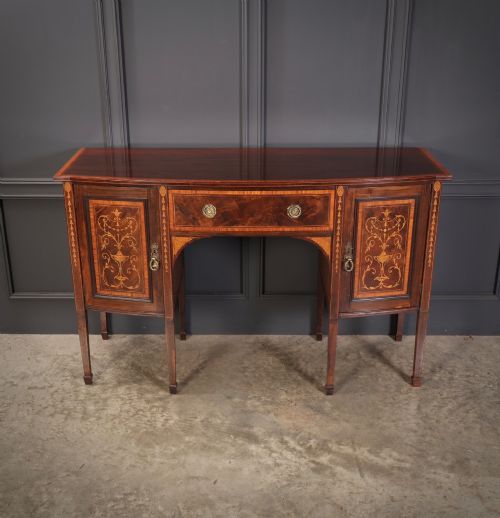
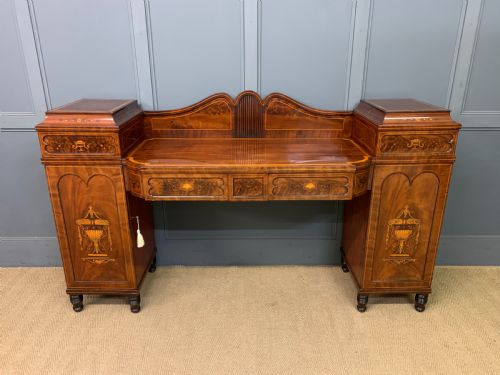
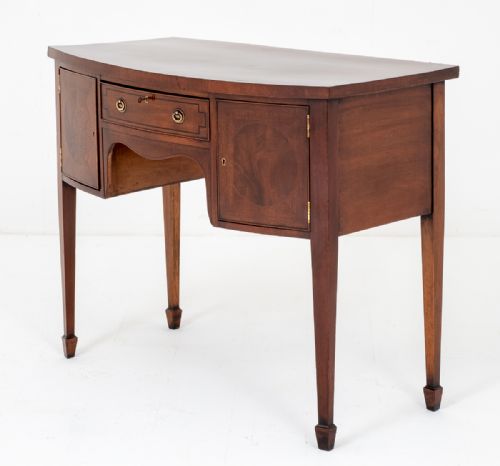
Makers shaped these forms with bow fronts, twin pedestals, and six-legged arrangements. The structural lineage traces directly through George III and Sheraton Revival traditions, offering distinct silhouettes for formal spaces.
Materials and construction
Cabinetmakers relied heavily on solid mahogany and flame mahogany veneer to construct these large dining pieces. Selected sections were chosen for rich grain patterns, providing a deep visual texture across broad surfaces.
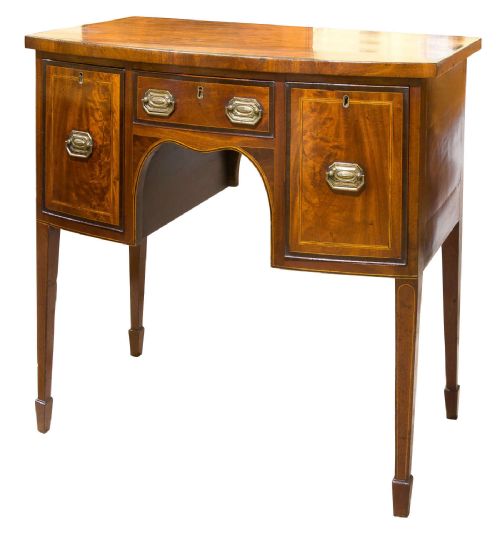
Craftsmen integrated boxwood and satinwood inlay to define borders and panels on formal fronts. Brass fittings, including handles and drawer pulls, were secured to complement the dark timber tones.
Structural framing often utilised sturdy oak for internal partitions and drawer linings, ensuring durability through decades of daily domestic use. Glass panels also appear in specific regional or period interpretations to soften the heavy timber facade.
Classic Dining Credenza Retail Price Guide 2026
Typical asking prices for classic dining credenza among the pieces listed under this phrase on Sellingantiques today, from the lower quarter to the upper quarter. They describe what is for sale here now, not the wider market.
Several pieces feature hidden cellarette drawers once lined to keep expensive bottled wine cool and secure.
Judging quality and proportion
Superior examples of a classic dining credenza display seamless veneering where grain patterns mirror symmetrically across drawer fronts. Lesser pieces rely on uniform timber cuts that lack depth and visual movement.
The crispness of inlaid boxwood and satinwood distinguishes master workshops from standard production. Sharp, precise borders indicate high technical skill during assembly.
Proportion and stance dictate the overall presence of the piece, particularly in pedestal and six-legged designs where leg tapering must balance the weight of the main body.
The Classic Dining Credenza Glossary
- Bow front
- A convex curved cabinet front that projects outward in a smooth arc. This shape softens the heavy rectangular geometry typical of formal dining furniture.
- Pedestal sideboard
- A form featuring distinct side cabinets or pedestals flanking a central section. It represents a major architectural layout within Georgian dining rooms.
- Flame mahogany veneer
- A thin slice of wood cut from timber fork growths to create a fiery, swirling grain pattern. Cabinetmakers laid this across prominent drawer and door panels for decoration.
- Boxwood inlay
- Narrow strips of pale wood embedded flush into darker timber surfaces. It creates sharp linear contrast and geometric framing.
- Sheraton Revival
- A late nineteenth or early twentieth-century design movement recreating eighteenth-century neoclassical lightness. Pieces from this era emulate refined proportions and delicate stringing.
Classic Dining Credenza: Frequently Asked Questions
What is a classic dining credenza?
A classic dining credenza is a heavy wooden storage piece used in dining rooms for serving food and storing tableware.
These items belong to the broader sideboard and buffet family, appearing in styles ranging from plain oak Victorian builds to inlaid George III masterpieces.
How were these dining pieces used?
Historically, households used these items to display silver and serve dishes during large dinner parties.
Cupboards and drawers held heavy linens and cutlery close to the dining table for easy access during meals.
How do I live with mahogany furniture?
Living with these dark wood items involves placing them away from direct sunlight to preserve the rich mahogany finish.
Regular polishing with natural wax maintains the lustre of the timber and protects the surface from daily wear.
How can I tell the periods apart?
Periods reveal themselves through specific structural details and decorative motifs like stringing and brassware.
Georgian and Regency pieces show refined proportions, while Victorian versions often feature heavier proportions and oak construction.