


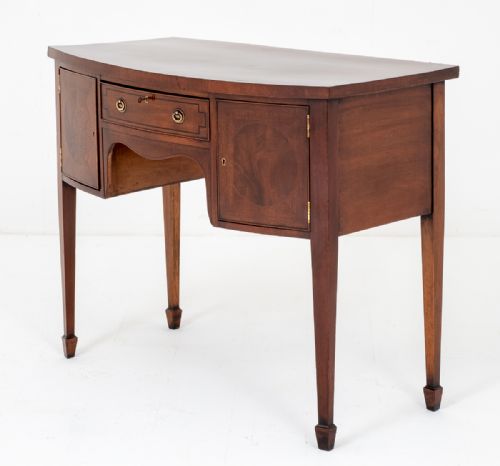


Classic Dining Buffet
These classic dining buffet examples bring substantial proportions and timeless timber to a traditional interior.
Classic Dining Buffet
A classic dining buffet provides formal storage and serving space for a dining room, typically taking the form of a substantial timber sideboard or serving table. The pieces found here span from the eighteenth century through to the early twentieth century, encompassing Georgian, Regency and Victorian eras alongside later revival styles.
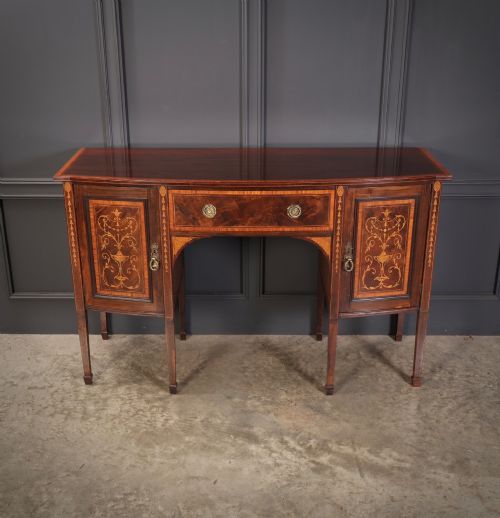
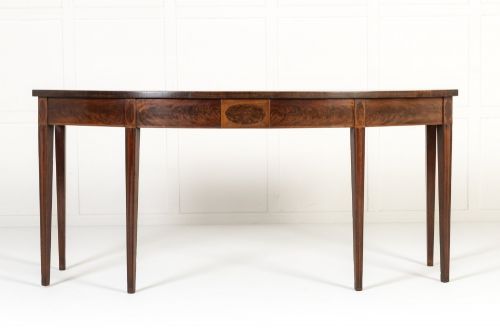
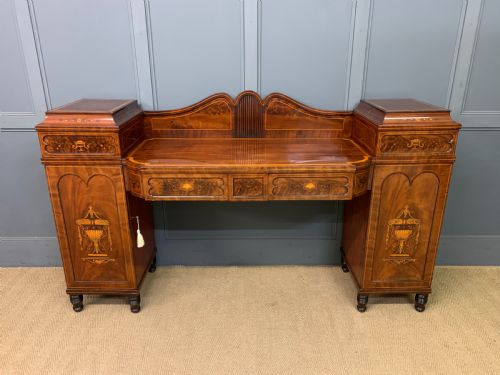
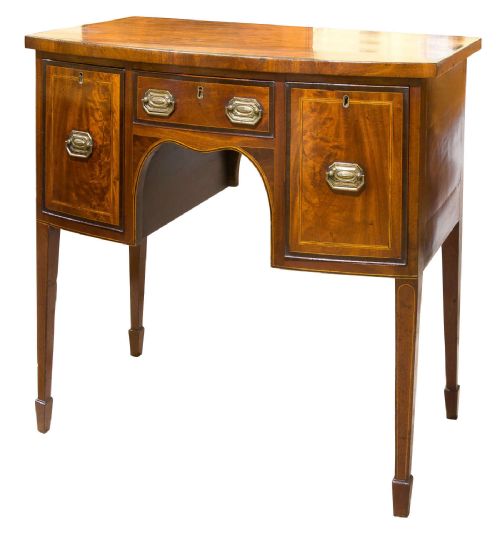
The most common form encountered on this page is the mahogany sideboard, often featuring a bow front, serpentine front or pedestal arrangement. These larger items of dining furniture were built to hold silver, linen and glassware while offering a surface for food and drink during service.
Materials and construction methods
Construction relies predominantly on solid mahogany and oak, selected for durability and rich figuring, often enhanced by contrasting satinwood and boxwood inlay. Cabinetmakers shaped these dense timbers into curved fronts and sturdy pedestal bases using traditional joinery.
Metal fittings such as brass handles and hardware provide functional and decorative accents on drawers and cupboards. Selected pieces incorporate glass elements alongside timber and brass to display serving wares.
Classic Dining Buffet Retail Price Guide 2026
Typical asking prices for classic dining buffet among the pieces listed under this phrase on Sellingantiques today, from the lower quarter to the upper quarter. They describe what is for sale here now, not the wider market.
Some six-legged sideboards were built extra long to ensure the family silver stayed firmly planted during enthusiastic Victorian dinner parties.
Assessing quality in dining furniture
Quality rests upon the precision of the cabinetwork and the subtlety of decorative details such as stringing and marquetry inlay. Pieces with finely figured mahogany veneers and balanced proportions represent the higher end of the range.
The sophistication of the silhouette defines the distinction between standard storage and superior design. Subtle curves in serpentine and bow fronts require advanced carpentry skills that elevate the piece.
The Classic Dining Buffet Glossary
- Bow front
- A convex curved cabinet front that projects outward in the centre, creating a softer silhouette than a flat facade. This shape required specialist woodworking skill to construct accurately.
- Serpentine front
- A front configuration featuring a central convex curve flanked by two concave curves, forming a continuous wave line. It is characteristic of finer eighteenth and nineteenth century cabinetmaking.
- Pedestal sideboard
- A form comprising two separate pedestals connected by a central serving table or board, popular during the Georgian and Regency periods. This layout offers distinct compartments for dining room storage.
- Inlay
- A decorative technique where contrasting woods like satinwood or boxwood are inserted into recesses within the primary mahogany surface to create geometric patterns or borders.
Classic Dining Buffet: Frequently Asked Questions
What is a classic dining buffet used for?
These pieces serve as functional storage for dining room essentials such as silverware, table linen and serving dishes. The top surface also provides a convenient area for presenting food and drink during meals.
Historically, they formed the central station for organising service before plates reached the dining table. Today, they continue to anchor a traditional dining room while offering practical storage space.
What woods were used in these pieces?
Mahogany is the primary timber found in these listings, valued for its deep colour and strength. Oak also appears in specific regional or period items.
Cabinetmakers utilised lighter woods such as satinwood and boxwood for contrasting inlay work and decorative borders. Brass hardware complements these timber surfaces.
How do I style a buffet in a modern home?
A classic timber buffet adds warmth and architectural presence to a contemporary dining space. You can pair the rich mahogany tones with minimal wall colours to highlight the grain and form.
Use the surface to display ceramics, lamps or seasonal arrangements while keeping the interior storage functional. The substantial proportions anchor the room without requiring matching furniture sets.