




Classic Credenza
These classic antique credenza pieces are substantial serving surfaces and storage units built from mahogany and pine, prized for their rich timber figures.
Classic Credenza
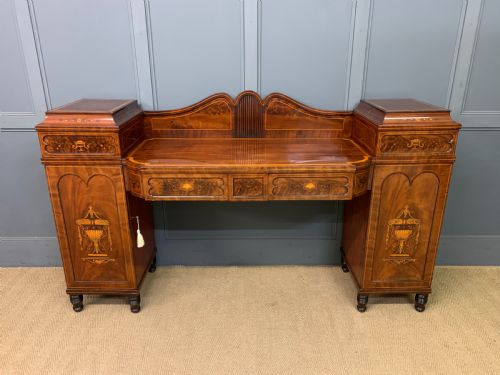
A classic antique credenza encompasses large dining room storage forms such as sideboards, side cabinets, buffets, and dresser bases recorded across the Georgian and Victorian eras. These storage pieces serve as focal points in dining spaces, providing generous surface areas and enclosed compartments for tableware.
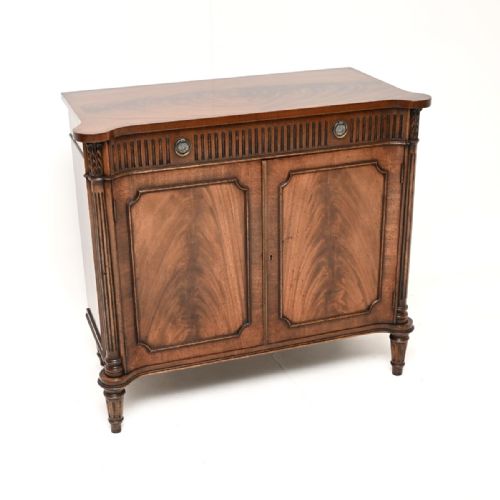
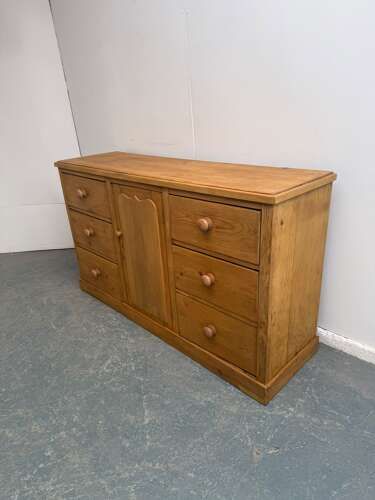
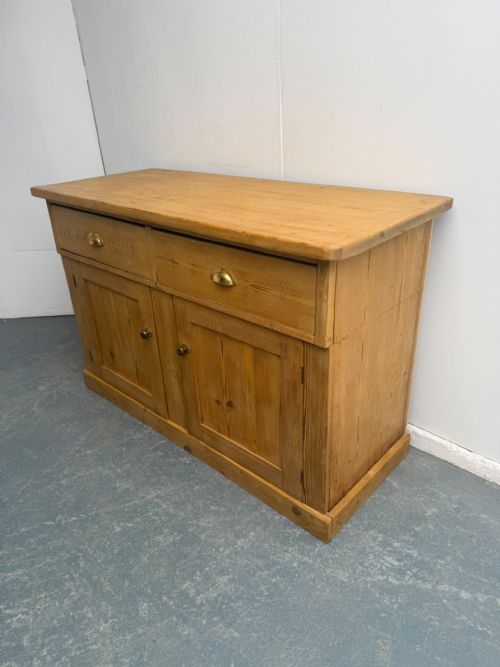
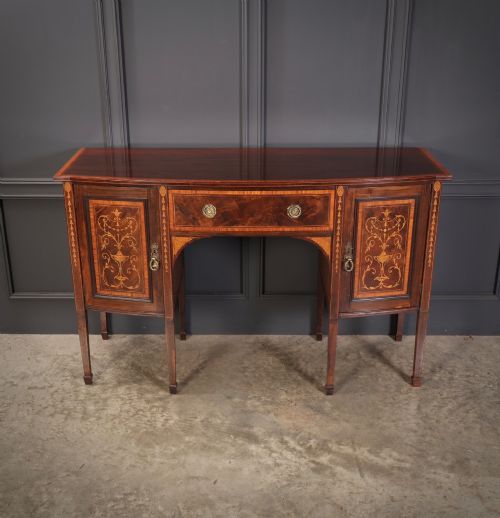
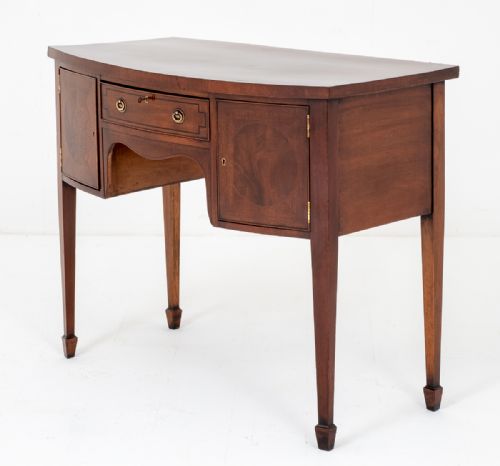
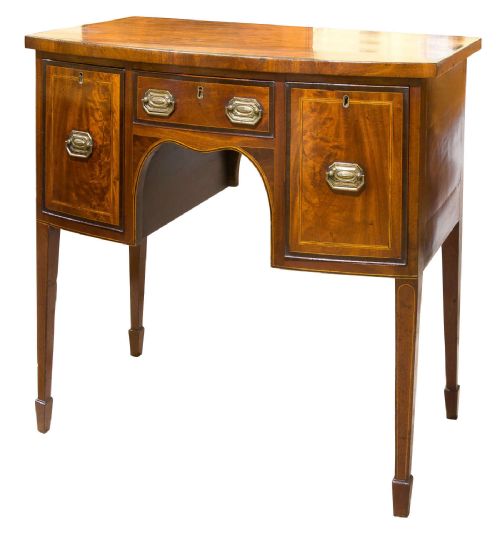
The selections available on this page run from formal George III mahogany bowfronts and pedestal sideboards down to simpler Victorian and 19th century pine kitchen dresser bases. Mahogany examples often feature inlaid details, whilst pine variants present a more utilitarian country aesthetic.
Materials and construction methods
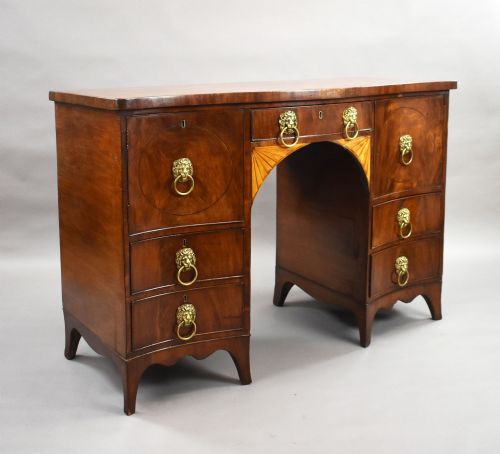
Cabinet makers relied heavily on solid mahogany and pine as primary structural timbers, frequently augmented by decorative boxwood and satinwood inlay work. Marquetry techniques add intricate geometric or floral patterns to the drawer fronts and surfaces.
Joinery methods include precise boxwood stringing, curved bowfront shaping, and the integration of sturdy brass hardware such as handles and escutcheons. Wax finishes are applied to pine pieces to preserve the timber grain.
Classic Credenza Retail Price Guide 2026
Typical asking prices for classic credenza among the pieces listed under this phrase on Sellingantiques today, from the lower quarter to the upper quarter. They describe what is for sale here now, not the wider market.
Some six-legged Georgian sideboards were built with extra legs simply to support heavy carved mahogany frames during lavish feasts.
Distinctions in craftsmanship
The distinction between standard utility items and superior examples lies in the selection of timber figures and the intricacy of inlay work, such as boxwood and satinwood details on mahogany carcases. Finer pieces demonstrate careful attention to symmetry in bowfront designs and pedestrian pedestal proportions.
Structural integrity and original hardware, including brass fittings, elevate the standing of a piece. The presence of marquetry and well-executed joinery distinguishes formal Georgian and Regency revival items from simpler country variants.
The Classic Credenza Glossary
- Bowfront
- A convex curved cabinet front that projects outward in a smooth arc. This shape requires advanced woodworking skill to bend and fit the timber precisely.
- Pedestal sideboard
- A large dining room storage form featuring flanking cabinets or pedestals connected by a central counter or table section. These configurations originate in the Georgian period.
- Marquetry
- Decorative veneer work arranged in pictorial or geometric patterns using various coloured woods. Craftsmen cut thin pieces of timber and fit them together flush.
- Dresser base
- The lower section of a kitchen or dining dresser containing drawers and cupboards without the upper shelving rack. These pieces were built for heavy domestic service.
Classic Credenza: Frequently Asked Questions
What is the difference between a sideboard and a credenza?
Sideboards and credenzas are both long storage furniture items traditionally used in dining rooms for serving food and storing crockery. Sideboards typically feature legs or pedestals, while older credenzas often sat closer to the floor.
In modern usage, the terms frequently overlap depending on the region and period style. Both serve the primary purpose of combining display surfaces with concealed storage.
How can I identify a Georgian style piece?
Georgian furniture is characterised by classic proportions, balanced symmetry, and high-quality mahogany construction. Common decorative elements include bowfronts, boxwood stringing, and tapered legs.
Pieces from this era often display restrained ornamentation that emphasises the natural grain of the timber. Hardware such as brass drop handles provides additional period context.
Are pine dresser bases suitable for modern kitchens?
Pine dresser bases offer robust surfaces and deep drawers that function effectively as standalone kitchen storage units. Their waxed finishes provide practical resistance to daily wear in domestic environments.
These pieces integrate easily into contemporary interiors by providing a rustic contrast to modern fittings. They serve as versatile kitchen islands or server units.