




Classic Animal Painting
Classic animal painting brings domestic, rural and wild subjects into the room, captured in oil paint and framed in giltwood.
Classic Animal Painting
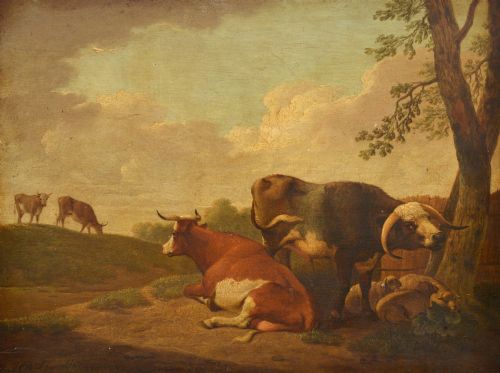
A classic animal painting captures creatures within landscapes, stables or domestic settings, recorded across the seventeenth, eighteenth and nineteenth centuries. These works range from Dutch rural scenes with cattle and sheep to intense sporting depictions of bears and hounds in combat.
Buyers encounter oil paintings on canvas alongside watercolour illustrations, housed within giltwood and gilded wood frames. The selection includes specific British and European schools, spanning 18th Century Dutch, Flemish Baroque and Victorian fine art.
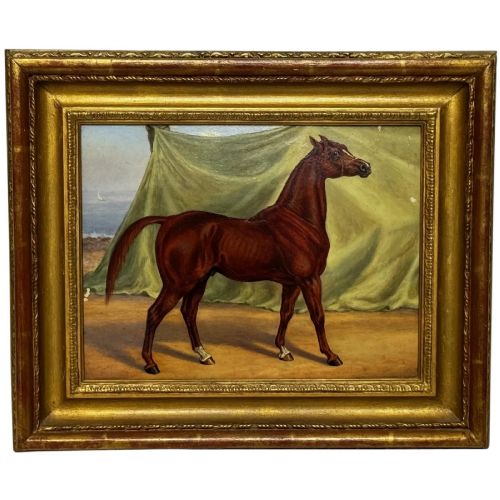
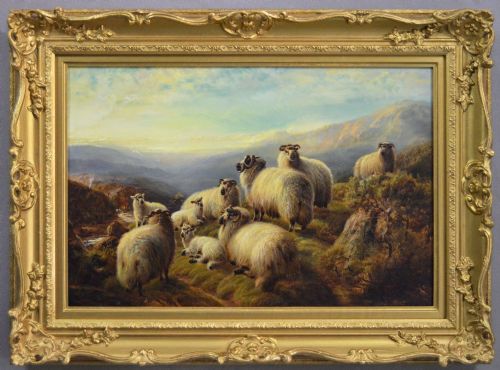
The subjects extend from purebred Arabian horses and highland sheep to household dogs and working farm animals. Each piece reflects the artistic priorities of its period, whether recording livestock or dramatising wildlife.
Materials and technique
Artists built these works using oil paint applied to canvas surfaces, layering pigments to render the textures of animal coats, feathers and surrounding landscapes. Watercolour on paper also appears among the later mid-century works.
The completed canvases sit within substantial giltwood frames, incorporating carved and gilded wood that complements the depth and tone of the painted surface.
Classic Animal Painting Retail Price Guide 2026
Typical asking prices for classic animal painting among the pieces listed under this phrase on Sellingantiques today, from the lower quarter to the upper quarter. They describe what is for sale here now, not the wider market.
Listings span from the seventeenth century to the twentieth century, with nineteenth-century Victorian works appearing most frequently.
Assessing quality and execution
Quality rests upon the artist's command of anatomical proportion, movement and light, separating finely observed studies from more formulaic workshop productions. The realism in the rendering of fur, muscle structure and expression dictates the artistic merit of the piece.
The condition and period integrity of the original giltwood frame heavily influence the overall standard of the object. Frames that retain their original gilding without excessive restoration match the historical importance of the canvas within.
Hendrik Willem Schweickhardt·Robert Watson·Frans Snyders·William Henry Mander·A Davis·Walt Disney
The Classic Animal Painting Glossary
- Canvas
- A heavy woven fabric stretched across a wooden frame to form the foundation for oil paintings. It provides a durable and textured surface for pigment application.
- Giltwood
- Wood, typically carved timber, that has been coated with a thin layer of gold leaf or metallic gilt. It forms the decorative framing typical of period fine art.
- Oil paint
- A slow-drying paint made by mixing pigments with a drying oil, most commonly linseed oil. This medium allows for subtle blending and rich tonal depth.
- Sporting art
- Fine art depicting blood sports, hunting, horses and dogs, often commissioned by landowners. It records rural pursuits and prized animals with documentary precision.
Classic Animal Painting: Frequently Asked Questions
What subjects feature in these paintings?
The subjects include livestock such as cattle and sheep, purebred horses, hunting dogs and wild animals in combat. Artists placed these creatures in rural landscapes, stables or domestic interiors.
Compositions range from quiet pastoral scenes of resting sheep to dramatic encounters between hounds and bears.
Which periods do these artworks represent?
The listings span from the seventeenth century through the eighteenth and nineteenth centuries, extending to mid-century modern pieces. Each era brings distinct framing styles and painting techniques.
Victorian and eighteenth-century Dutch works form a significant portion of the available selection.
How should I display giltwood frames?
Giltwood frames require stable indoor humidity and temperature to protect the delicate gold leaf and carved wooden base. Avoid placing them in direct sunlight or near active heat sources.
Dust the carved surfaces gently with a soft, dry brush without applying liquid cleaners.
What is Flemish Baroque painting?
Flemish Baroque art developed in the seventeenth century, characterised by dynamic movement, rich colour and dramatic contrasts of light and shadow. Works from this tradition often depict complex animal and human interactions.
Artists in this style focused on texture and physical energy within the composition.