




Chrome Ceiling Fixture
These chrome ceiling fixture pieces bring genuine nineteen-twenties and nineteen-thirties industrial and residential illumination into modern spaces.
Chrome Ceiling Fixture
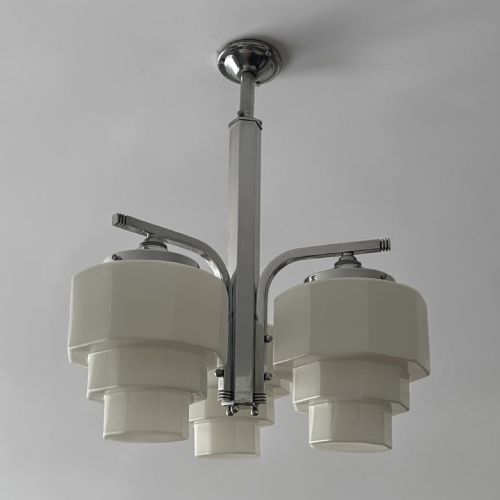
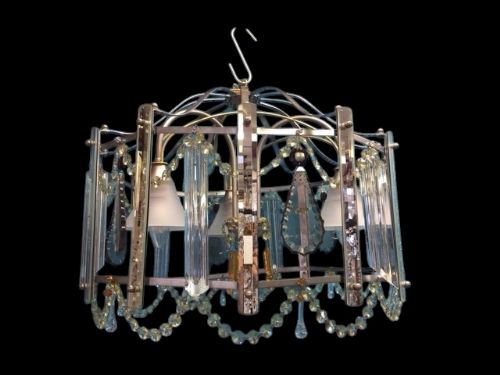
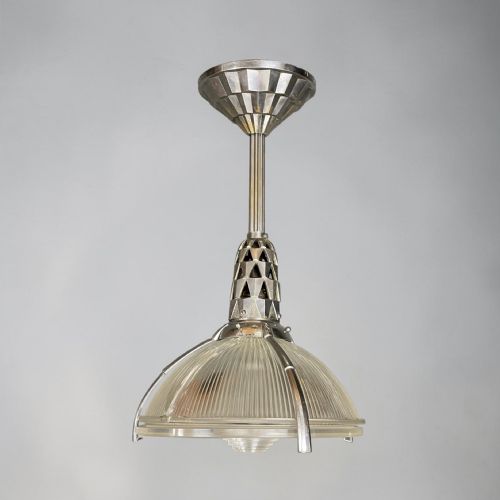
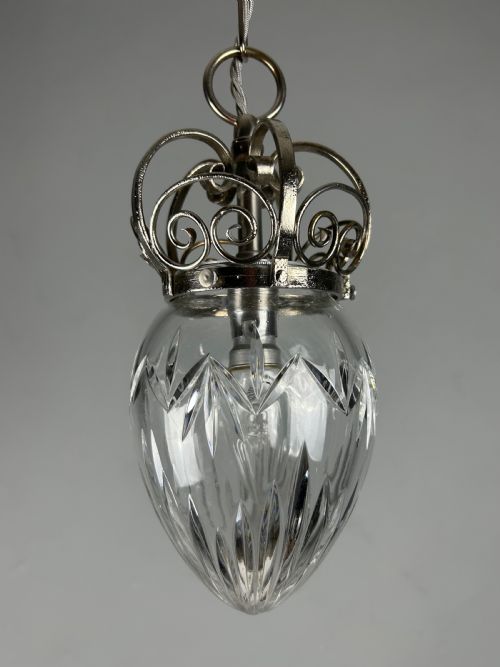
A chrome ceiling fixture encompasses pendant lights, hanging lanterns, and chandeliers dating from the nineteen-twenties and nineteen-thirties. Buyers seeking a chrome ceiling fixture will encounter streamlined Art Deco styles alongside French Chateau and industrial interpretations.
The assortment relies heavily on pendant lighting and ceiling lights utilising metal paired with glass. Pieces often display influences from the Art Deco and Odeon design movements.
Origins include domestic British and continental workshops, producing multi-light fittings and single suspension lamps. These objects illuminate rooms efficiently while maintaining period architectural character.
Materials and construction methods
Construction relies upon metal framing, specifically chrome and steel, combined with decorative glass elements. Workshops utilised polished chrome, brass accents, and structural steel to support the weight of suspended glass components.
Glass components range from plain pressed satin glass and opaline glass to heavy cut glass and crystal prisms. Techniques involved moulding pressed glass shades and cutting crystal bag chandeliers to catch and diffuse light effectively.
Fish-scale glass shades from the thirties let you bring an aquatic texture indoors without keeping an actual aquarium.
Distinctions in manufacture and design
Quality differentiates simpler utility lighting from ambitious decorative suites. Superior examples employ complex pressed satin glass or reeded opaline shades alongside substantial steel and chrome metalwork rather than basic sheet metal components.
Design ambition separates standard commercial installations from signed works and matching suites. Articulation of metal galleries, intricate glass texturing, and integrated brass detailing elevate the visual presence of a fitting.
Émile-Jacques Ruhlmann
The Chrome Ceiling Fixture Glossary
- Chrome
- A hard, corrosion-resistant metallic plating applied to base metals to provide a bright, reflective finish. This surface treatment defined much of the modern architectural hardware of the twentieth century.
- Opaline glass
- A milky, translucent glass developed to diffuse light evenly without harsh glare. It appears frequently in twentieth-century pendant lighting.
- Pressed glass
- Molten glass shaped by being pressed into a metal mould using a plunger. This technique allowed for intricate surface patterns to be produced consistently.
- Pendant light
- A single light fixture suspended from the ceiling by a cord, chain, or metal rod. These fixtures concentrate illumination downwards into a specific area of a room.
- Art Deco
- A design movement spanning the nineteen-twenties and nineteen-thirties characterised by sleek geometric shapes and stylised motifs. It heavily influenced lighting and interior hardware of the period.
Chrome Ceiling Fixture: Frequently Asked Questions
What periods do these lights come from?
The available lighting originates predominantly from the nineteen-twenties and nineteen-thirties. These decades span the height of the Art Deco movement and early industrial design.
Designs from this era reflect modernist architectural shifts towards clean metallic finishes and geometric glass forms.
How were these fixtures originally used?
These fittings served as primary illumination sources in domestic rooms, hallways, and public buildings. Single pendants lit smaller spaces while multi-light suites illuminated grander interiors.
Their metal and glass construction ensured durable daily performance alongside decorative illumination.
How do I live with vintage lighting?
Integrating period fixtures into contemporary spaces requires assessing ceiling heights and suspension lengths carefully. Many pieces accommodate standard modern electrical bulbs while retaining their original aesthetic.
Positioning them centrally allows the glass and chrome elements to function as focal decorative points.
How do I identify Art Deco lighting?
Art Deco lighting is identified through geometric silhouettes, stepped forms, and polished metallic surfaces. Common indicators include reeded opaline shades and streamlined chrome galleries.
French and British workshops of the period favoured these symmetrical, functional compositions.