





Chrome Bedside Lighting
Chrome bedside lighting brings industrial sheen and geometric glamour to the bedroom, spanning the Art Deco decades with striking metallic forms.
Chrome Bedside Lighting
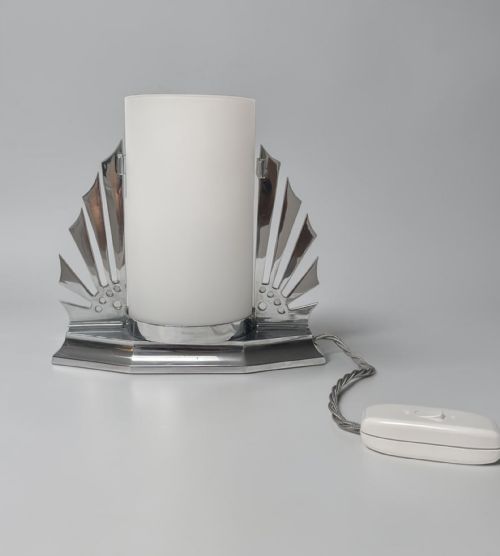
Chrome bedside lighting primarily takes the form of table lamps, embodying the distinct aesthetic of the Art Deco period. These pieces arrive from the 1920s, 1930s, 1940s, and 1960s, offering strong geometric shapes and metallic finishes.
A buyer examining this selection will frequently encounter single table lamps or matched pairs designed to sit upon a bedside table. The forms range from straightforward utilitarian stems to elaborate figural and architectural compositions.
The dominant style defining these items is Art Deco, alongside expressions of Art Deco glamour and modernist design. Many examples incorporate contrasting elements like coloured glass or contrasting plastics alongside the primary metal.
Materials and Construction
Makers utilised polished chrome plating over base metals to achieve a durable, reflective surface that characterises the aesthetic. This metallic sheen is frequently paired with glass components, including frosted glass, opal glass, crystal glass, and pink glass.
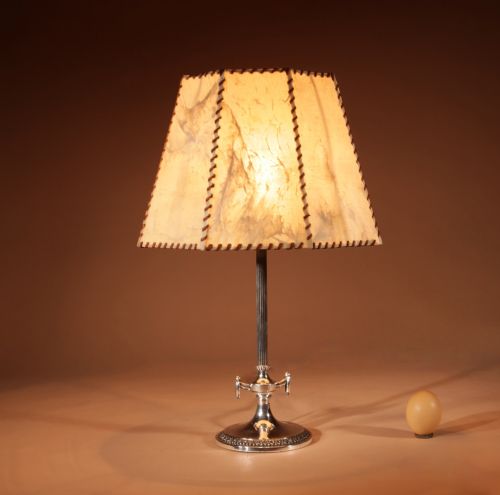
Early electrical components and structural details often incorporate early plastics such as Bakelite and Catalin phenolic Bakelite. Additional textural contrast appears through materials like parchment leather, silver plate, and white metal.
Chrome Bedside Lighting Retail Price Guide 2026
Typical asking prices for chrome bedside lighting among the pieces listed under this phrase on Sellingantiques today, from the lower quarter to the upper quarter. They describe what is for sale here now, not the wider market.
Listings feature table lamps exclusively, spanning four distinct decades from the 1920s to the 1960s.
Evaluating Quality and Finish
Quality in these lighting pieces rests upon the precision of the metalwork and the integrity of the combined materials. Superior examples display crisp casting in figural elements and secure, well-fitted junctions between the chrome framework and glass shades.
The sophistication of the design differentiates standard production from exceptional work, particularly in pieces featuring complex geometry like zig-zag motifs or figural sculptures. The choice of secondary materials, such as heavy crystal glass or genuine Bakelite details, elevates the construction.
The Chrome Bedside Lighting Glossary
- Chrome
- An electroplated coating of chromium applied over base metal to provide a bright, corrosion-resistant finish. This process became central to modern metal furniture and lighting.
- Bakelite
- An early thermosetting phenol formaldehyde resin prized for its durability and rich dark tones. It frequently forms the bases, switches, or accent details on period electrical items.
- Opal Glass
- A translucent milky-white glass that diffuses light evenly across a room. It was widely utilised in lamp shades to soften harsh electrical illumination.
- Art Deco
- A design movement spanning the 1920s and 1930s characterised by stylised motifs, geometric symmetry, and sleek lines. It remains the defining style for these metallic table lamps.
- Catalin
- A cast phenolic resin developed in the twentieth century known for its vibrant colours and translucent quality. It serves as a colourful contrast to cold metallic chrome.
Chrome Bedside Lighting: Frequently Asked Questions
What periods do these lamps come from?
The pieces originate primarily from the 1920s, 1930s, and 1940s, capturing the height of the Art Deco movement. A small number of examples date from the 1960s.
This span ensures that designs range from early geometric experiments to later mid-century interpretations of the same metallic aesthetic.
What materials are used in these lights?
Construction relies heavily on polished chrome and silver plate combined with various forms of glass. Common glass types include frosted, opal, crystal, and pink varieties.
Secondary materials often include early plastics like Bakelite and Catalin, alongside parchment leather and white metal.
Are pairs commonly available?
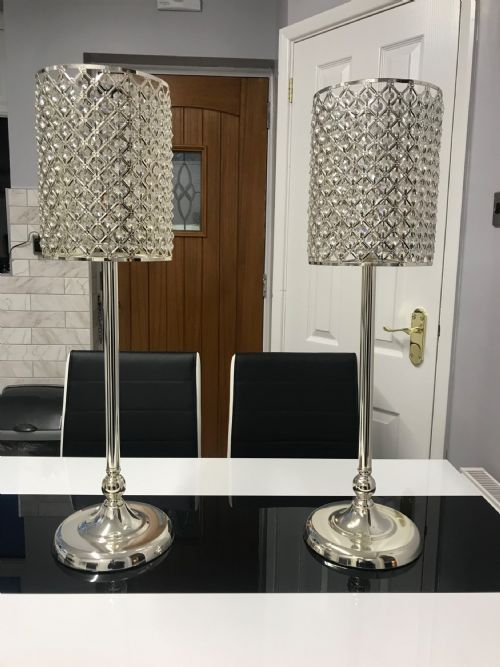
Matched pairs appear regularly among the table lamps, offering symmetrical options for a bedroom setup. These include paired crystal table chandeliers and twin twist lamps.
Single lamps also feature prominently for those seeking a singular accent piece on a table.
How do figural lamps differ from standard designs?
Figural pieces incorporate sculptural elements such as athletes holding a ball or distinct geometric motifs like zig-zag lightning flashes into the lamp base. Standard designs focus instead on clean cylindrical stems, twists, or architectural stepped bases.
Both styles utilise the same reflective chrome and glass vocabulary typical of the era.