
Chippendale Style Mahogany Chair
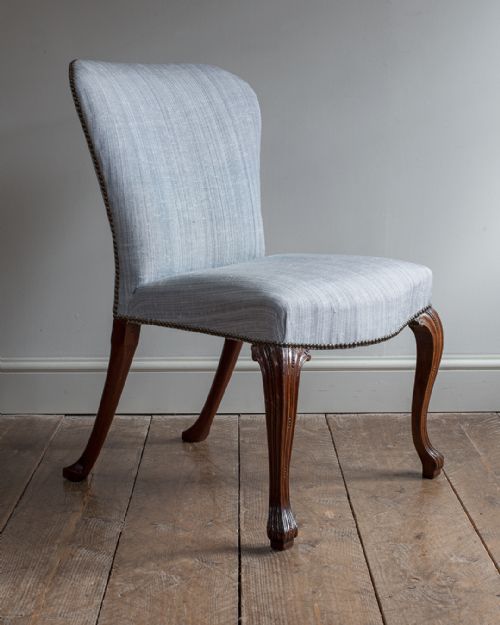
A chippendale style mahogany chair brings the refined carving and sturdy timber of eighteenth-century London workshops into modern dining rooms and studies.
Chippendale Style Mahogany Chair
A chippendale style mahogany chair encompasses everything from single elbow seats for a desk to large dining sets built across the Georgian, Victorian and Edwardian eras. Buyers encounter original eighteenth-century pieces alongside robust revival iterations from the late nineteenth and early twentieth centuries.
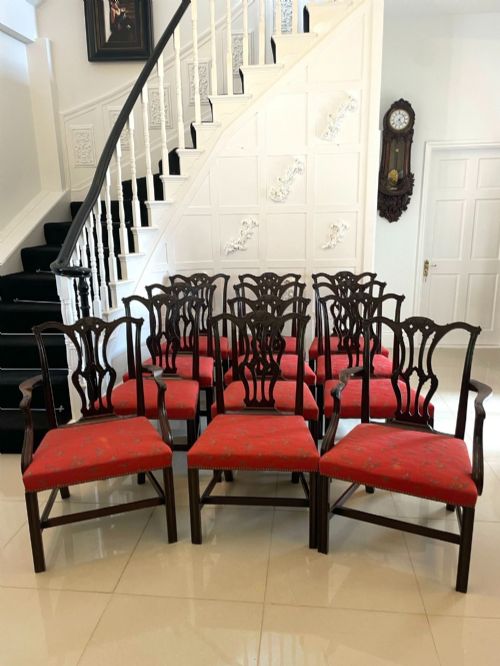
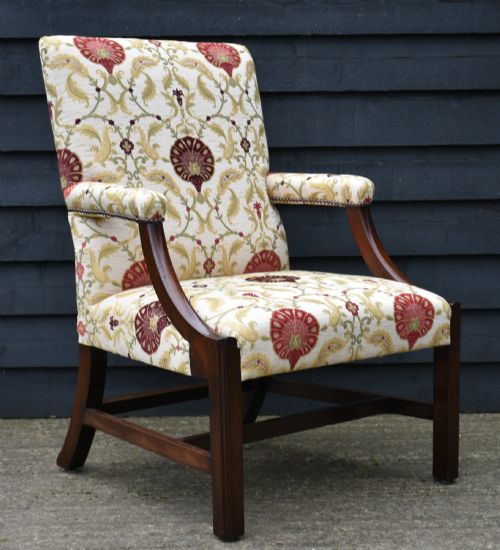
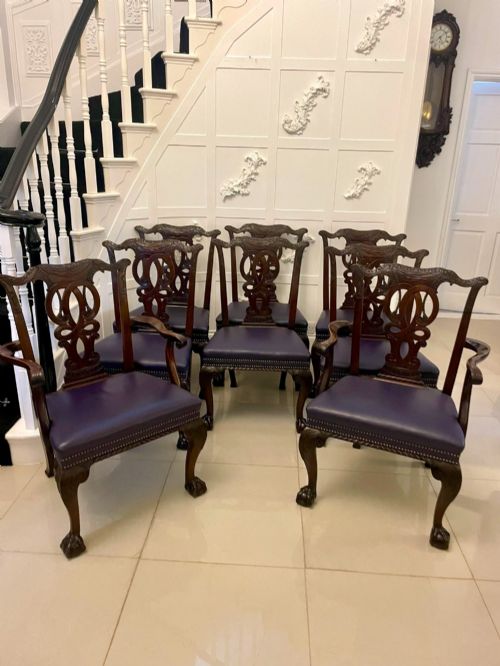
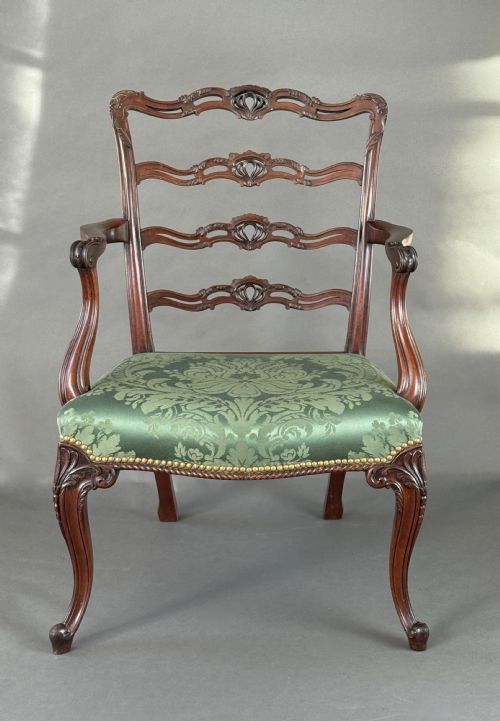
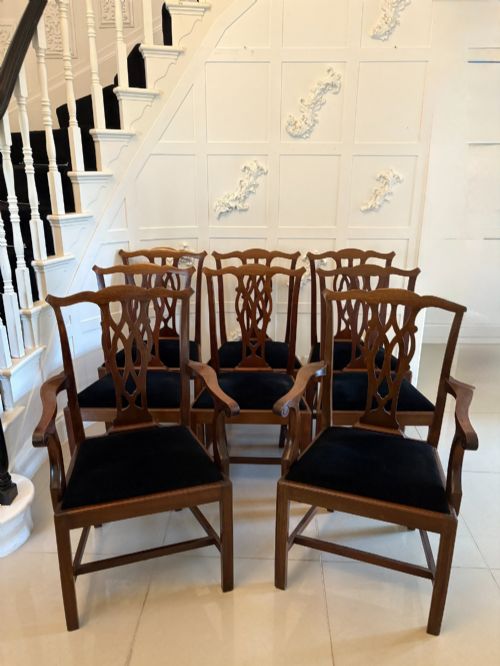
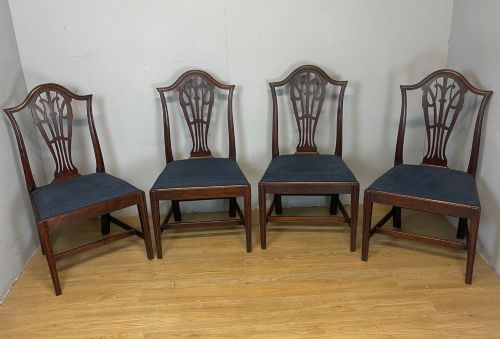
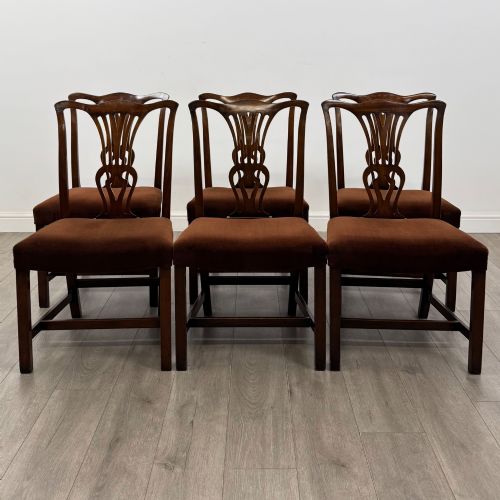
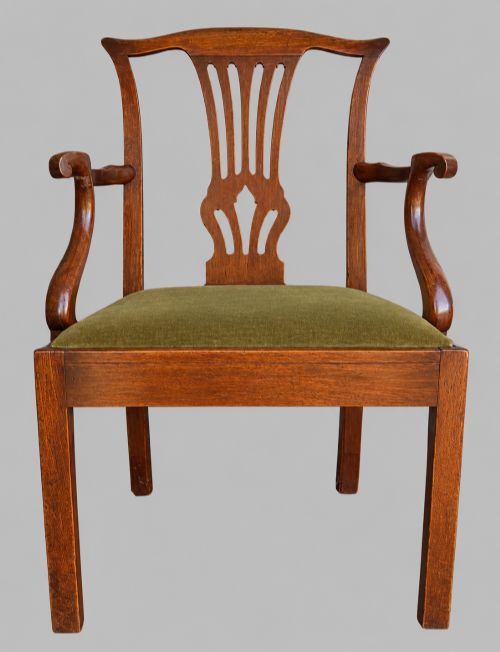
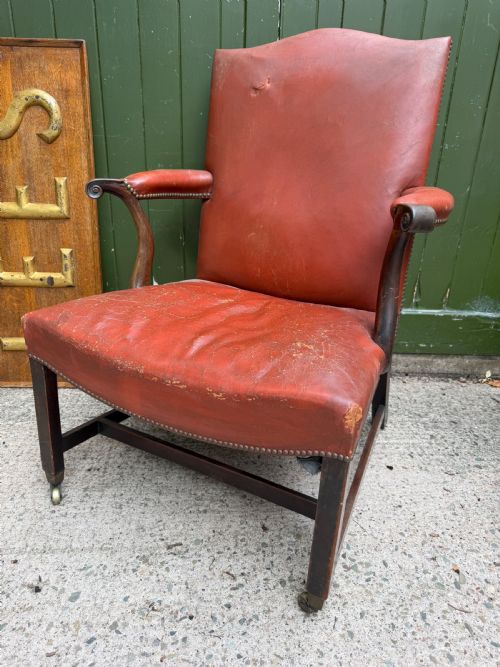
Forms span open armchairs, Gainsborough library seats upholstered in leather, ladder back dining chairs, and carvers designed to sit at the head of a table. The most frequent discoveries on this page are dining sets and pairs of revival armchairs produced around nineteen hundred.
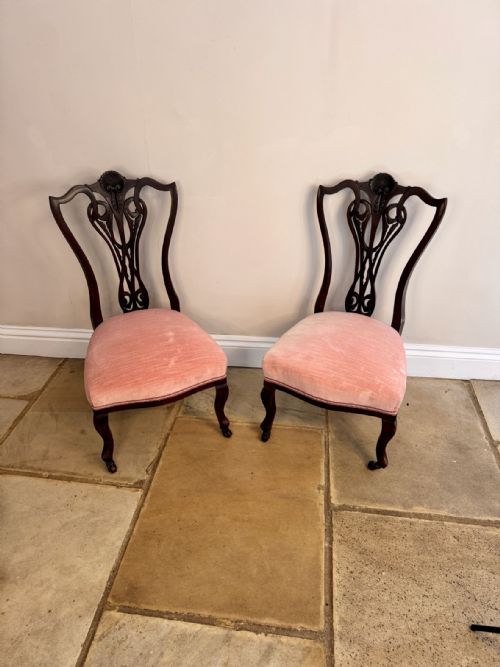
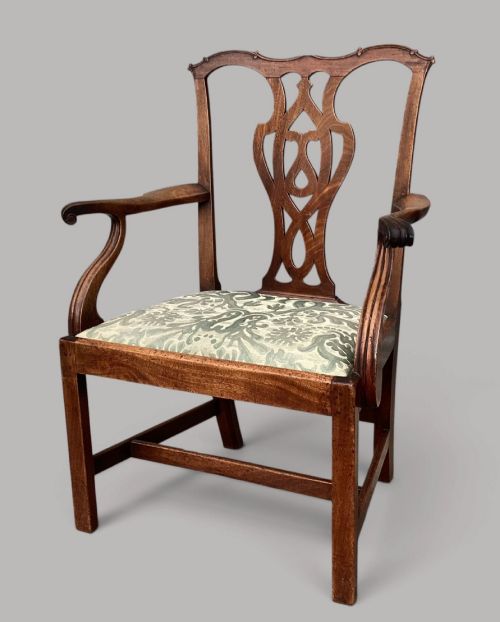
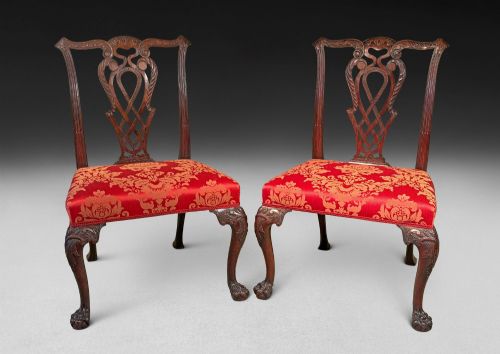
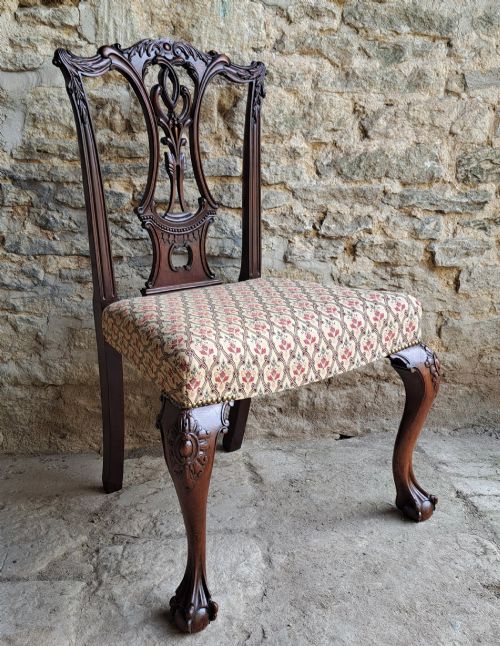
The aesthetic draws directly upon the published designs of Thomas Chippendale, integrating pierced splat backs, cabriole legs, and occasionally Chinese fretwork or ribbon motifs. These seating options served formal parlours, libraries and dining rooms then, and they continue to anchor similar rooms today.
How they were made
Makers relied primarily on dense, dark mahogany, selected for its stability and suitability for deep, crisp hand-carving along the top rails and splats. Frames were joined using traditional mortise and tenon techniques, ensuring structural longevity across centuries of daily use.
Upholstery methods varied from drop-in seats webbing-backed beneath horsehair to fixed leather hides secured with brass tacks. Silk, wool tapestry, velvet and modern replacement fabrics frequently cover the seating pads of both period originals and later revivals.
Listings feature mahogany dining sets ranging from four to sixteen chairs, alongside single library armchairs and Edwardian settees.
What varies in quality
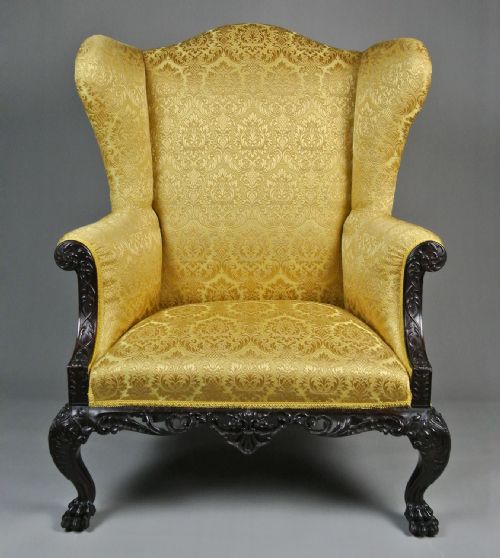
The depth and crispness of the hand-carving set finer examples apart from simpler commercial output, particularly in the rendering of acanthus leaves, ball and claw feet, and pierced ribbon backs. Timber selection also dictates grade, with figured grain and rich original patina marking out superior work.
Structural integrity and originality of the frame components define the upper tier of survivals. Chairs retaining their original blocks, unthinned legs, and matching period timber show greater fidelity to their workshop origins than heavily restored or mismatched sets.
Alfred Allen of Birmingham
The Chippendale Style Mahogany Chair Glossary
- Splat
- The vertical wooden strip down the centre of a chair back, frequently pierced and carved in interlaced ribbon or vase patterns.
- Gainsborough chair
- A wide, upholstered armchair with open padded arms, low sides, and short legs designed for writing desks or libraries.
- Carver
- An armchair intended for the head of a dining table, matching the design of the smaller side chairs in the set.
- Blind fretwork
- Low-relief geometric carving applied to the flat surfaces of chair legs and rails, often associated with Chinese Chippendale designs.
Chippendale Style Mahogany Chair: Frequently Asked Questions
How do I spot a true 18th-century chair?
Examine the timber shrinkage, hand-cut joinery, and tool marks hidden beneath the seat frame. Eighteenth-century pieces display dry, dense mahogany and construction methods distinct from later nineteenth-century revival workshops.
Compare the carving depth and proportions against documented Chippendale plates to confirm period authenticity.
Are revival chairs from 1900 well made?
Revival pieces from the Edwardian and late Victorian periods frequently utilise solid, heavy mahogany and skilled hand-carving. Many of these sets were produced by reputable cabinet makers replicating Georgian forms with great precision.
They offer robust daily utility for modern dining rooms while retaining traditional aesthetic standards.
What is a Chinese Chippendale style chair?
This variant incorporates straight square legs and geometric fretwork panels inspired by eighteenth-century European interpretations of Chinese motifs. They often feature intricate openwork railings along the arms and back.
Such designs were popular in grand country house drawing rooms and remain visually striking today.
Can I mix carvers with single chairs?
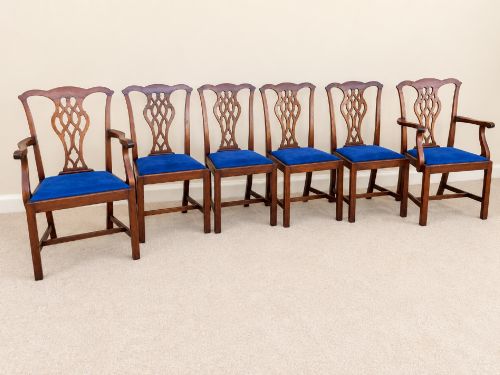
Historically, dining sets were assembled with two armchairs for the heads of the table and several armless side chairs along the sides. Matching the wood tone, leg style, and back design ensures a cohesive appearance.
Mixing revival periods requires careful attention to the specific shade of mahogany and carving weight.