




Chippendale Style Low Table
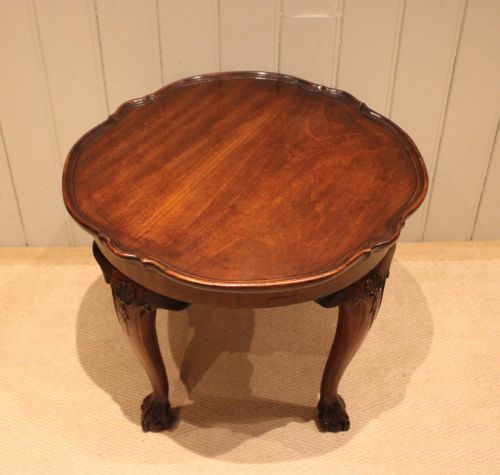
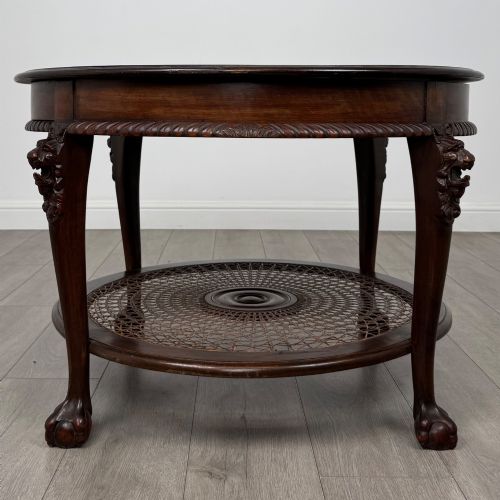
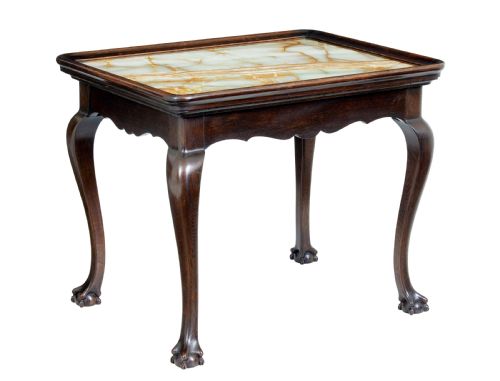
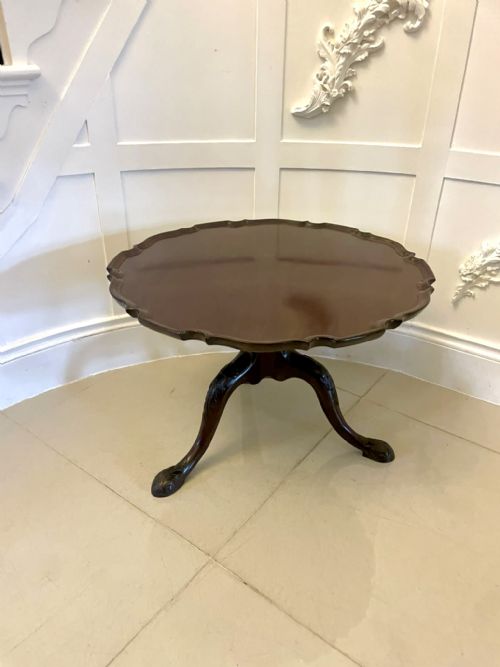
These chippendale style low table examples bring classic mahogany frames and carved detail into a room, offering a sturdy surface with historic proportion.
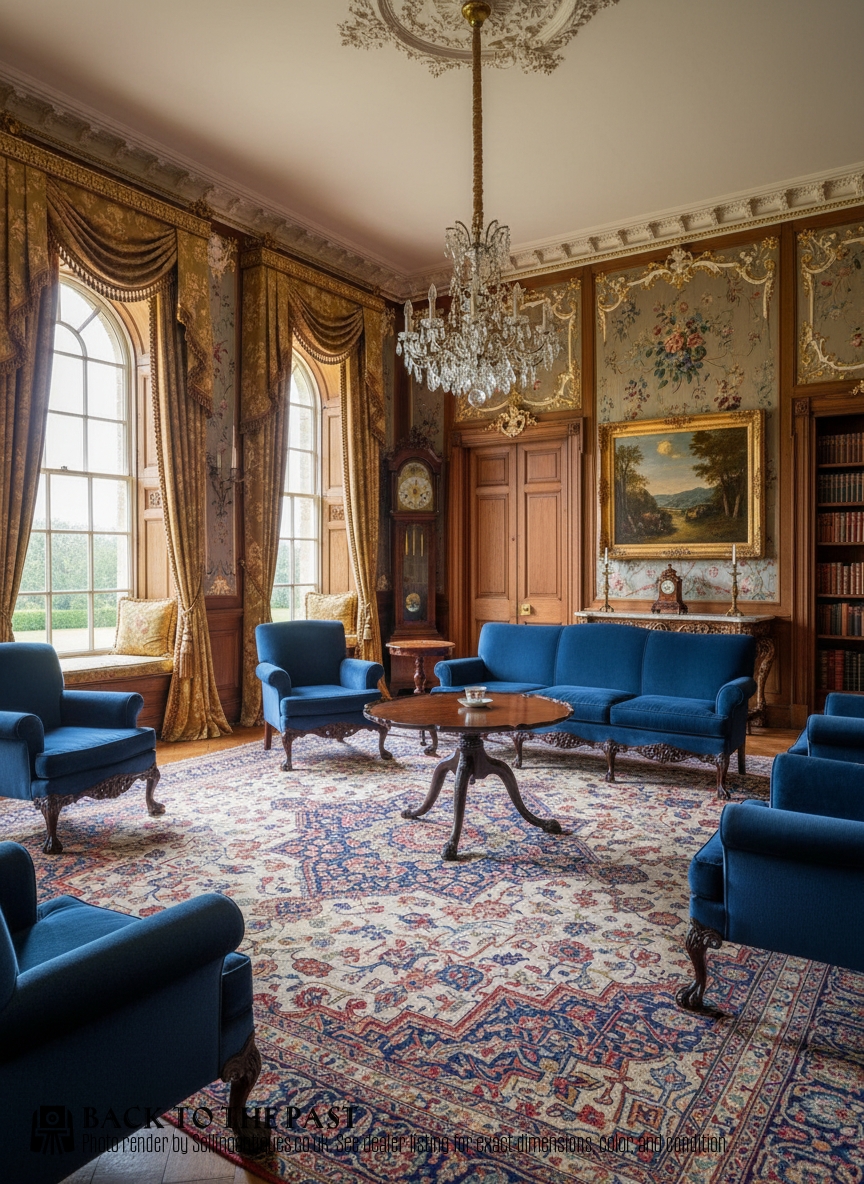
Chippendale Style Low Table
A chippendale style low table draws on eighteenth-century design traditions, appearing here primarily as coffee tables, side tables, and low stools adapted for modern living.
You will most commonly encounter mahogany constructions from the nineteenth and twentieth centuries, including revival pieces from the Edwardian era, 1920, and 1930.
Forms range from pie crust top coffee tables and round occasional pieces to country house low boys and upholstered footstools showing distinct Georgian influence.
How they were made
Cabinetmakers built these tables and stools predominantly using solid mahogany and walnut, occasionally incorporating oak for internal or structural framing.
Decoration relied on skilled hand carving, seen in shaped edges and detailed legs, sometimes complemented by brass hardware or inset onyx and cane panels.
One dining table in the archive stretched an ambitious eight feet, proving that even low dining surfaces needed room for feasts.
What varies in quality
Quality rests in the crispness of the timber carving and the selection of the primary wood, where rich grain and solid construction distinguish finer workshops from simpler production.
Proportion and structural integrity dictate the standing of a piece, with well-balanced frames and considered detailing holding more presence in a room.
Waring and Gillow
The Chippendale Style Low Table Glossary
- Chippendale Style
- Furniture following the aesthetic vocabulary published by Thomas Chippendale in the eighteenth century, characterised by carved mahogany and classical motifs. Revival pieces later reinterpreted these designs.
- Pie Crust Table
- A small occasional table featuring a raised, carved edge shaped in undulating curves resembling pastry work. This technique required careful hand shaping from solid timber.
- Low Boy
- A small traditional side table with drawers, raised on relatively tall legs. Antique examples often served domestic functions in country houses.
- Cane
- Plant material woven into open patterns for table panels or seating inserts. It provides a lightweight decorative texture alongside heavier timber.
Chippendale Style Low Table: Frequently Asked Questions
What is a chippendale style low table?
These are low-set tables and stools created in the decorative manner of eighteenth-century cabinetmaker Thomas Chippendale.
They appear frequently as mahogany coffee tables and side tables dating from the nineteenth and twentieth centuries.
How do I date a mahogany table?
Dating relies on timber characteristics, construction methods, and the style of the carving. Revival pieces often show early twentieth-century manufacturing techniques beneath traditional forms.
Examining the underside and drawer construction helps separate Georgian originals from Edwardian and later interpretations.
Where did these tables originate?
The design lineage traces back to British cabinetmaking traditions inspired by eighteenth-century pattern books.
Subsequent revival periods in the Victorian and Edwardian eras continued producing these forms for domestic interiors.
How do I style a low mahogany table?
A low mahogany table anchors a seating area, pairing well with traditional upholstery or contrasting with modern interiors.
Its timber tones and carved details add warmth and historic character to a room.