

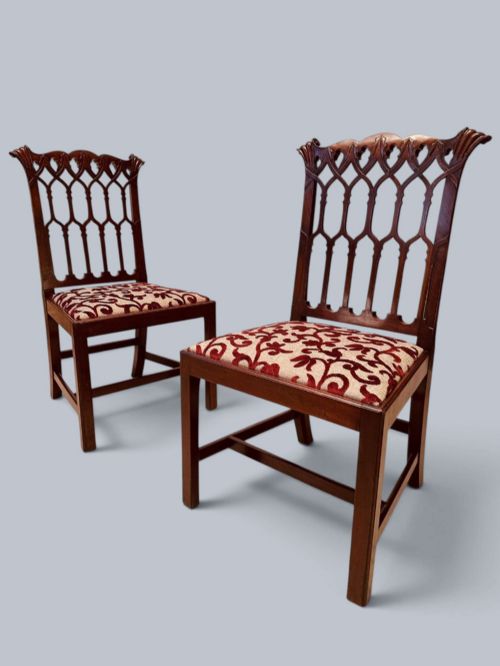
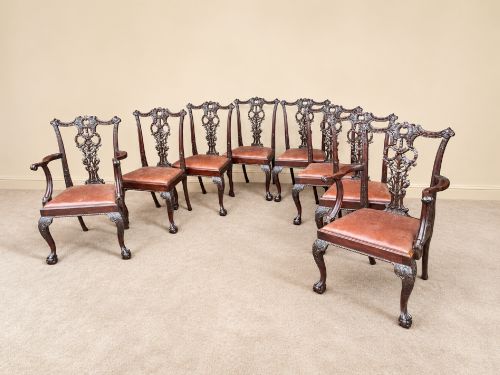
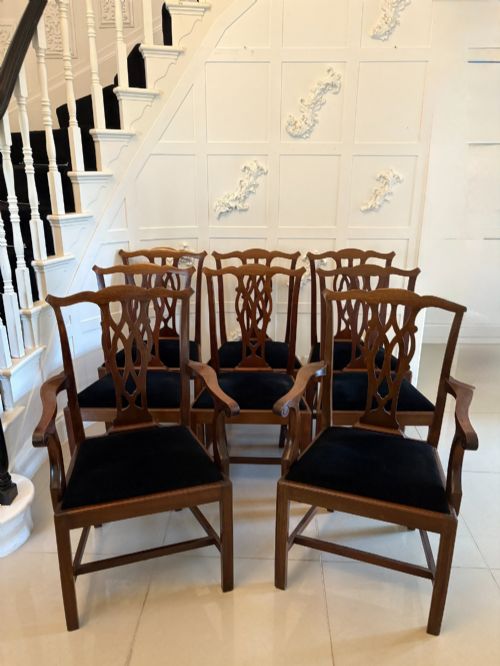
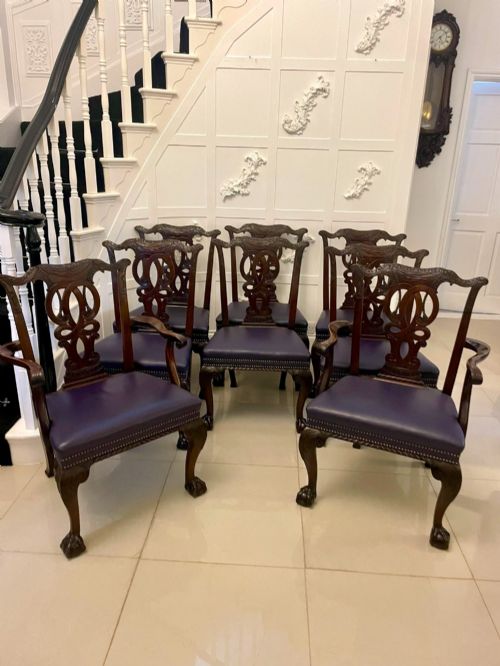
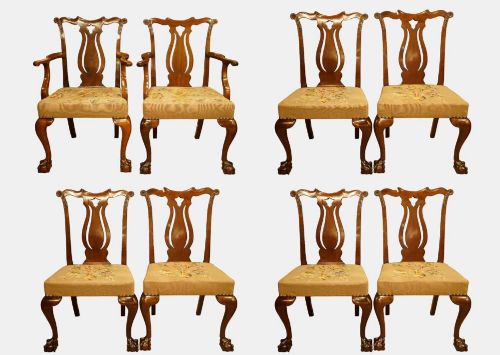


Chippendale Revival Dining Set
A chippendale revival dining set brings structured historic dignity to a room, offering matched seating crafted during the later nineteenth and early twentieth centuries in imitation of eighteenth-century models.
Chippendale Revival Dining Set
A chippendale revival dining set typically comprises a coordinated group of dining chairs, often numbering from four up to fourteen pieces, with armchairs and single chairs combined. These sets date predominantly from the Victorian, Edwardian, and early twentieth-century periods, capturing the revived interest in classic cabinet-making forms.
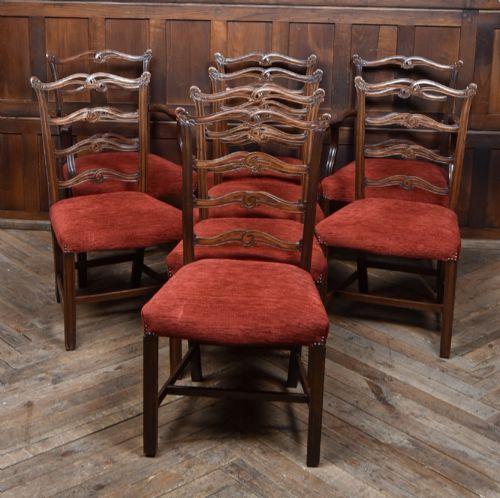
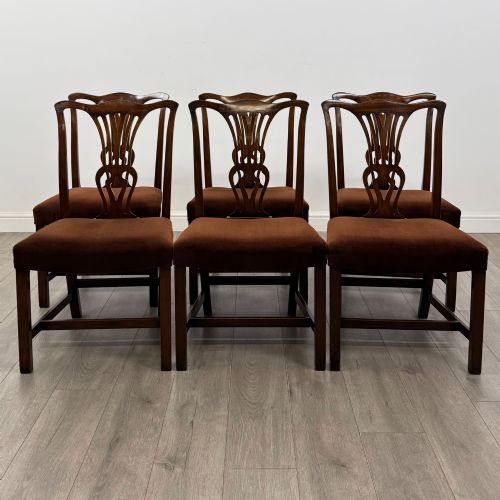
The aesthetic draws heavily on eighteenth-century design vocabulary, incorporating elements like ribbon backs, ladderbacks, and pierced splats. Makers working in the nineteenth and early twentieth centuries reinterpreted these historic motifs to satisfy contemporary domestic requirements for large, formal dining arrangements.
How they were made
Mahogany serves as the primary timber across the surviving pieces, valued for its dense grain and capacity to hold crisp hand-carved details. Oak appears less frequently, along with occasional examples executed in ebonised wood or burr walnut.
Seating portions are upholstered in various materials including leather, velvet, tapestry, and standard fabric, secured over the wooden framework. Joinery relies on traditional methods to ensure stability across large sets spanning twelve or more chairs.
Chippendale Revival Dining Set Retail Price Guide 2026
Typical asking prices for chippendale revival dining set among the pieces listed under this phrase on Sellingantiques today, from the lower quarter to the upper quarter. They describe what is for sale here now, not the wider market.
Listings feature sets constructed from mahogany, oak, and burr walnut across the Victorian and Edwardian periods.
What varies in quality
Depth and crispness of the carved ornamentation separate standard production from superior examples, particularly along the top rails and splats. Chairs featuring intricate ribbon work or extensive pierced carving demonstrate greater artisanal investment than plain variants.
Consistency across large groupings dictates overall merit, where matching timber grain and uniform framing across ten or twelve pieces show deliberate workshop selection. The integrity of the original upholstery platform and underlying webbing also influences the standing of a set.
Warings·Phillips and Jones·Robert Strahan Dublin·H. Samuel London
The Chippendale Revival Dining Set Glossary
- Splat
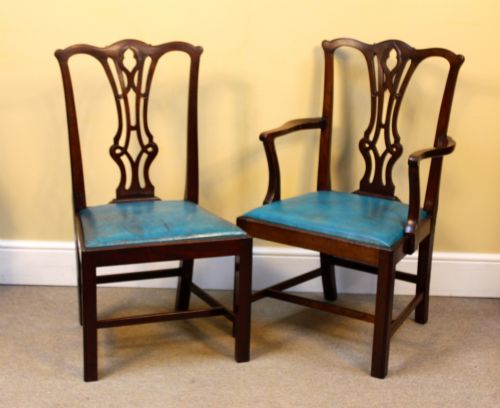
- The vertical wooden strip down the centre of a chair back, frequently pierced or carved in revival pieces. This component defines much of the distinct silhouette seen in these designs.
- Carver
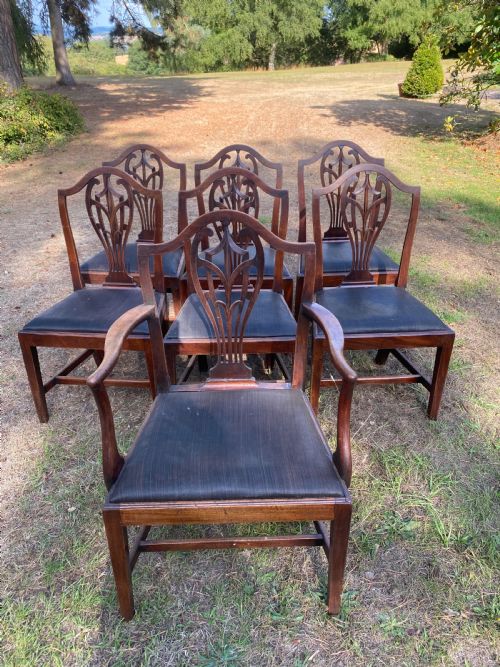
- An armchair designed to match a set of single dining chairs, usually placed at the head of a table. These often feature extended arms terminating in scroll or knuckle handholds.
- Ribbon back
- A chair back design where the central splat resembles interlaced ribbons or folded silk. This decorative technique demands high carving skill.
- Ladderback
- A chair back formed of horizontal slats stacked vertically between the uprights. This vernacular style appears frequently in nineteenth-century revival iterations.
Chippendale Revival Dining Set: Frequently Asked Questions
How many chairs come in a standard set?
Sets vary widely in size, running from four chairs up to fourteen pieces depending on the original commission. Many larger configurations include a pair of carvers alongside a greater number of single chairs.
Buyers frequently encounter counts of six, eight, ten, or twelve items surviving together from the nineteenth and early twentieth centuries.
Are these sets from the eighteenth century?
Most pieces associated with this style date from the nineteenth century or the Edwardian era rather than the original eighteenth-century period of Thomas Chippendale. They represent a revival movement where later makers consciously copied earlier aesthetics.
Evidence shows production spanning the Victorian era through to the nineteen-thirties, utilising older design templates with contemporary workshop methods.
What wood types should I expect to find?
Mahogany remains the dominant timber used across the majority of these dining groups, chosen for its durability and rich appearance. Oak and burr walnut also appear in specific regional or decorative examples.
Ebonised finishes are occasionally found on select Edwardian and Victorian suites to mimic exotic hardwoods.
How do I accommodate carvers in a dining arrangement?
Armchairs, or carvers, are traditionally positioned at the head and foot of the dining table while single chairs line the sides. This configuration matches historical usage patterns for formal dining spaces.
When counting a set total like six plus two, the figures denote single chairs and carvers respectively.