

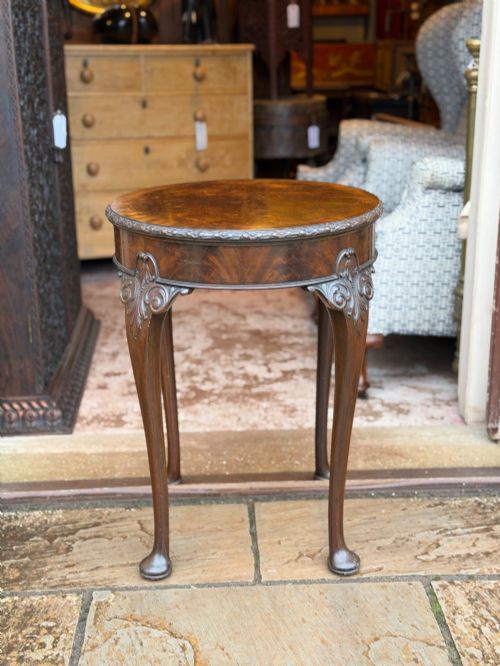


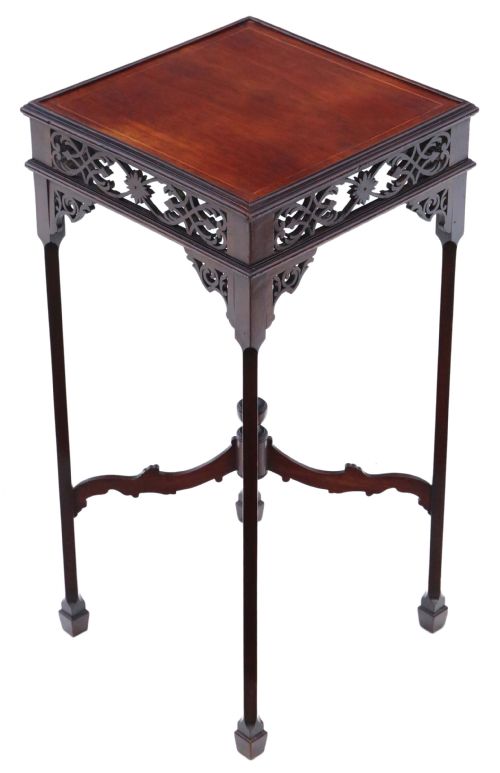


Chippendale Display Table
These chippendale display table pieces combine fine timber framing with glazed display compartments to showcase small collections in proper style.
Chippendale Display Table
A chippendale display table brings together functional furniture and glazed exhibition space, serving as both an occasional table and a miniature cabinet for prized objects. Buyers seeking this phrase encounter formats ranging from dedicated bijouterie tables with glass lids to side tables and plant stands featuring display shelves.
The pieces on offer span several distinct eras, stretching from authentic 18th-century Georgian examples through to Edwardian and later revival interpretations. Mahogany forms the backbone of these pieces, often paired with glass tops and brass fittings to create a formal aesthetic suited to traditional interiors.
Beyond the standard bijouterie table, related forms such as wig stands, torchere plant stands, and Pembroke tables with display stretchers appear within the selection. Each variant offers a distinct method for displaying small ornaments or serving as a refined surface in a reception room.
How they were made
Makers relied primarily on mahogany for the structural frames, utilising its strength and rich grain to support glazed compartments and delicate legs. Timber sections were shaped and joined to bear the weight of glass tops while maintaining a light, elegant silhouette.
Glazing and metalwork form the secondary components, with glass panels fitted into wooden frames to protect interior contents from dust while allowing full visibility. Brass hardware frequently secures the lids, hinges, and occasional galleries, adding metallic contrast to the dark timber.
Interiors were often lined with velvet or fabric to cushion delicate items placed within the display well. This textile lining provides a soft contrasting background that enhances the appearance of silver, porcelain, or small curiosities.
Chippendale Display Table Retail Price Guide 2026
Typical asking prices for chippendale display table among the pieces listed under this phrase on Sellingantiques today, from the lower quarter to the upper quarter. They describe what is for sale here now, not the wider market.
Some tables double as wig stands, proving that Georgian gentlemen required as much vanity furniture as their successors.
What varies in quality
The refinement of the timber carving and the crispness of the joinery separate standard production pieces from finer examples. Superior tables exhibit hand-carved details along the legs and rails, whereas simpler items rely on plain turned or straight supports.
The choice of secondary materials and internal fittings also dictates the grade of a piece. High-quality items incorporate heavy brass mounts, intact fabric or velvet linings, and well-fitted glass panels that sit flush within their wooden rebates.
The Chippendale Display Table Glossary
- Bijouterie table
- A specialist display table featuring a glazed top and a shallow compartment for exhibiting small valuables, jewellery, and curiosities.
- Torchere
- A tall, slender stand originally designed to hold a candle or lamp, later adapted to support plants or decorative ornaments.
- Pembroke table
- A small, versatile table with hinged drop leaves on either side, occasionally constructed with an undertshelf or display stretcher.
- Gallery
- A low decorative railing, typically rendered in brass or carved wood, fitted around the perimeter of a table top to prevent items from sliding off.
- Stretcher
- A horizontal wooden brace connecting the legs of a table to provide structural stability, sometimes widened into a functional shelf for display.
Chippendale Display Table: Frequently Asked Questions
What is a chippendale display table used for?
These tables function as surface furniture and enclosed display cases simultaneously. The glazed top compartment allows owners to exhibit small collectibles while keeping them secure and free from dust.
They sit comfortably in reception rooms, drawing rooms, or hallways as occasional tables that draw the eye toward featured curiosities.
How do I date a mahogany display table?
Dating relies on observing construction methods, timber patination, and stylistic markers across the piece. Georgian and 18th-century examples display different joinery techniques and proportions compared to Edwardian or revival pieces from the early twentieth century.
Hardware style, such as the design of brass hinges and locks, also offers clear chronological indicators.
Are these tables sturdy enough for daily use?
Most examples are built from solid mahogany and designed for regular domestic placement. They function reliably as side tables or plant stands while accommodating light decorative objects within their display compartments.
Care should be taken with the glass tops and delicate internal linings during routine cleaning.
What is the difference between a bijouterie table and a side table?
A bijouterie table specifically incorporates a glazed lift-off or hinged lid over a shallow velvet-lined well for showing small items. A standard side table offers only a solid wooden top for general placement.
Some hybrid designs bridge the category by pairing a standard surface with a lower display shelf.