
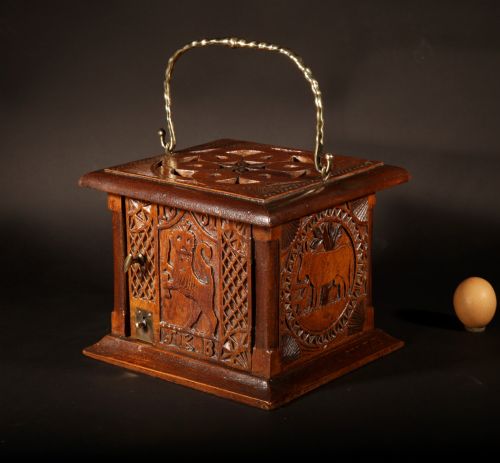
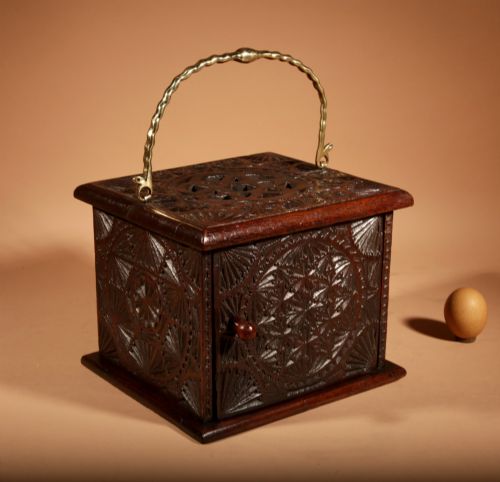
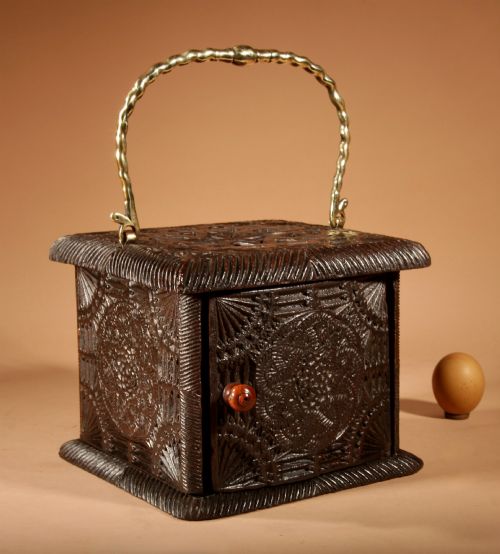
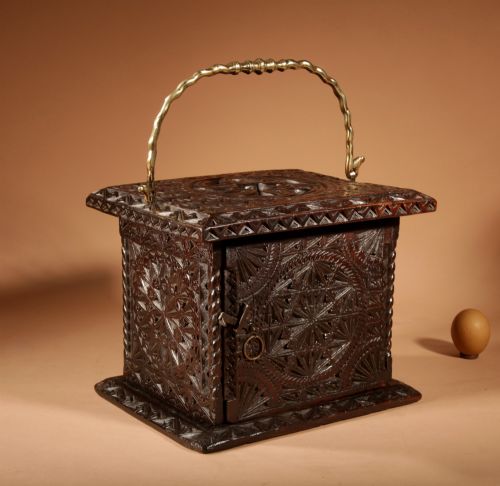




Chip Carved Oak Box
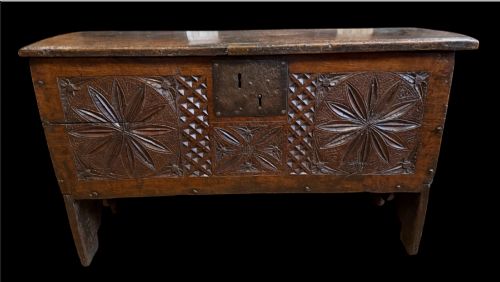
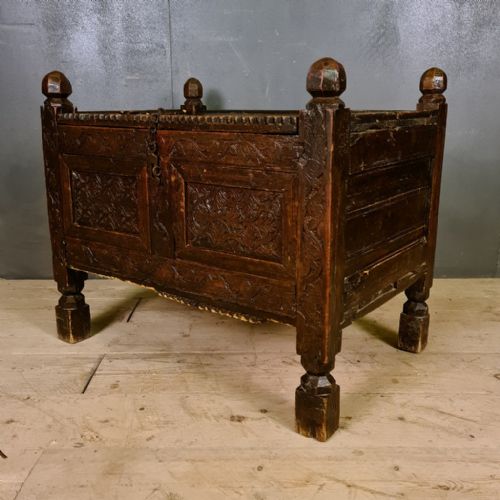
These chip carved oak box pieces are solid timber artefacts bearing geometric notched decoration, prized for their tactile folk art surface texture.
Chip Carved Oak Box
A chip carved oak box is a utilitarian container carved with gouges and knives to create geometric patterns across the wooden surface. These items range from small desk containers like quill boxes and snuff boxes to larger coffers and foot warmers.
You are most likely to encounter smaller lidded containers and foot warmers from the seventeenth century onwards, alongside vernacular chests featuring regional British and European folk art motifs.
The regional diversity includes Welsh and Frisian examples, often incorporating heart inlays or partly painted details to enhance the traditional country aesthetic.
How they were made
These pieces are constructed primarily from native oak and occasional fruitwood inlay, utilising durable plank construction joined with traditional methods. Artisans applied surface decoration by removing chips of wood from the solid timber ground with specialised chisels and knives.
Hardware details such as wrought iron and brass hinges or handles appear on functional items like foot warmers and coffers, while some examples integrate fruitwood inlay for decorative contrast.
Materials across the inventory include solid oak, brass, iron, and fruitwood inlay.
What varies in quality
Quality rests in the crispness and complexity of the geometric chip carving, where deliberate execution creates precise light and shadow across the oak grain. The depth of the carving and the balance of the repeating patterns distinguish master folk art from simpler utility work.
The integrity of the original timber and the survival of early brass or iron fixings elevate certain examples, particularly where original painted highlights or fruitwood inlays remain intact without modern intervention.
The Chip Carved Oak Box Glossary
- Chip carving
- A form of relief carving where small chips are removed from a wooden surface with knives or chisels to form geometric patterns. This technique defines the distinct texture of these rustic containers.
- Coffer
- A heavy wooden chest traditionally used for storing valuables or documents. These storage pieces often display early vernacular carving.
- Foot warmer
- A box designed to hold hot embers, typically featuring pierced metal liners and insulated wooden or iron construction. They kept feet warm during cold periods.
- Vernacular
- Everyday architecture or objects made by local craftspeople using traditional regional styles and native materials. These items reflect local domestic needs rather than high court fashions.
Chip Carved Oak Box: Frequently Asked Questions
What is a chip carved oak box?
A chip carved oak box is a small container or chest decorated by cutting small geometric chips out of the timber surface. They were made by traditional craftspeople for domestic storage.
These pieces showcase regional folk art patterns, ranging from simple geometric shapes to intricate designs featuring heart inlays and painted accents.
How were these boxes used?
These boxes served everyday domestic functions, holding items such as quills, lace, snuff, or marriage documents. Larger versions acted as storage coffers for household goods.
Foot warmers were specialised variants used to hold hot embers and warm feet in chilly domestic or ecclesiastical spaces.
How do I date an oak box?
Dating relies on observing construction methods, timber patination, and the style of the hardware and carving. Earlier pieces from the sixteenth and seventeenth centuries exhibit thick plank construction and vernacular tool marks.
Later nineteenth and twentieth-century examples often display standardised construction techniques alongside revival folk art styles.
Where were these pieces made?
These items originated across various British and European regions, with distinct styles emerging from Wales and Frisia. Local makers utilised native woods like oak and fruitwood.
Regional traditions influenced the specific geometric motifs and inlay patterns applied to each box or coffer.