

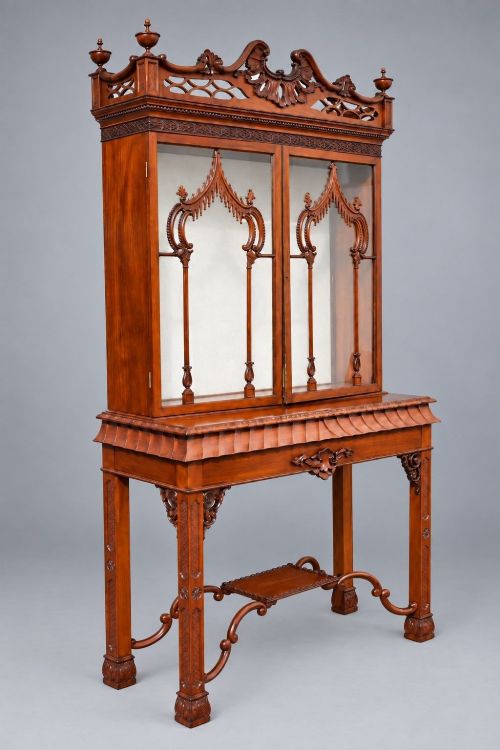


Chinese Vitrine Cabinet
A chinese vitrine cabinet brings sophisticated display space and intricate woodwork into a room, offering collectors a striking way to showcase treasured porcelain and curios.
Chinese Vitrine Cabinet
A chinese vitrine cabinet functions primarily as a glazed display cabinet or china display cabinet, designed to keep precious objects visible yet protected behind glass. These pieces emerge predominantly from the nineteenth century, with Victorian iterations and pieces dating around eighteen eighty showing strong stylistic crossover.
Buyers encounter forms ranging from freestanding glazed hardwood display cabinets to elaborate cabinets on stand and silver cabinets. Makers often drew on Chinoiserie aesthetics, Chinese Chippendale Revival styling, and late Qing Dynasty influences to create these distinctive display vessels.
Asian export and Chinese oriental designs dominate this selection, frequently pairing substantial timber frames with refined glass panels. The resulting furniture pieces bridge formal English revival tastes with traditional eastern craftsmanship.
Materials and construction
Cabinet makers utilised dense timbers such as mahogany, hardwood, rosewood, and cherrywood to build the structural frames of these display pieces. These woods provided the necessary strength to support large glazed areas while accepting intricate surface carving.
Decoration often involved delicate mother of pearl inlay embedded directly into the wooden panels, alongside polished brass hardware and occasional fabric linings. Glazing was integrated carefully into doors and sides to maximise light entry for the contents displayed within.
Chinese Vitrine Cabinet Retail Price Guide 2026
Typical asking prices for chinese vitrine cabinet among the pieces listed under this phrase on Sellingantiques today, from the lower quarter to the upper quarter. They describe what is for sale here now, not the wider market.
Listings feature items spanning the nineteenth century, including specific dates from 1880, 1890, and 1900 alongside Victorian period pieces.
Judging the quality
Quality rests heavily on the depth and precision of the carved wood elements, particularly within Chinoiserie and Chinese Chippendale revival pieces where crisp relief work distinguishes finer examples. The integration of mother of pearl inlay also varies, with superior work sitting flush and secure within the timber.
The choice of primary wood dictates much of the character, as richly grained rosewood or figured mahogany elevates a cabinet above simpler hardwood versions. Structural proportion, especially on cabinets on stand, separates standard utility furniture from more ambitious decorative commissions.
The Chinese Vitrine Cabinet Glossary
- Vitrine
- A glass-fronted cabinet specifically designed for displaying fine objects or china. These pieces protect delicate items from dust while offering all-round visibility.
- Chinoiserie
- European theatrical interpretation of Chinese artistic traditions, popular in furniture decoration and carving. This style frequently employs motifs of landscapes, pagodas, and figures.
- Chinese Chippendale
- An eighteenth-century English furniture style incorporating fretwork and pagoda-like pediments inspired by Chinese design. Revivals of this style recurred later in the Victorian era.
- Mother of pearl inlay
- The decorative insertion of iridescent shell fragments into carved recesses within the wooden surface. This technique adds luminous contrast to dark hardwoods.
- Cabinet on stand
- A form where a primary display enclosure rests upon a separate supporting frame or table structure. This elevates the visual weight of the furniture.
Chinese Vitrine Cabinet: Frequently Asked Questions
What is a chinese vitrine cabinet?
A chinese vitrine cabinet is an antique display case built with glass panels and timber frames, designed to showcase porcelain, silver, and curiosities. They range from simple hardwood display units to elaborate revival pieces.
These cabinets draw on diverse stylistic traditions, including Chinese Chippendale, Chinoiserie, and Qing Dynasty aesthetics, combining eastern motifs with western cabinet-making forms.
How do I date a cabinet?
Dating relies on examining the timber species, construction methods, and stylistic markers such as Victorian revival traits or late Qing characteristics. Nineteenth-century examples often display hand-cut joinery and specific regional carving styles.
Hardware, glass consistency, and the integration of inlay work also provide reliable clues for placing a piece within the 1880 to 1900 timeframe.
Where should I place it?
These cabinets suit principal reception rooms, dining spaces, or studies where their glazed panels can catch natural light. Positioning them away from direct sunlight protects both the timber and any displayed contents.
Because many examples feature detailed carving on stands or glazed sides, placing them where they can be viewed from multiple angles enhances their visual impact.
How do I care for the wood?
Maintenance involves dusting regularly with a soft cloth and occasionally applying appropriate wax to nourish hardwoods like mahogany and rosewood. Avoid liquid polishes that can damage mother of pearl inlay or soften historic finishes.
Maintaining stable room humidity prevents the timber from splitting and keeps glued joints and glass settings secure over time.