






Chinese Silk Textile
A Chinese silk textile brings intricate needlework and vibrant historical imagery directly into a room.
Chinese Silk Textile
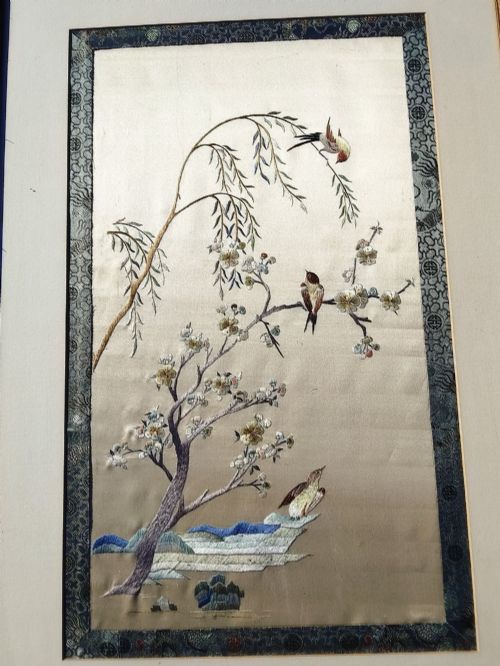
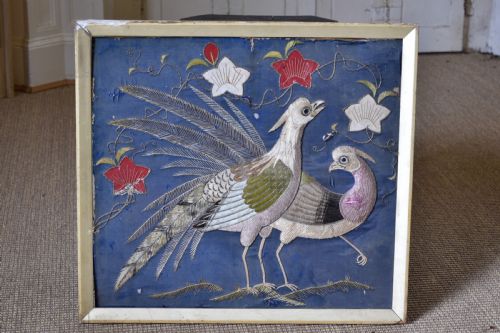
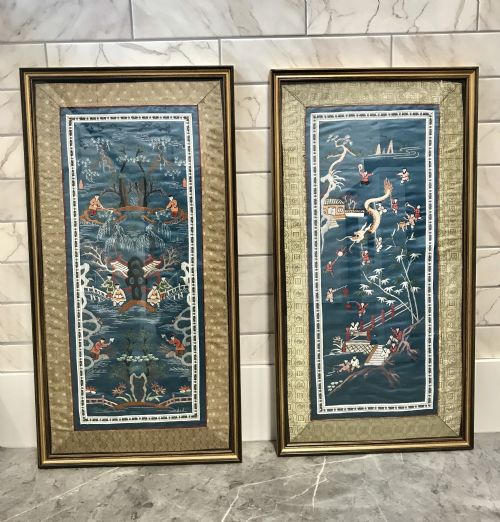
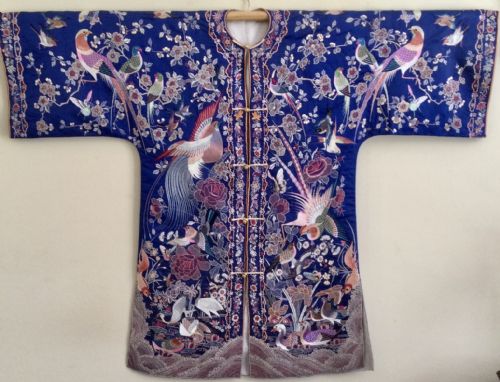
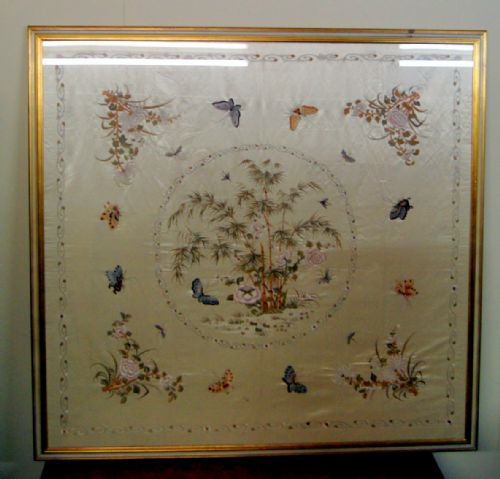
A chinese silk textile encompasses framed embroidery, embroidered panels, rank badges, painted silk works, and woven rugs dating from the early nineteenth century through to the mid twentieth century. These items showcase traditional motifs such as dragons, figures, trees, flowers, garden birds, and mandarin ducks.
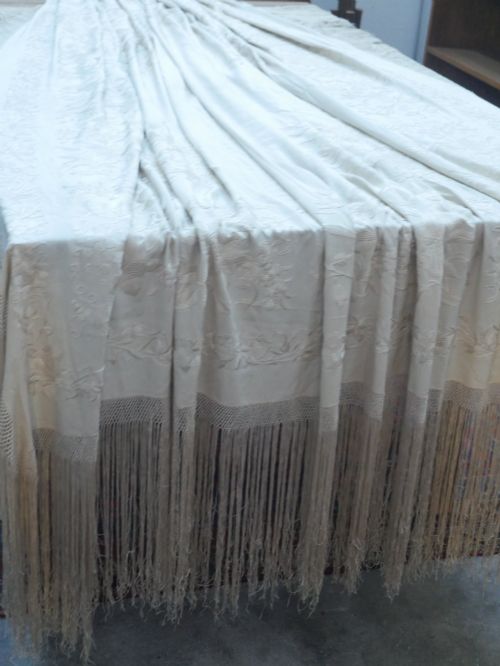
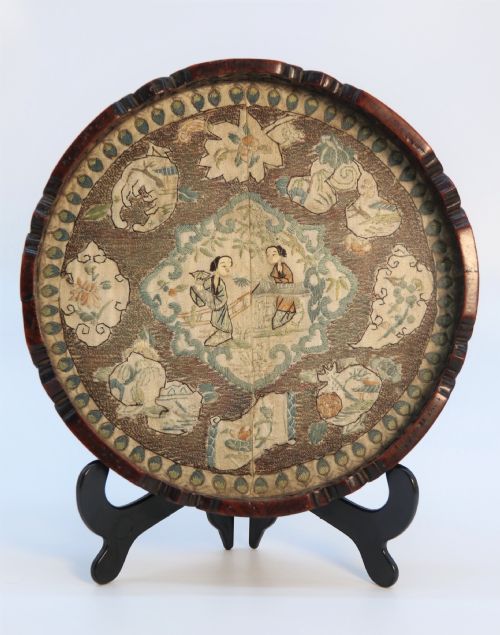
The pieces on this page include framed wall art, trays utilising carved hardwood, and garments like silk piano shawls and a child's robe. Origins span Qing Dynasty pieces alongside later twentieth-century works and an East Turkestan Khotan rug fragment.
Buyers most frequently encounter nineteenth-century hand-sewn panels and framed embroideries protected under glass. These textile art forms reflect centuries of skilled needlework traditions passed down through generations.
How they were made
Craftsmen utilised base fabrics of silk, wool, and cotton combined with metallic thread and pigment to create richly textured surfaces. Skilled hands stitched detailed figures and natural scenes directly onto the cloth.
Many items incorporate supplementary materials such as glass for protection and wood or hardwood for frames and trays. Carved wooden structures often house delicate embroidered panels to form functional decorative objects.
Chinese Silk Textile Retail Price Guide 2026
Typical asking prices for chinese silk textile among the pieces listed under this phrase on Sellingantiques today, from the lower quarter to the upper quarter. They describe what is for sale here now, not the wider market.
Listings span periods from eighteen hundred to nineteen sixty, utilising silk, cotton, wool, glass, pigment, and carved hardwood.
What varies in quality
The precision and density of the hand sewing separate standard examples from exceptional artistic achievements. Finer needlework displays greater detail in subjects such as plumage, facial expressions, and botanical elements.
The preservation of the original silk fabric and the integrity of any metallic thread influence the overall visual impact. Items retaining vivid pigments and secure mountings demonstrate superior historical care.
The Chinese Silk Textile Glossary
- Rank badge
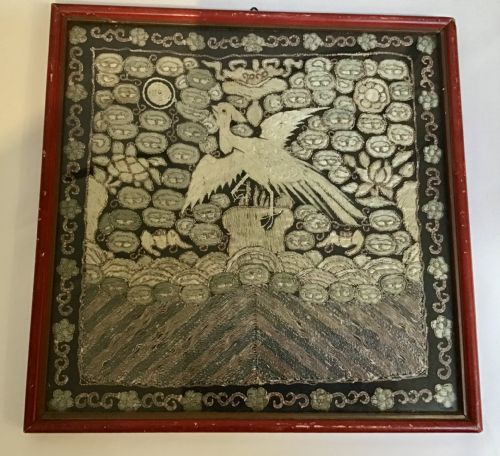
- A square insignia sewn onto the robes of officials during the Qing Dynasty to indicate their societal status. These badges typically depict specific birds or animals.
- Piano shawl
- A large, fringed silk shawl often heavily embroidered with floral designs. They became popular decorative home furnishings in the early twentieth century.
- Qing Dynasty
- The final imperial dynasty of China, lasting from sixteen forty-four until nineteen twelve. Many surviving textiles originate from the later decades of this period.
- Khotan rug
- A carpet or fragment originating from the oasis city of Khotan in East Turkestan. These textiles often feature distinctive regional geometric and floral motifs.
- Chinoiserie
- A European artistic style reflecting Chinese aesthetic influences. It appears across various decorative arts and furnishings.
Chinese Silk Textile: Frequently Asked Questions
How should I display a silk textile?
Keep framed embroideries and panels away from direct sunlight to prevent the silk fibres and pigments from fading over time. Hanging them in rooms with stable humidity protects the delicate organic materials.
Ensure that any wall art is securely mounted behind glass if the textile is fragile. This guards the surface against dust and accidental physical contact.
What is a rank badge?
A rank badge is an embroidered square that was traditionally affixed to the front and back of an official's court robe. They served as immediate visual indicators of civil or military hierarchy.
Today, these badges survive as sought-after collector pieces. They highlight the exceptional precision of historical needlework.
What motifs appear on these textiles?
Common imagery includes traditional Chinese symbols such as imperial dragons, garden birds, and mandarin ducks. Floral arrangements and stylized trees also frequent the embroidered panels.
These subjects carried deep cultural meanings relating to status, longevity, and harmony. Artisans rendered them using fine silk and metallic threads.