





Chinese Relief Wood Panel
A Chinese relief wood panel brings deep architectural carving and layered narrative scenes directly into a room.
Chinese Relief Wood Panel
A chinese relief wood panel represents intricate carving traditions originating in the Qing dynasty, Chinese traditional, and Chinese regional styles. These decorative elements appear most frequently on this page as wall plaques, table screens, and room dividers.
The assortment on offer spans the eighteenth century through to the early twentieth century, incorporating items dated around 1750, 1850, 1880, 1890, 1900, 1920, and the Victorian era. Buyers frequently encounter individual wall art alongside matched sets of carved wooden panels and architectural temple fragments.
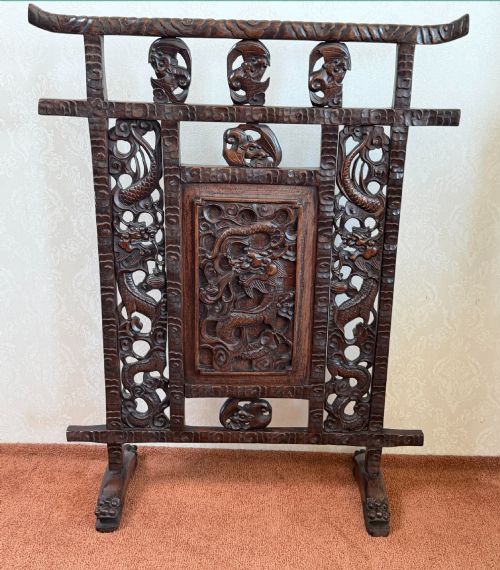
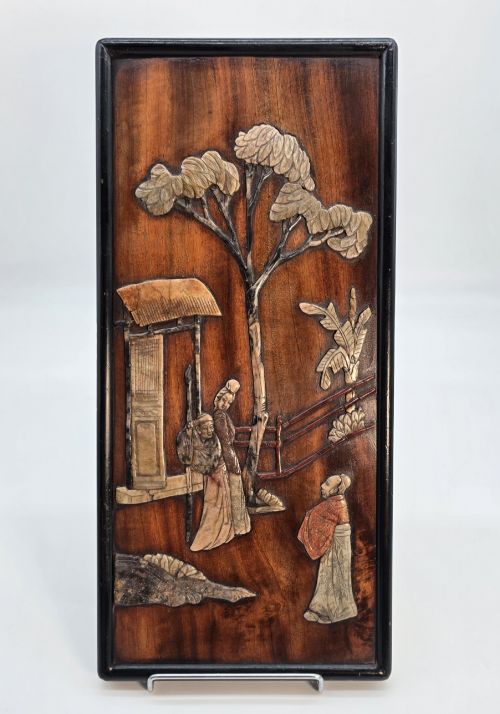
Beyond flat wall plaques, the inventory includes freestanding table screens and multi-fold room dividers that utilise deep wood carving. Some examples integrate supplementary media, such as soapstone or hardstone framed pictures and lacquered trunks adapted for display.
How they were made
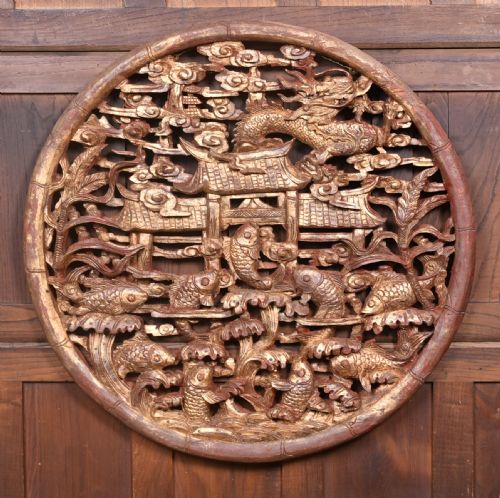
The construction relies on hardwoods and softwoods shaped through detailed relief carving techniques. Many items incorporate applied gold leaf to highlight figural motifs and geometric borders against the timber background.
Makers utilised contrasting materials like brass mounts, soapstone, and hardstone to add colour and texture to the timber surfaces. Lacquer finishes often seal and protect the wood, adding a deep sheen to trunks and screens.
Chinese Relief Wood Panel Retail Price Guide 2026
Typical asking prices for chinese relief wood panel among the pieces listed under this phrase on Sellingantiques today, from the lower quarter to the upper quarter. They describe what is for sale here now, not the wider market.
Listings feature items spanning the eighteenth century to the 1920s, incorporating hardwoods, softwoods, lacquer, and gold leaf.
What varies in quality
The depth and intricacy of the chisel work separate standard production pieces from exceptional examples. Deeper undercut carving allows figures and foliage to emerge dynamically from the background plane, creating complex shadow and form.
The preservation of original surface treatments, such as gold leaf and lacquer, dictates the visual impact of a piece. Panels retaining crisp detail in secondary elements like dragon motifs and borders demonstrate superior workmanship.
The Chinese Relief Wood Panel Glossary
- Relief carving
- A sculptural technique where figures and patterns project from a flat background. This method defines the primary visual appeal of these wooden panels.
- Gilt wood
- Timber treated with gold leaf applied to the surface. This technique highlights specific architectural details and figural elements.
- Hardwood
- Dense, durable timber harvested from deciduous trees. It provides a stable foundation for intricate and long-lasting miniature chisel work.
- Table screen
- A portable decorative panel supported by a wooden stand. These items were traditionally placed on desks or tables for contemplation.
- Soapstone
- A soft, talc-based stone frequently used in Chinese decorative arts. It appears inlaid or carved within panel settings.
Chinese Relief Wood Panel: Frequently Asked Questions
What is a chinese relief wood panel?
A chinese relief wood panel is a carved timber architectural or decorative element featuring raised figures, landscapes, or floral motifs. These objects originate from various historical periods and served functional or ornamental roles.
Today, they are mounted on walls or displayed as freestanding screens to introduce texture and historical narrative into interior spaces.
How were these panels used historically?
Historically, these panels functioned as architectural components in temples and residences, acting as room dividers, wall decorations, or protective screens. They provided both privacy and symbolic narrative protection.
Many pieces were integrated into larger furniture forms or structural joinery within traditional buildings.
How do I hang a heavy wooden panel?
Hanging a heavy wooden panel requires locating secure wall studs or using heavy-duty masonry anchors depending on your wall construction. The mounting hardware must support the substantial weight of dense hardwoods and applied stone.
Consult a professional installer if the panel lacks integrated hanging brackets or requires a custom French cleat system.
How do I date an antique wood panel?
Dating relies on examining the tool marks left by the carver, the species of wood utilised, and the wear patterns on the lacquer or gold leaf. Stylistic indicators tied to Qing dynasty or Victorian periods also offer chronological clues.
Comparing the construction joints and backing boards with documented examples helps narrow down the century of manufacture.