





Chinese Lacquer Table Lamp
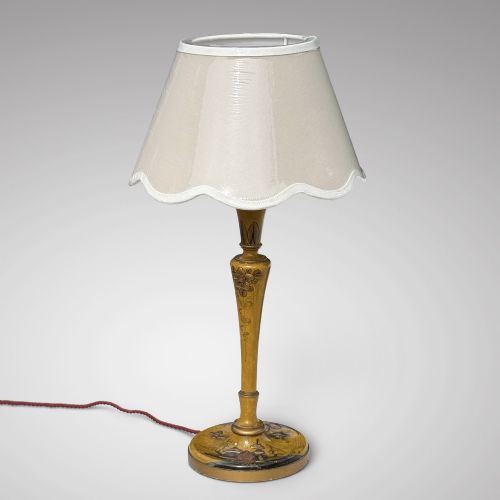
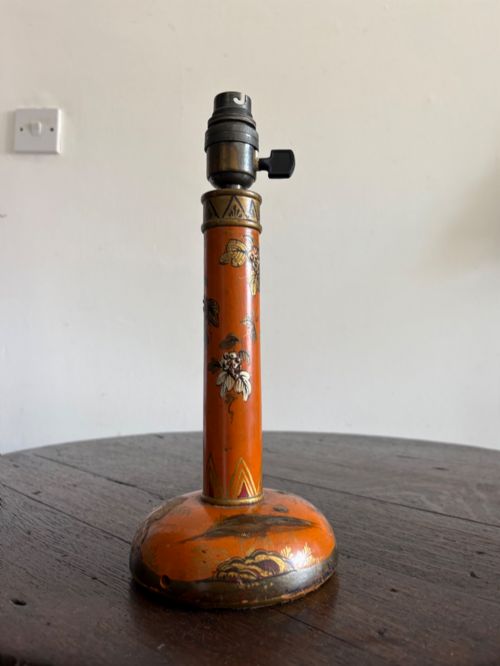
These chinese lacquer table lamp pieces bring rich chinoiserie colour and hand-painted detail into a room, offering genuine period character.
Chinese Lacquer Table Lamp
When you search for a chinese lacquer table lamp, you encounter items shaped by 19th Century, Victorian, Edwardian, 1860, 1920, and 1930 periods.
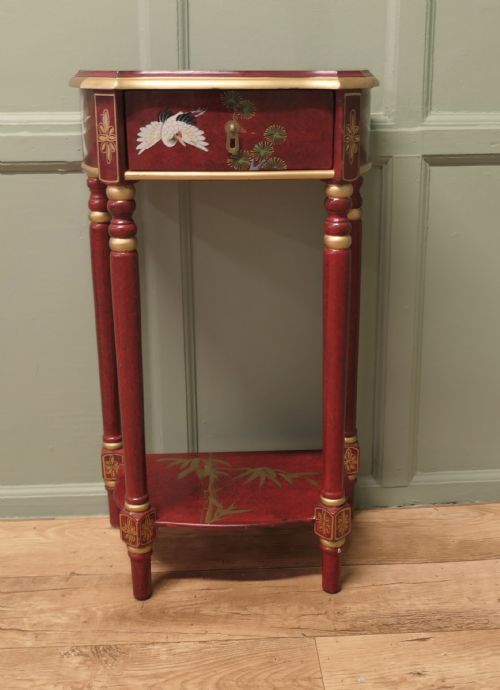
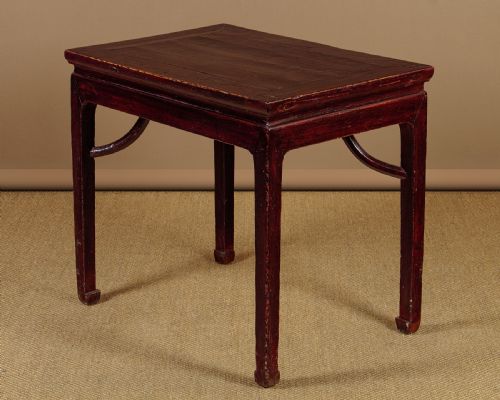
The selection on this page includes table lamps alongside converted side tables, nests of tables, tea canisters, and bedside cabinets.
These pieces draw on Chinoiserie, Edwardian Chinoiserie, Chinese Provincial, and Chinese Oriental styles.
Materials and construction methods
These items use lacquered timber, wood, and Chinese elm as a base, combined with lacquer, paint, and gilt surface treatments.
Metal components such as brass appear alongside fabric elements on lighting fixtures.
Materials documented across the available inventory include lacquer, brass, wood, fabric, gilt, paint, lacquered timber, and metal.
Distinguishing quality across pieces
Quality rests on the execution of the hand-painted decoration and the depth of the lacquer finish across the surface.
The integrity of the underlying wood and the retention of original gilt details separate standard examples from finer ones.
The Chinese Lacquer Table Lamp Glossary
- Chinoiserie
- European interpretation and imitation of Chinese and East Asian artistic traditions, popular in decorative arts and furniture. This style often employs lacquer and painted motifs.
- Lacquer
- A durable finish applied to wood or other materials, derived from tree sap or synthetic resins. It creates a smooth, hard surface that takes paint and gilt well.
- Gilt
- Application of gold leaf or gold paint to a surface to provide metallic highlights. It frequently outlines figures and landscapes on dark lacquer grounds.
- Tripod table
- A small freestanding table supported by three legs. This form appears in Edwardian examples.
Chinese Lacquer Table Lamp: Frequently Asked Questions
What periods do these lamps date from?
The pieces span the 19th Century, Victorian, Edwardian, 1860, 1920, and 1930 periods.
Items often reflect Edwardian Chinoiserie and Chinese Provincial aesthetics.
Were all these lamps originally made as lighting?
Some items begin as other forms, such as tea canisters or side tables, and convert into table lamps later.
Purpose-built table lamps also feature alongside converted furniture pieces.
What materials form the bodies?
Construction relies on wood, lacquered timber, and Chinese elm.
Surfaces feature lacquer, paint, gilt, and brass fittings.
How do Chinoiserie and Oriental styles differ?
Chinoiserie specifically denotes European decorative arts influenced by Chinese design, prevalent in Edwardian and 19th Century pieces.
Chinese Provincial styles represent regional domestic craftsmanship.