







Chinese Hardwood End Table
A chinese hardwood end table brings dense rosewood and traditional carving into a room, offering practical surface space with deep historical character.
Chinese Hardwood End Table
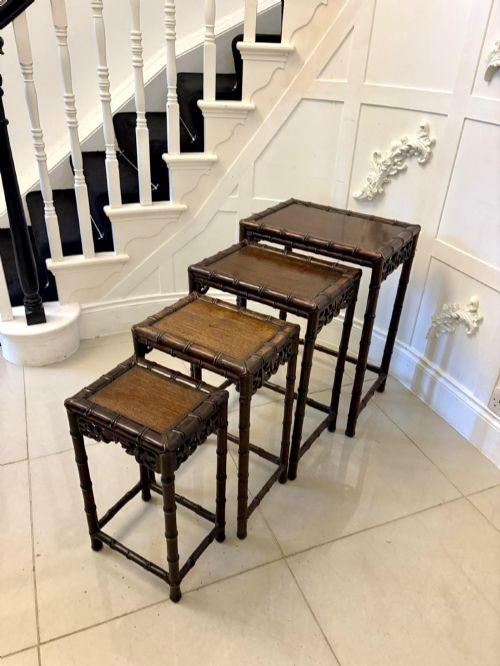
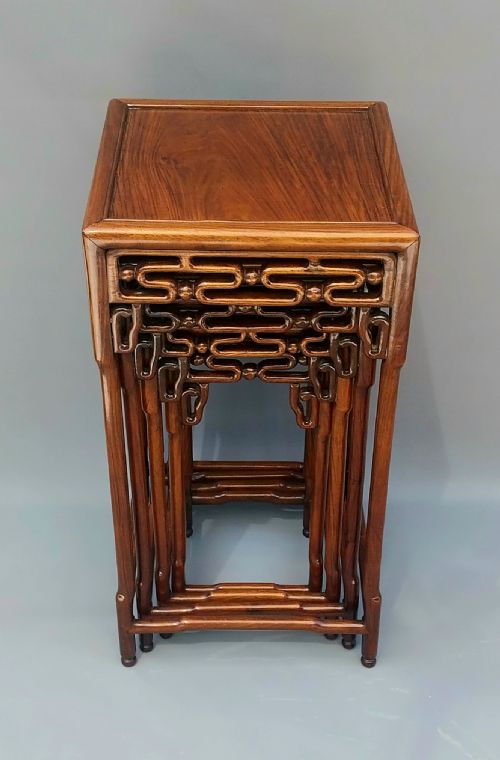
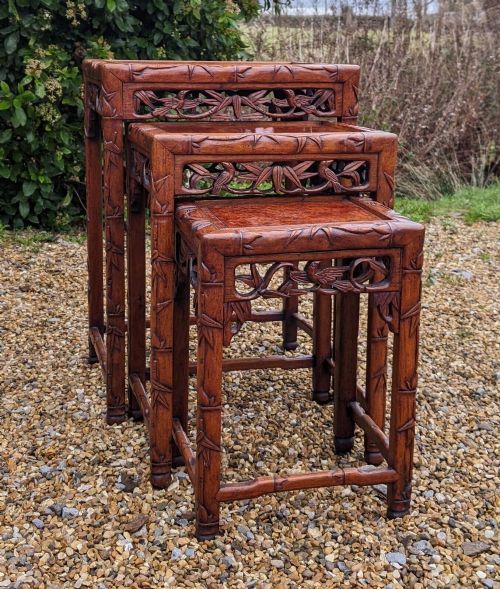
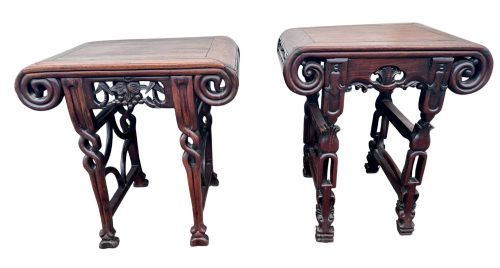
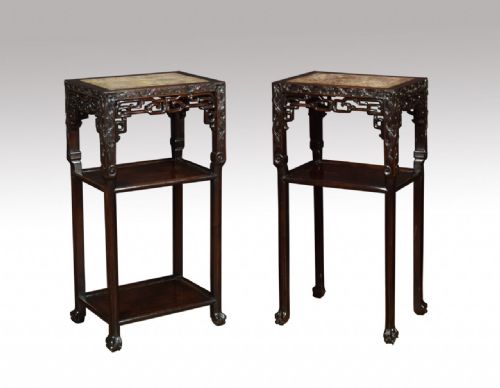
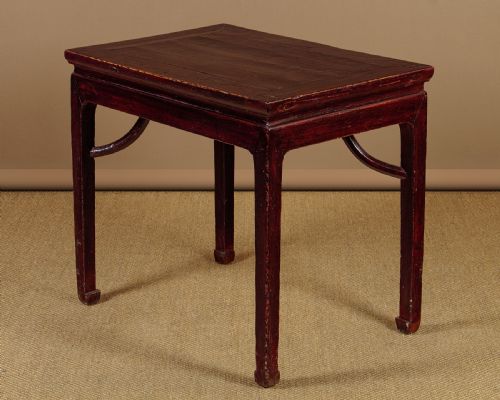
A chinese hardwood end table appears in several distinct forms across this selection, most commonly as nests of four graduated tables designed to tuck neatly beneath one another. Buyers also encounter low kang tables, small side tables, and occasional stands intended for displaying porcelain or plants.
The pieces span the nineteenth century and early twentieth century, encompassing Qing dynasty and Chinese export traditions. Makers utilised dense timbers to build furniture that functions reliably as a bedside cabinet, coffee table, or compact surface in modern interiors.
Materials and construction
Craftsmen built these items from heavy exotic timbers including rosewood, hongmu, and huanghuali wood, prized for their rich grain and natural durability. Many surfaces incorporate inset panels of rouge marble or porcelain, adding contrasting texture and cool touch to the warm wooden frames.
Joinery relied on traditional techniques that allowed the dense wood to expand and contract with humidity without splitting. Carvers added subtle pierced details, scroll ends, and faux bamboo moulding to the structural edges while keeping the primary surfaces smooth.
Chinese Hardwood End Table Retail Price Guide 2026
Typical asking prices for chinese hardwood end table among the pieces listed under this phrase on Sellingantiques today, from the lower quarter to the upper quarter. They describe what is for sale here now, not the wider market.
The selection spans the nineteenth and early twentieth centuries, capturing late Qing dynasty production and Chinese export pieces.
Evaluating the standard
Quality rests primarily on the density and selection of the timber, with superior examples showing crisp figuring and deep natural colour in the rosewood or huanghuali. The precision of the carved details and the snugness of fit when nesting multiple tables also distinguish finer workshop production.
The presence of undamaged inset marble panels or intact porcelain inserts elevates a piece above standard utility furniture. Original surface finishes that retain their subtle sheen rather than heavy modern restoration indicate better preservation over the decades.
The Chinese Hardwood End Table Glossary
- Hongmu
- A traditional Chinese term for dense, heavy hardwoods that translate literally as red wood. These timbers provide the structural strength for nineteenth-century tables.
- Kang table
- A low domestic table traditionally used on a heated platform bed for dining or writing. These low surfaces now serve well as compact coffee tables.
- Nesting tables
- A set of graduated tables designed to slide one beneath another to save floor space. Nineteenth-century makers frequently produced these in sets of four.
- Quartetto
- An alternative historical term for a set of four matching tables that graduate in size. The word appears frequently in nineteenth-century British trade descriptions.
Chinese Hardwood End Table: Frequently Asked Questions
How do I use a nesting table set?
These sets pull apart to provide multiple small surfaces for drinks or lamps when guests visit. They push together into a single compact stack when floor space is needed.
Individual tables can also be separated and placed around a room as matching side surfaces.
Where should I place a kang table?
Their low profile makes these tables suitable as coffee tables in front of low seating. They also function well as display surfaces for ceramic bowls or small sculptures.
Keep them away from direct heat sources to protect the historic hardwood.
How do I care for rosewood furniture?
Dust the timber regularly with a soft, dry cloth to prevent dirt accumulation in the carved recesses. Avoid liquid polishes and silicone sprays that can damage the antique finish.
Maintain stable room humidity to protect the wood joints and any inset marble panels.
What defines Qing dynasty style?
This aesthetic draws on centuries of traditional Chinese woodworking, featuring structured forms and refined carvings. Makers often incorporated scroll ends and pierced aprons.
The style balances decorative carving with functional utility in domestic furniture.